
Air Compressor for 24/7 Continuous Operation in the Textile Industry
2026-07-30
In the textile industry, where production never sleeps, compressed air is the silent heartbeat of every spinning, weaving, and finishing process. But not all compressors are built for the relentless 24/7 grind—poor reliability can lead to costly downtime and fabric defects. That’s why smart mills are turning to engineered solutions from Seize Air. Designed specifically for non-stop operation, these air compressors deliver constant pressure, minimal maintenance, and energy savings that directly impact your bottom line. Let’s explore what makes a compressor truly ready for continuous duty in textile manufacturing.
Why round-the-clock air supply matters in textile production
In textile mills, airborne fibers and dust are constant byproducts of processes like carding, spinning, and weaving. Without continuous air circulation, these particles settle on machinery and fabrics, leading to defects, increased wear, and potential fire hazards. A steady airflow also helps regulate humidity—a critical factor since natural fibers can become brittle or limp when moisture levels fluctuate. This isn't just about comfort; it’s about maintaining the precise conditions that fabrics demand at every stage.
When ventilation pauses, temperature and humidity drift quickly, causing inconsistencies in yarn tension and dye uptake. The result is often off-spec batches, wasted materials, and costly production delays. Round-the-clock air supply keeps these variables locked in, enabling smooth transitions between shifts and reducing the need for quality control rechecks. It’s a predictable, low-maintenance way to protect both product integrity and operational rhythm.
Beyond the production line, constant air movement prevents the buildup of microfibers that workers would otherwise inhale. That’s a direct investment in respiratory health and overall workforce morale. In facilities running 24/7, even short interruptions can create stuffy, uncomfortable conditions that slow down decision-making and physical coordination. Keeping the air moving isn’t a luxury—it’s fundamental to safe, efficient textile manufacturing.
Key design features for non-stop compressor performance
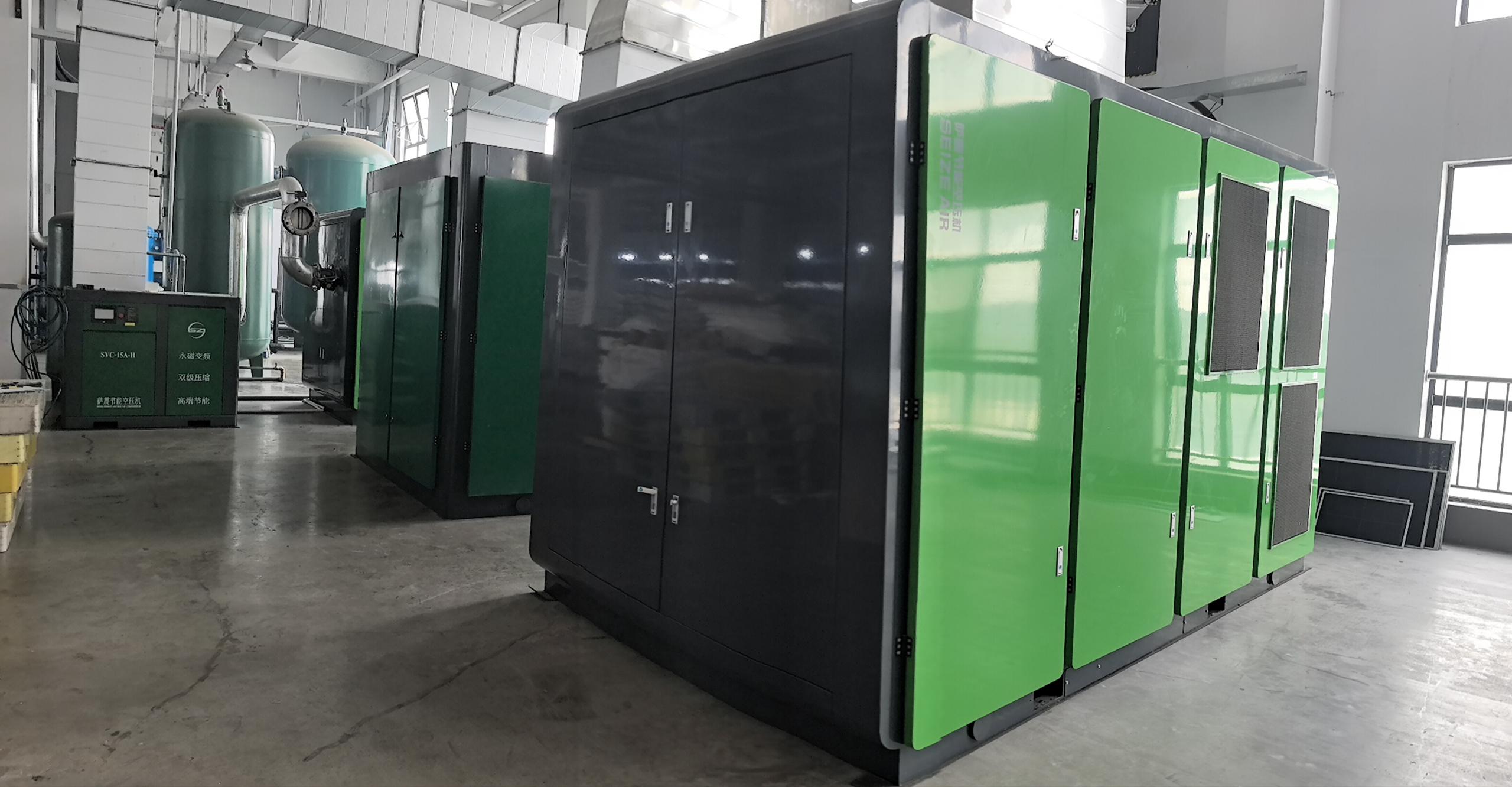
Continuous operation in demanding environments hinges on a rugged core assembly. The heart of the system relies on oversized bearings and a precision-balanced rotating group, which together minimize vibration and mechanical stress. These components are carefully matched to handle rapid thermal cycling without compromising alignment, ensuring that the compressor can run for extended periods at full load without unexpected downtime.
Effective cooling and lubrication circuits are just as critical. By integrating generously sized oil galleries and a high-capacity cooling fan, the design prevents heat soak even under heavy use. The lubrication system delivers clean oil exactly where friction occurs, while an integrated thermal management strategy keeps internal temperatures within a narrow, optimal band. This protection extends component life and maintains efficiency over tens of thousands of hours.
Finally, smart control and protection algorithms add an intelligent layer of reliability. Real-time monitoring of key parameters—discharge temperature, motor current, pressure differentials—allows the controller to make subtle adjustments before small issues become failures. Features like soft-start capability and adaptive cycle management reduce wear on electrical and mechanical parts, letting the compressor respond smoothly to fluctuating demand without ever needing to pause.
Matching the right compressor to your textile processes
In textile manufacturing, the choice of a compressor isn't just about raw power—it's about how well it integrates with the specific rhythms of your production line. Spinning, weaving, dyeing, and finishing each demand different pressure and flow characteristics. A compressor that excels in a continuous operation like air-jet weaving might struggle in the intermittent, high-demand bursts of a pneumatic cleaning system. The key is to map out your exact load profile: identify peak demands, average consumption, and any critical applications where pressure fluctuations could damage delicate fabrics or disrupt precision tools.
Beyond sizing, consider the type of compressor and its air quality. Oil-injected rotary screw compressors offer reliability for many tasks, but finishing processes often require 100% oil-free air to avoid contaminating the product. Variable speed drives can slash energy costs by matching output to demand, yet they may not be the best fit for processes with constant, full-load operation. Look at your entire system: a refrigerated dryer might be overkill for a humid spinning room but essential to prevent moisture from ruining sensitive dye mixtures. The right match minimizes waste, reduces downtime, and protects your final product.
Ultimately, the best compressor setup is one that leaves room for growth without overspending today. Analyze your utility bills, listen to the operators who work with the equipment daily, and run a compressed air audit to pinpoint invisible leaks that silently erode efficiency. A thoughtfully selected compressor isn't an expense—it's an asset that adapts as your textile processes evolve, ensuring consistent quality at a lower total cost of ownership.
Preventive maintenance that keeps downtime at bay
Every piece of machinery has a rhythm, and when that rhythm is interrupted by a sudden breakdown, the costs go far beyond repairs. It's the stalled production lines, the idle workers, and the missed deadlines that really sting. Preventive maintenance isn't about ticking boxes on a checklist; it's about tuning into that rhythm and catching the faintest signs of wear before they become roaring failures.
Think of it as routine health checks for your equipment. By replacing worn belts, greasing bearings, and calibrating sensors on a schedule that matches actual usage—not just the calendar—you sidestep those chaotic emergency calls. This approach smooths out the peaks and valleys of equipment performance, extending asset life and keeping the focus on output, not outages.
The real beauty lies in data-driven timing. Modern sensors and monitoring tools don't just guess when a part might fail; they whisper warnings through vibration analysis and thermal imaging. Acting on those whispers transforms maintenance from a cost center into a silent guardian of uptime, ensuring that your operation never misses a beat.
Energy efficiency strategies that lower operational costs
Beyond the obvious environmental benefits, reducing energy consumption is one of the most direct ways to trim operating expenses. Facility managers often find that upgrading to high-efficiency HVAC systems and installing advanced building controls yields savings far exceeding the initial investment. Simple adjustments—like recalibrating thermostats, optimizing equipment schedules, and using natural ventilation when possible—can shave a noticeable percentage off monthly utility bills without sacrificing comfort.
Lighting upgrades remain a quick win. Swapping outdated fluorescent tubes for LEDs not only cuts lighting-related electricity use by half or more but also reduces heat output, easing the load on cooling systems. Pairing such upgrades with occupancy sensors and daylight harvesting ensures that energy isn’t wasted in unused spaces. Over time, these changes accumulate into significant financial returns, especially in large commercial or industrial settings where lighting runs around the clock.
The real game-changer, however, lies in data-driven energy management. Submetering key equipment and analyzing usage patterns can uncover hidden inefficiencies—like equipment running during off-hours or compressed air leaks that silently inflate power costs. Once identified, these issues are often fixed with minimal expense, yet they prevent thousands of dollars in annual waste. When operational teams regularly review energy analytics and adjust practices accordingly, the cost savings become sustainable and compound year after year.
Real-world scenarios where continuous compressed air makes the difference
In automated manufacturing facilities, hundreds of pneumatic actuators, valves, and robotic grippers depend on a steady stream of compressed air. Even a momentary dip in pressure can cause misalignments, dropped parts, or complete line stoppages that cost thousands per minute. Continuous air supply isn't just about powering tools—it’s the heartbeat of precision assembly, keeping cycle times tight and scrap rates low without anyone having to constantly monitor gauges.
Body shops and refinishing centers illustrate another subtle but critical demand. Spray guns used for primer, paint, and clear coats require a clean, uninterrupted airflow to atomize materials uniformly. Any fluctuation introduces texture variations, orange peel effects, or solvent pops that ruin a flawless finish. Here, continuous compressed air translates directly into fewer rework hours, less wasted paint, and customer satisfaction that hinges on visual perfection.
Perhaps nowhere is the need more acute than in medical environments. Surgical tools, ventilators, and anesthesia machines often rely on medical-grade compressed air that must flow without interruption. In intensive care units, a loss of air supply can become life-threatening within seconds. Hospitals design redundant systems specifically to guarantee that continuous air delivery—because in these rooms, it doesn't just make a difference; it sustains life itself.
FAQ
Textile production lines run non-stop to meet demand, and any halt in compressed air stops machinery like spinning frames, looms, and air-jet systems instantly. Even a short pressure drop can cause thread breakage, fabric defects, or costly downtime. A compressor built for continuous duty keeps everything synchronized and avoids these disruptions.
You want a unit with a robust cooling system—usually an efficient aftercooler and a reliable fan design—to handle the heat buildup. A heavy-duty motor with a high duty cycle (100% rated) is non-negotiable. Also, look for oversized airends, quality bearings, and a smart controller that adjusts output to demand without frequent starting and stopping.
Clean, dry, and steady air pressure directly influences fabric consistency. Moisture or oil carryover can stain materials, while pressure fluctuations lead to uneven weaving or knitting. A good compressor paired with proper filtration and drying ensures that every meter of fabric meets spec without hidden faults that show up later in dyeing or finishing.
You'll be changing filters and oil (if it's oil-lubricated) more frequently than the manual's standard intervals, simply because it runs triple the hours of a typical industrial setup. Daily checks of condensate drains, intake vents, and cooling fins prevent overheating. Vibration analysis and annual airend inspections help catch wear before it becomes a breakdown.
Absolutely—modern variable speed drive (VSD) units match motor speed to air demand, so you're not wasting power during lower production periods. Combined with heat recovery systems that repurpose compression heat for facility warming or water preheating, the energy footprint shrinks significantly over relying on a fixed-speed machine blowing off excess pressure.
Oil-free rotary screw compressors are often the go-to because they eliminate oil contamination risks and handle high volumes at steady pressure. For massive operations, a centrifugal compressor might be justified, but only if demand is rock-steady. Many mills use multiple smaller screws with a sequencer to stair-step output, which adds redundancy and fine-tunes efficiency.
Start by mapping actual air consumption at each machine, then add a 20–30% buffer for leaks, future expansion, and peak loads. Don't rely on nameplate ratings alone—measure real usage with a flow meter over several shifts. Undersizing leads to chronic pressure dips, while oversizing on a fixed-speed unit causes wasteful cycling and maintenance headaches.
The biggest one is ignoring ambient conditions—lint and dust clog intake filters fast, so you need frequent cleaning or an elevated intake. Another is skimping on dryers; humid air ruins solenoid valves and pneumatic controls. Also, people often set the pressure band too wide, thinking it saves energy, but it actually stresses components and hurts product uniformity.
Conclusion
In textile manufacturing, even brief interruptions in compressed air supply can cascade into costly defects, material waste, and production halts. Spinning, weaving, and dyeing machinery relies on consistent air pressure to maintain tension, operate pneumatic valves, and ensure precise thread control. Round-the-clock operation demands compressors engineered for durability under heavy cyclic loads. Key design choices—such as oversized cooling systems, premium bearings rated for continuous duty, and vibration-dampened frames—prevent overheating and prolong service intervals. Pairing the compressor type to the specific process matters just as much; oil-free screw compressors often suit sensitive textile finishing, while robust rotary screw designs handle the high-volume demands of air-jet looms without compromising air quality. Intelligent controls that adapt output to fluctuating plant loads further safeguard uninterrupted flow.
Sustaining 24/7 performance also hinges on a disciplined maintenance routine. Vibration analysis, real-time oil condition monitoring, and scheduled filter replacements catch wear before it triggers downtime. This proactive approach dovetails with energy-saving measures: variable-speed drives, leak management programs, and heat recovery systems slash power bills—often the largest operational expense after labor. Real-world applications illustrate the payoff. A cotton spinning mill avoided six-figure losses when a standby compressor seamlessly took over during a primary unit failure, keeping ring frames spinning without pause. In dyeing and finishing, stable pressure eliminates streaks and rework, directly boosting first-pass yield. Together, these strategies turn the compressor room from a potential bottleneck into a pillar of uninterrupted productivity.
Contact Us
Contact Person: Mia
Email: [email protected]
Tel/WhatsApp: +86 19821985894
Website: https://www.seize-air.com