
Best Chocolate Enrober Choices for Artisan Chocolate Makers
2026-11-24
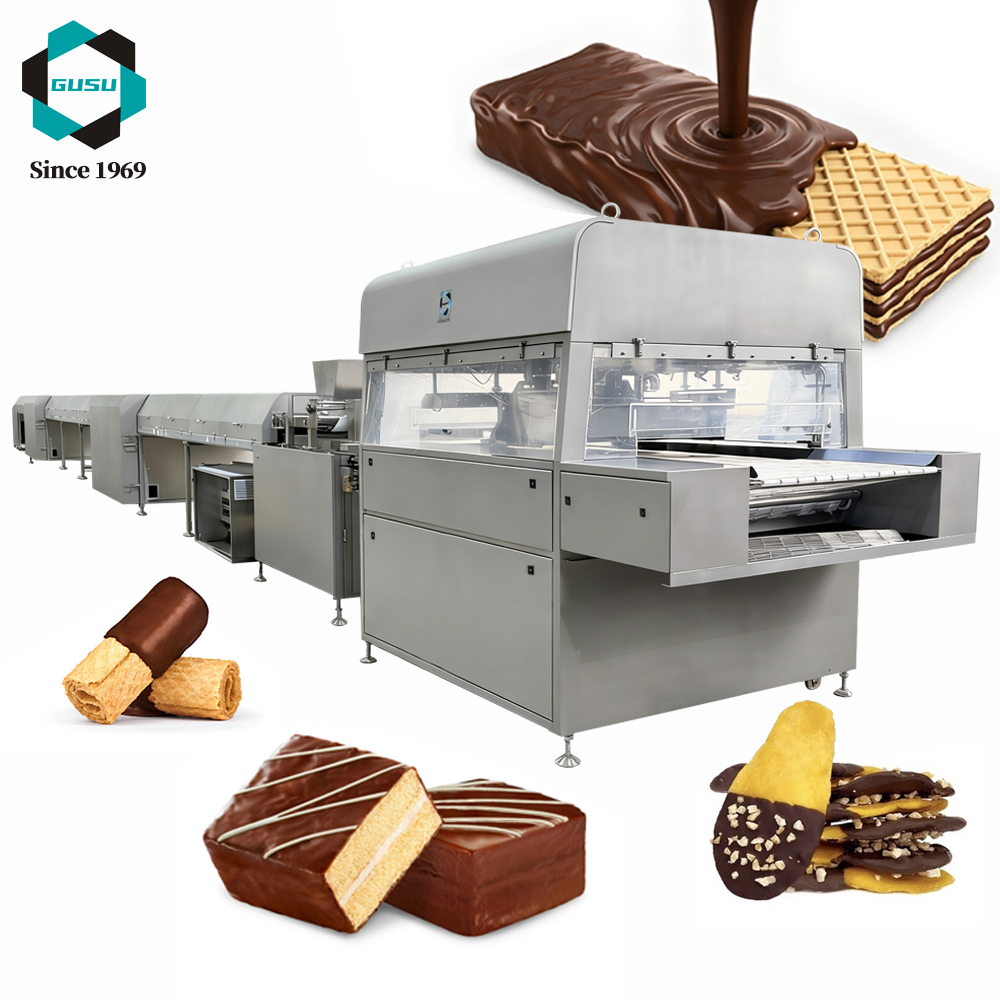
Choosing the right chocolate enrober can quietly make or break a small-batch production line, especially when every batch carries an artisan's signature. While most guides list the same tired specifications, the real difference often lies in how a machine handles your specific chocolate viscosity, center fragility, and workspace rhythm. From compact tabletop models that respect a studio footprint to continuous systems built for growing demand, the options are far from equal. In this guide, we compare the best practical enrober choices for artisan chocolate makers, including insights from GUSU's approach to precision coating and temperature stability, so you can move beyond generic specs and find equipment that actually fits your craft.
Small-Footprint Enrobers That Suit a Working Studio
A benchtop enrober that doesn’t demand its own corner of the room changes how a small studio schedules production. Instead of rolling out a full-size line for a few dozen bars, you can run short batches, switch between dark and milk chocolate, and still keep enough counter space for tempering and packing.
Look for frames with quick-release belts and a shallow trough. The less chocolate the machine holds just to function, the less you lose at the end of a session. Some compact models sit on a standard stainless table and still offer an adjustable air curtain and a clean bottoming plate for consistent coverage without the usual bulk.
Daily use usually comes down to the unglamorous details. A simple control panel, parts that fit in a standard sink, and low-profile feet or casters matter more than a long list of automation. For a working studio, the right enrober earns its footprint by being pulled into service often, not by waiting for seasonal peaks.
Temperature Recovery and the Art of a Steady Shell
A cold egg dropped into a rolling boil has almost no chance to ease into the heat. The shell heats unevenly, the air pocket expands faster than the mineral structure can flex, and tiny cracks begin before the white has even set. Letting eggs sit out of the fridge for fifteen minutes is not fussiness; it gives the entire shell time to recover toward room temperature and meet the water as a single, less startled surface.
That steadier shell changes what happens inside. The membrane under the shell stays more relaxed, so steam and expansion find small escapes instead of forcing fractures. The result is less peeling frustration and more clean, intact ovals. It also means the cooking time you set actually refers to the egg in front of you, not a half-warmed guess.
The same idea applies at the other end of the process. Moving a just-boiled egg into a bowl of icy water is another kind of temperature recovery: it stops the carryover heat and pulls the shell slightly away from the white. That pause, brief and quiet, is often what makes the shell release without tearing the surface apart.
Belt Speed, Width, and Coating Irregular Centers
On a moving belt, speed seldom acts alone. A slight increase in belt speed can pull the coating film thinner in the middle before the edges have time to settle, while a drop in speed lets more material accumulate around the centerline. When the belt width changes or the tracking drifts by only a few millimeters, that accumulation rarely stays centered; it shifts into a wavy, irregular band that looks heavier on one side.
Width plays a quieter role because it changes how tension distributes across the belt. A wider belt may crown differently under the coating head, creating a soft valley or ridge that pulls the wet film toward the middle or pushes it toward the edges. Irregular centers often start here: the coating head remains fixed, but the belt's centerline underneath it is no longer where the edge guides assume it to be.
Correction works best when speed and width alignment are checked together rather than adjusting one in isolation. Running the belt at a steady speed for several minutes, watching the coating lane, and then making small tracking adjustments usually brings the irregular center back to the middle. The goal is not perfect speed or perfect width, but a stable relationship between the two long enough for the coating to settle evenly.
The Cleanup Factor Most Buyers Overlook
When buyers tour a property, they focus on paint colors, countertops, and closet space. What they rarely mention is the residue left behind in the range hood, the dust caked on ceiling fan blades, or the faint odor clinging to bathroom grout. These overlooked areas signal one thing: maintenance has slipped. A surface-level clean might pass a quick glance, but a buyer’s nose and fingertips will find what the eye misses. If you want the sale to feel effortless, deep clean the hidden zones before the first showing. It’s not glamorous, but it’s often the deciding factor between “nice house” and “well-kept home.”
Sellers tend to overinvest in staging while underestimating the power of a spotless utility room or a streak-free window track. Buyers rarely ask about these spots directly, yet they’ll open the dishwasher, peek behind the toilet, or run a finger along the top of the refrigerator. When those surfaces come back clean, the whole property feels more valuable. When they don’t, every minor flaw becomes a reason to negotiate harder or walk away. Think of it as quiet evidence: a home that’s clean in the awkward corners is a home that’s been cared for where it counts.
The good news is this cleanup doesn’t require a massive budget. It’s about targeting the forgotten zones most people skip: vent covers, baseboard grooves, the gap between the stove and counter, and the inside of light fixtures. Once those areas are handled, the house doesn’t just look better—it feels different. That feeling travels with buyers as they compare your home to the next one. A slightly dated kitchen with immaculate hidden corners often beats a renovated space with grimy switch plates and dusty air returns. Clean obscure, win obvious.
Used, Rebuilt, and New Machines That Hold Their Value
Equipment buyers tend to fixate on the initial price, but the number that matters later is what the machine will fetch at resale. Used, rebuilt, and new machines that keep their value usually have a few things in common: a brand with established service support, a model that fits common job demands, and a history that is easy to verify. A machine with widespread parts availability and a known maintenance record rarely sits unsold for long.
Rebuilt equipment is often undervalued by first-time buyers. A carefully rebuilt machine can deliver years of reliable work at a lower upfront cost, while detailed rebuild documentation gives the next buyer confidence to pay a fair price. The opposite is also true: vague claims about repairs or replaced components without paperwork will eat into resale value quickly.
New machinery is not automatically a safe purchase. Some configurations lose a large share of their value in the first few years, particularly when they are too specialized or tied to a short-term trend. Before committing, it helps to ask whether a similar buyer would still want this exact setup several years down the road. If that mental resale picture is unclear, the machine will probably be harder to move when the time comes.
Enrobing Modules Compared with Standalone Machines
When a production line already has a depositing or cooling backbone, an enrobing module can slot into that flow without forcing a major layout change. It tends to suit shorter runs, seasonal items, or recipes that only need occasional coating. The main appeal is floor space and turnaround speed, not raw output.
A standalone enrobing machine behaves more like a dedicated workstation. Its longer belt path, separate blower stations, and more deliberate temperature control make it easier to hold a steady chocolate viscosity and even coverage across a full shift. That added capability comes with a larger footprint and a more involved setup, so it pays off when coating is a daily requirement rather than an occasional step.
Day-to-day handling also sets them apart. Modules are often easier to wheel out, clean, and reconfigure, while standalone units may need more time for belt adjustments and washing but give operators finer control over things like bottoming thickness and curtain flow. The better option is not the one with the longest feature list; it is the one that matches how often the line actually changes direction.
FAQ
Start with a tabletop unit that has a narrow belt width, removable parts, and a small chocolate reservoir. You want something that can handle a few hundred pieces a day without forcing you to melt more chocolate than you actually need. A built-in vibrating or blower station helps remove excess coating, and a stainless steel body makes end-of-day cleanup far less painful.
It can carry you further than most people assume, especially if you are producing filled chocolates, caramels, or biscuit bases in small batches. The real limitation is belt length and cooling capacity. Once you find yourself running the machine for several hours straight or waiting on racks to set, it is time to look at a freestanding unit with an integrated cooling tunnel rather than simply buying a bigger tabletop model.
It is everything. Chocolate that drifts by a degree or two will give you dull streaks, thick shells, and poor snap. Look for a machine with digital control over the bath, the curtain, and the shaker table if possible. Even a well-designed enrober will disappoint if it cannot hold the working temperature steady during a long production run.
Hilliard is popular in small North American workshops for its straightforward tabletop machines. Italian makers like Selmi, FBM, and Gami often show up in growing artisan businesses because they offer compact freestanding models with practical add-ons such as decorating attachments and tempering units. The best choice depends heavily on local service support, so a less famous brand with a nearby technician can be more valuable than a prestigious name.
Many people buy for today's batch size and ignore how much space the machine needs around it for trays, cooling racks, and cleaning. Others choose the widest belt they can afford, only to discover that a wide belt requires a large amount of chocolate just to keep the curtain flowing properly. A better approach is to match the belt width to your most common product, not your occasional large order.
Plan the production sequence from lightest to darkest coatings so you are not constantly emptying the bath. Use soft scrapers to pull excess chocolate back into the reservoir before it hardens on the belt. For removable parts, warm water and a non-abrasive sponge work well, but keep any part that touches chocolate completely dry before reassembly. Save the chocolate from cleaning into a separate container and reuse it for ganache or baking rather than fine dipping.
A built-in temperer simplifies the workflow and saves counter space, but it means the enrober can only run one type of chocolate at a time. If your production moves between dark, milk, and white chocolate frequently, a separate wheel temperer or a second melting tank gives you more flexibility. For a maker focused on one signature couverture, an all-in-one unit is often the cleanest choice.
The shift makes sense when hand dipping becomes the bottleneck rather than the craft element that defines your product. If two people cannot keep up with consistent orders, or if you are rejecting too many pieces because of uneven shells and fingerprints, an enrober will pay for itself in saved labour and fewer seconds. Small makers often keep hand dipping for limited seasonal pieces and use the enrober for the core range.
Conclusion
For a working artisan studio, the best chocolate enrober is rarely the one with the highest capacity. A small-footprint machine that rolls out for a run and tucks back against a wall after cleaning often fits better than a fixed, oversized line, especially when the same bench is used for packing boxes. More important than the initial set point is temperature recovery: a steady shell depends on how quickly the enrober pulls chocolate from the curtain, through the trough, and back into working range without wild swings. Units with quick-return pumps, well-insulated reservoirs, and separate tempering circuits tend to hold that narrow band even during long coating sessions. Belt speed and width matter just as much once you move beyond flat, uniform centers. A wide belt sounds convenient until you are running clusters, misshapen truffles, or oblong bars that need a wire or finger belt to drain properly. Slower speeds give irregular pieces time to shed excess chocolate cleanly, while a fixed, fast belt can leave puddles at the base. Then comes cleanup, the factor most first-time buyers overlook. If the trough, rollers, and side panels do not lift out without tools, a short coating run can turn into a full afternoon of scraping.
It also helps to treat an enrober as a long-term tool rather than a one-batch purchase. Well-maintained used and rebuilt machines from specialty builders tend to hold value because their pumps, frames, and tempering circuits can be serviced instead of discarded. A rebuilt unit with new belts and a refreshed motor is often a smarter buy than a low-cost import that struggles to source spares. Standalone enrobers offer the most flexibility, since you can move them between cooling tunnels or switch belt arrangements as your product range changes. Modular enrobing attachments may save floor space at the end of an existing line, but they lock you into that tunnel's speed, height, and clearance. For most artisan makers, the safer route is a compact standalone machine that is easy to clean, holds temperature through the day, and can be resold later without losing too much value.
Contact Us
Contact Person: Zhang Wei
Email: [email protected]
Tel/WhatsApp: 8618662577837
Website: https://www.chocomachinery.com