
Best CNC Machining Service Solutions for High-Precision Manufacturing Projects
2026-09-09
High-precision manufacturing leaves no room for error, yet many CNC machining services still treat tight tolerances as an afterthought. If your project demands micron-level accuracy and consistent repeatability, settling for "good enough" isn't an option. ProtoMat has built its reputation on bridging that gap—combining advanced multi-axis machining with a process that actually listens to your specs. Before you choose your next manufacturing partner, here's what truly separates a best-in-class CNC solution from a costly gamble.
Tolerances That Hold Up When the Heat Is On
When components are exposed to elevated temperatures, their physical dimensions shift in predictable but often underappreciated ways. A tolerance that works perfectly at room temperature can rapidly degrade as metal expands, clearances close, and mating surfaces bind. The challenge isn't simply choosing tighter numbers—it's designing tolerance bands that account for thermal growth while preserving function.
One effective approach is to pair materials with similar coefficients of thermal expansion, so that mating parts grow at nearly the same rate. For applications where dissimilar materials are unavoidable, engineers often calculate the differential expansion and bake that allowance into the nominal dimensions. This deliberate spacing ensures that even at peak operating temperature, the assembly retains the intended fit, whether it's a sliding clearance or a press interference.
Validation under realistic thermal cycling is essential. Instead of relying solely on ambient measurements, test fixtures subject prototypes to repeated heat-up and cool-down sequences, then re-measure critical dimensions. Only tolerances that survive these cycles without drift, galling, or excessive wear are considered robust enough for production. This empirical approach separates designs that look good on paper from those that actually hold up when the heat is on.
Material Choices That Make or Break High-Precision Parts
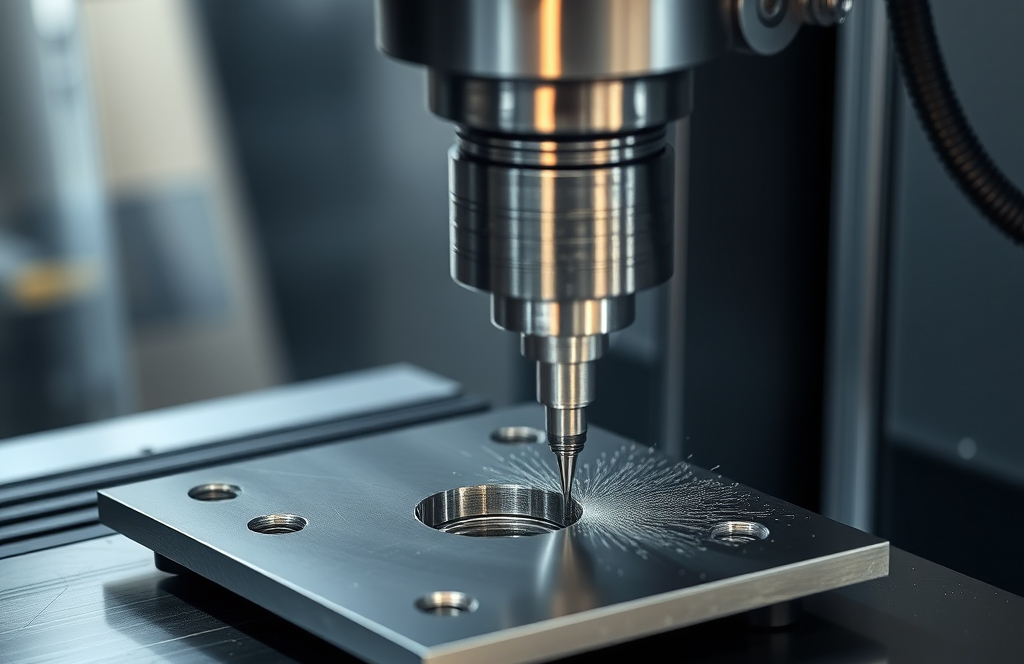
Selecting the right material for a high-precision part often comes down to subtle trade-offs. A material that machines beautifully in one application can warp or micro-crack in another simply because thermal expansion, internal stress, or surface hardness were not fully accounted for. For instance, choosing 6061 aluminum over 7075 can save cost but at the expense of stability under repeated load cycles. Engineers who ignore these nuances may find their tight tolerances drifting after only a few hundred hours of service.
Beyond basic strength and machinability, grain structure and residual stress play an outsized role. Cold-drawn stainless steel may hold a dimensional tolerance during initial cutting, but release trapped stress later during heat treatment or even light assembly. In contrast, stress-relieved alloys or carefully annealed tool steels maintain their geometry far more predictably. The difference often shows up in parts like bearing seats or optical mounts, where a few microns of movement can ruin alignment.
Surface finish and wear behavior are equally critical. A material that polishes to a mirror finish may still gall under sliding contact if the mating surface is slightly harder. Coatings and case hardening can extend life, but they introduce their own dimensional shifts. In high-precision work, the winning choice is rarely the strongest or cheapest material—it is the one whose entire processing history aligns with the part's functional demands.
Why 5-Axis Machining Isn't Just for Complex Shapes
The assumption that 5-axis machining only pays off when you're cutting twisted impellers or sculpted medical implants misses the bigger picture. While it's true that simultaneous 5-axis motion unlocks geometries impossible on 3-axis machines, the real advantage for everyday shops is often simpler: fewer setups. When you can tilt the tool or the part to reach angled holes, undercuts, or multi-sided features without refixturing, you eliminate the tolerance stack that comes from clamping, unclamping, and re-indicating. That means a bracket with a few angled bolt circles or a valve body with intersecting ports can be done in one shot, with better positional accuracy and less scrap.
Another overlooked benefit is tool life and surface finish. On a 3-axis machine, reaching a shallow draft angle or a steep wall often forces you to use long, skinny tools that chatter and deflect. With 5-axis positioning, you can keep the cutter short and stiff, engage the material at a more favorable lead angle, and maintain constant chip load. The result is less vibration, longer tool life, and a finish that needs less hand polishing. This isn't reserved for aerospace alloys; even mild steel or aluminum parts with steep walls or deep pockets see the improvement.
Finally, 5-axis simplifies your workholding. Instead of building custom fixtures for every secondary operation, you can often hold a part in a standard vise or dovetail clamp, machine five sides, and be done. This reduces fixture design time, storage clutter, and changeover between jobs. For small-batch or prototype work—where fixture cost and setup time dominate—this agility translates directly into quicker deliveries and more competitive quotes. So the next time someone tells you 5-axis is overkill for simple parts, ask them how many setups they used last week.
Surface Finishes That Survive the Worst Conditions
On offshore platforms and in chemical transfer stations, a standard coating can lose adhesion within months. Salt-laden wind, acid condensate, and constant wet-dry cycling work into micro-cracks and lift the film from the substrate. Two-part polyurea and ceramic-modified epoxy systems behave differently: they cross-link into a dense, slightly elastomeric barrier that moves with thermal expansion instead of fighting it. This gives them enough give to survive a sudden drop from 40°C to -20°C without spiderwebbing.
The harshest test sites — mine slurry lines, coastal bridge bearings, desalination intake gates — also demand resistance to high-velocity particle impact. Here, fluoropolymer topcoats earn their cost by shedding abrasive fines and reducing surface friction. A properly specced system pairs a zinc-rich primer for sacrificial protection, a high-build epoxy for barrier thickness, and a UV-stable urethane or fluoropolymer cap. Applied over a near-white blast profile, this stack typically outlasts conventional alkyd enamel by a factor of four or five, even where salt fog exposure runs past 5,000 hours.
From Prototype to Production Without Losing Your Mind
Turning a prototype into a production system often feels like herding cats while the cats are on fire. The prototype works because you ignored edge cases, hardcoded values, and skipped logging. Production punishes exactly that. The trick isn't to rewrite everything from scratch—it's to treat the gap as a series of small, boring migrations rather than one heroic overhaul. You'll keep your sanity by inventorying what the prototype actually does, then replacing each shortcut with a boring, well-tested piece before anyone notices.
One practical approach is to wrap the prototype in a thin API layer early, even if that layer just proxies calls. This gives you a seam where you can swap out fake data stores, add authentication, and introduce rate limits without touching the core logic. Monitoring and alerting should come next, but keep them dumb: log every incoming request, track response times, and alert only when a metric crosses a threshold that would have woken you up at 3 a.m. during the prototype phase. Resist the urge to add Kubernetes, microservices, or a fancy message queue just because a blog post said so.
Finally, accept that the prototype's code will embarrass you in six months, and that's fine. The goal isn't to ship a monument to perfect architecture; it's to keep the thing running while you replace the scary parts one at a time. Write plain functions, keep dependencies few, and document the three weird hacks that make the prototype fast. When a production incident inevitably happens, you'll be debugging a system you mostly understand instead of a black box you barely recognize.
Inspection Data: The Unsung Hero of Precision Machining
Most machinists treat inspection reports as afterthoughts—documents to file away once the part leaves the floor. But in precision machining, those numbers are the only honest witness to what actually happened at the cutting edge. A diameter that drifts by two microns between the first and last part tells a story no operator can see with the naked eye. Ignoring that story means shipping parts that might pass today and fail tomorrow.
What separates good shops from exceptional ones is how they use inspection data before a problem becomes a reject pile. Instead of waiting for a CMM report to reveal a trend, they pull measurements from in-process probing and surface finish checks, then compare them against tool wear curves. That lets them swap an insert at the exact moment the process starts to wander—not after it has already produced scrap. It is not about collecting more data; it is about connecting the data to the right decision.
There is also a quiet value in historical inspection records. When a customer pushes back on a dimensional issue, having a clear time-stamped trail of measurements can save a supplier relationship. More importantly, that same history helps you build a baseline for new materials or tighter tolerances. The data is not glamorous, but it is the reason precision machining can be repeated at the micron level without relying on luck.
FAQ
For most metals and engineering plastics we hold ±0.005 mm on critical dimensions, and slightly looser on deep pockets or thin walls. If a feature needs tighter than that, we usually suggest a quick design review to see if it's practical without driving up cost.
Aluminum alloys like 6061 and 7075 are common for tight tolerance work, along with 303/304 stainless, titanium, and PEEK. The right choice really depends on thermal stability and how the part will be used, so we often recommend pairing the material with the tolerance requirements early on.
Yes. We keep setups lean and reuse proven programs, so switching from one-off prototypes to runs of 50 or 100 parts doesn't change the accuracy. Small batches actually let us inspect more parts in-process rather than relying on spot checks.
We use 5-axis machines and, when needed, wire or sinker EDM to reach features that standard 3-axis tools can't. For deep cavities we pay extra attention to tool deflection and chip evacuation, which often matters more than the machine itself.
Standard options include bead blasting, anodizing, passivation, and electropolishing. We can also hold fine finishes as machined if you need a specific roughness value on sealing surfaces or bearing journals.
We run in-process probing on the machine for high-risk features, then do a full CMM inspection with a report for final parts. Every report includes the measured values against your drawing, not just a pass/fail statement.
Prototypes usually ship in 5 to 8 business days after the design is locked. Production batches can run 2 to 4 weeks depending on quantity and finishing steps. If it's urgent, we can compress the schedule by running first articles in parallel with programming.
Yes, we look at the print for areas where a small change could reduce vibration, tool wear, or setup time without loosening the tolerance. Common suggestions include adjusting internal corner radii, adding relief for threads, or splitting a complex part into two simpler pieces.
Conclusion
When precision actually matters, the difference comes down to a handful of unglamorous details. Tolerances that stay put while temperatures climb aren't a given—they're earned through toolpath discipline, thermal compensation, and a shop that understands material behavior under stress. Speaking of materials, picking the wrong alloy or polymer can undo even the most careful CAM work. A high-precision part isn't just about hitting numbers on a drawing; it's about selecting stock that will hold those numbers after heat cycles, coolant exposure, and real-world load. And while five-axis machining often gets marketed as a way to cut wild geometries, its bigger value in precision work is eliminating multiple setups. Fewer setups mean fewer chances for misalignment, which translates directly to repeatable accuracy.
Surface finish isn't cosmetic—it's the first line of defense against corrosion, fatigue, and premature wear. The right finish can mean the difference between a part that survives abrasive media or harsh chemicals and one that fails quietly in the field. Getting from a single prototype to a full production run without losing tolerances is another place where shops either shine or stumble. It requires process documentation, fixture stability, and a refusal to let "good enough" creep in. Underneath all of this sits inspection data. Not just a final report, but a continuous feedback loop that catches drift before it becomes scrap. The best CNC machining service solutions treat measurement as part of the process, not an afterthought—because precision isn't a claim, it's a record.
Contact Us
Contact Person: Joe
Email: [email protected]
Tel/WhatsApp: +8613799507208
Website: https://www.3dprotomat.com/