
Best Swiss Type Lathe: Precision Engineering for Complex Parts
2026-07-30
Swiss type lathes have long been the go-to solution for manufacturing intricate, high-precision components. But not all machines are created equal—when the demand for complex parts meets uncompromising accuracy, WINNRUI CNC redefines what's possible. Dive into our latest insights to see how the right Swiss lathe can transform your toughest projects into flawless realities.
Unmatched Precision for Micro-Machining
In the realm of micro-machining, the difference between success and scrap often comes down to sub-micron tolerances. Our advanced spindle systems and vibration-dampening architectures are engineered to hold positional accuracy even under the most demanding, high-speed toolpaths. Every cut, every pass, and every detail is executed with a level of repeatability that sets new standards—whether you're fabricating complex medical implants or intricate mold cavities.
What truly sets our approach apart is the seamless integration of real-time thermal compensation and adaptive feedback loops. Minute temperature shifts and material inconsistencies are instantly neutralized, allowing you to maintain flawless surface finishes without constant operator intervention. The result is a machining process that feels less like brute-force removal and more like sculpting with light—precise, predictable, and remarkably clean.
This precision isn’t just a specification on a datasheet; it’s a capability that unlocks geometries previously thought unproducible. From sharp internal corners to ultra-thin walls, our systems turn ambitious designs into tangible parts while dramatically reducing post-processing. You gain not only tighter tolerances but also faster cycle times and a confidence that every component will meet your most exacting standards.
Streamlining Complex Part Production
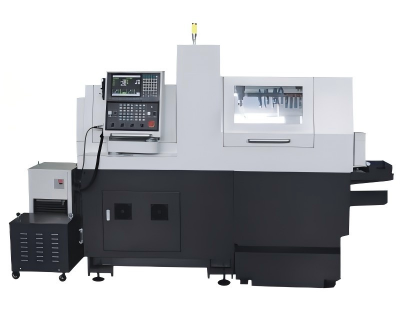
Manufacturing intricate components often involves a tangle of separate processes, each with its own lead times and quality pitfalls. Traditional workflows force designers to translate complex geometries into a series of simplified steps, which can dilute the original intent and introduce errors. Instead of fighting these constraints, forward-thinking teams are rethinking how a part goes from concept to physical reality, focusing on the critical path that directly shapes the final outcome.
By merging design and production into a continuous digital thread, the friction between iterations practically disappears. Advanced fabrication techniques allow for internal lattices, organic surfaces, and consolidated assemblies that would be impossible with conventional methods. The real shift happens when engineers stop compromising on geometry to fit a machine’s limitations and start letting the desired performance dictate the manufacturing strategy.
Speed comes not from rushing individual tasks, but from eliminating the back-and-forth that usually plagues complex projects. When prototypes are produced on the same equipment as final parts, the feedback loop tightens dramatically. This frees up bandwidth to refine details that genuinely affect functionality—like weight distribution, fluid flow, or thermal behavior—without the drag of tooling revisions or lengthy setup changes.
The Swiss Advantage in Multi-Axis Machining
Multi-axis machining demands precision that goes beyond standard tolerances, and Swiss-style lathes bring a distinct edge to this challenge. Their sliding headstock design, combined with a guide bushing, provides unmatched support for long, slender parts right at the point of cut. This setup virtually eliminates deflection and vibration, allowing for aggressive cuts and fine finishes in a single setup—something fixed-headstock machines struggle to achieve consistently. The result is not just tighter tolerances, but a fundamentally more stable process that lets manufacturers confidently tackle complex geometries with fewer interruptions.
Where traditional CNC lathes often require multiple operations to complete a part, Swiss machines shine by integrating secondary processes like milling, drilling, and even gear hobbing without re-fixturing. This consolidation slashes cycle times and human error, but the real advantage lies in how it preserves part integrity. Every operation references the same datum, so features align perfectly—no cumulative errors from chuck swaps. Add in the ability to hold tools from both the main and sub-spindle simultaneously, and you get a machine that thinks in entire workflows rather than isolated steps. It's this holistic approach that transforms complex part production from a logistical puzzle into a streamlined, repeatable system.
Beyond the mechanics, there's a mindset embedded in Swiss machining that elevates it for multi-axis work: a relentless focus on chip control and coolant delivery. Tiny cutting zones demand that chips clear efficiently to prevent re-cutting and tool damage, and high-pressure coolant through the tool isn't just an option—it's standard practice. This attention to the micro-details ensures tool life remains predictable and surfaces come out pristine, even in tough materials like Inconel or titanium. When you combine that discipline with simultaneous 5-axis capabilities, the result is a process that not only meets specs but consistently expands what's possible in precision manufacturing.
Achieving Tight Tolerances with Ease
In precision manufacturing, hitting exact specifications often feels like a balancing act between perfection and practicality. The secret lies not in obsessing over the final measurement, but in building stability into every step of the process. When machines are properly calibrated and thermal compensation is treated as a standard practice rather than an afterthought, tolerance bands naturally tighten.
Material behavior plays a surprisingly human role in this equation. Metals expand, composites shift, and even seasoned machinists sometimes forget that yesterday's perfect setup might need a tweak today because the shop temperature drifted overnight. By reading the subtle signs—like chip formation or subtle changes in spindle load—and making micro adjustments before deviations appear, teams cut scrap rates without slowing down production.
The real breakthrough comes when quality assurance stops being a checkpoint and becomes part of the workflow. In-process probing, automated offset updates, and statistical process control quietly shoulder the burden that used to fall on operator vigilance. It's not about working harder to meet tight tolerances; it's about designing a system where holding a few microns feels as routine as pressing cycle start.
Material Versatility: From Exotics to Standard
The range of materials available today feels almost limitless, stretching from rare, high-performance exotics to everyday standards that form the backbone of manufacturing. This breadth isn't just about ticking boxes on a spec sheet—it's about giving creators the freedom to match a material's character to the soul of their project, whether that means pushing boundaries with a superalloy or leaning on the trusted predictability of mild steel.
On one end, exotic materials like titanium, Inconel, and carbon fiber composites bring extraordinary strength-to-weight ratios, corrosion resistance, or thermal stability to the table—qualities that turn ambitious ideas into flight-ready components or life-saving medical devices. At the other end, standard materials such as aluminum, stainless steel, and ABS plastic offer a proven track record, cost-efficiency, and ease of sourcing, making them the unsung heroes of reliable, repeatable production runs.
This spectrum transforms the design process from a narrow path into a wide-open landscape. Engineers can pivot from a specialty alloy for a one-off prototype to a commodity-grade polymer for mass production without compromising the vision, and that flexibility is what turns a good product into a great one—precisely because the right material, exotic or standard, is always within reach.
Automation and Efficiency in Small Parts Manufacturing
In small parts manufacturing, automation has quietly transformed how tiny components are produced, often without the fanfare given to larger-scale industries. Robotic arms now handle minuscule screws and connectors with a precision that human hands would struggle to match, reducing both waste and cycle times. Rather than replacing workers, these systems tend to take over repetitive tasks like sorting, deburring, or inspection, freeing up skilled operators to focus on more complex problem-solving. The result is a floor where machines hum steadily, but the real efficiency gain lies in the consistency—every piece meets tolerances that were once aspirational.
The shift toward more automated processes also means rethinking how factories manage data. Sensors embedded in CNC machines and pick-and-place units feed information into lightweight monitoring dashboards, giving production leads a live view of output rates and tool wear. This isn’t about generating meaningless reports; it’s about catching a dull cutter before it scratches a batch of parts, or noticing that a feeder is vibrating slightly off rhythm. When those small adjustments happen in real time, the whole operation begins to feel less like a series of disconnected steps and more like a synchronized loop.
Perhaps the most understated advantage is flexibility. Modern automated cells can be reprogrammed for different part families within a single shift, allowing manufacturers to handle short runs without the lengthy changeovers that used to kill profitability. This adaptability, combined with collaborative robots that work safely alongside people, means that even specialized suppliers can compete on both speed and cost. In an industry where margins are tight and customers expect perfection, automation isn’t just a fancy upgrade—it’s becoming the quiet backbone of daily survival.
FAQ
A Swiss type lathe uses a sliding headstock and guide bushing that supports the workpiece close to the cutting tool, drastically reducing deflection and enabling ultra-precise machining of long, slender parts.
Their ability to machine tiny, intricate features with tight tolerances in a single setup, combined with simultaneous back-working capabilities, makes them ideal for producing complex medical parts efficiently and reliably.
Industries such as medical device manufacturing, aerospace, automotive fuel systems, and high-end watchmaking benefit greatly due to their need for miniature, high-precision components often made from challenging materials.
The sub-spindle allows for automated back-working operations like drilling, tapping, and deburring on the rear side of the part without manual handling, significantly increasing throughput and precision for complex geometries.
The guide bushing supports the bar stock immediately next to the cutting action, minimizing vibration and deflection, which results in superior surface finishes and the ability to hold extremely tight dimensional tolerances.
Swiss lathes handle a wide range, including stainless steels, titanium, cobalt-chrome alloys, aluminum, brass, and engineered plastics, often without sacrificing precision or surface integrity.
Modern Swiss type lathes are highly versatile, equipped with live tooling for milling, drilling, slotting, and gear hobbing, effectively combining turning and multi-axis machining in one cycle.
Conclusion
The hallmark of a truly standout Swiss type lathe lies in its ability to deliver unmatched precision for micro-machining without sacrificing speed. These machines are built to streamline complex part production, leveraging the inherent Swiss advantage of guide bushing support that keeps even the slenderest workpieces rigid during multi-axis operations. This translates into effortlessly achieving tight tolerances on intricate medical, aerospace, and electronics components where deviation is unacceptable. The synchronous multi-axis capability allows simultaneous back-working and secondary operations, effectively condensing entire production sequences into a single setup, which reduces cycle times and eliminates stack-up errors inherent in multiple fixturing.
Beyond sheer precision, modern Swiss lathes excel in material versatility, confidently cutting everything from high-temperature exotics like Inconel and titanium to free-machining brass and aluminum, all while maintaining surface finish integrity. This adaptability is paired with intelligent automation features—bar feeders, tool monitoring, and high-pressure coolant systems—that enable lights-out manufacturing for small parts in high volumes. The result is an efficient, self-contained production cell where complex geometries are realized quickly, scrap is minimized, and floor space is optimized. For shops navigating the demands of today’s high-mix, low-volume landscape, such a machine redefines what’s possible in precision engineering.
Contact Us
Contact Person: Tim
Email: [email protected]
Tel/WhatsApp: +86 15522553731
Website: https://www.winnrui-cnc.com/