
China Flour Processing Machinery Innovations Driving Global Milling Efficiency
2026-10-07
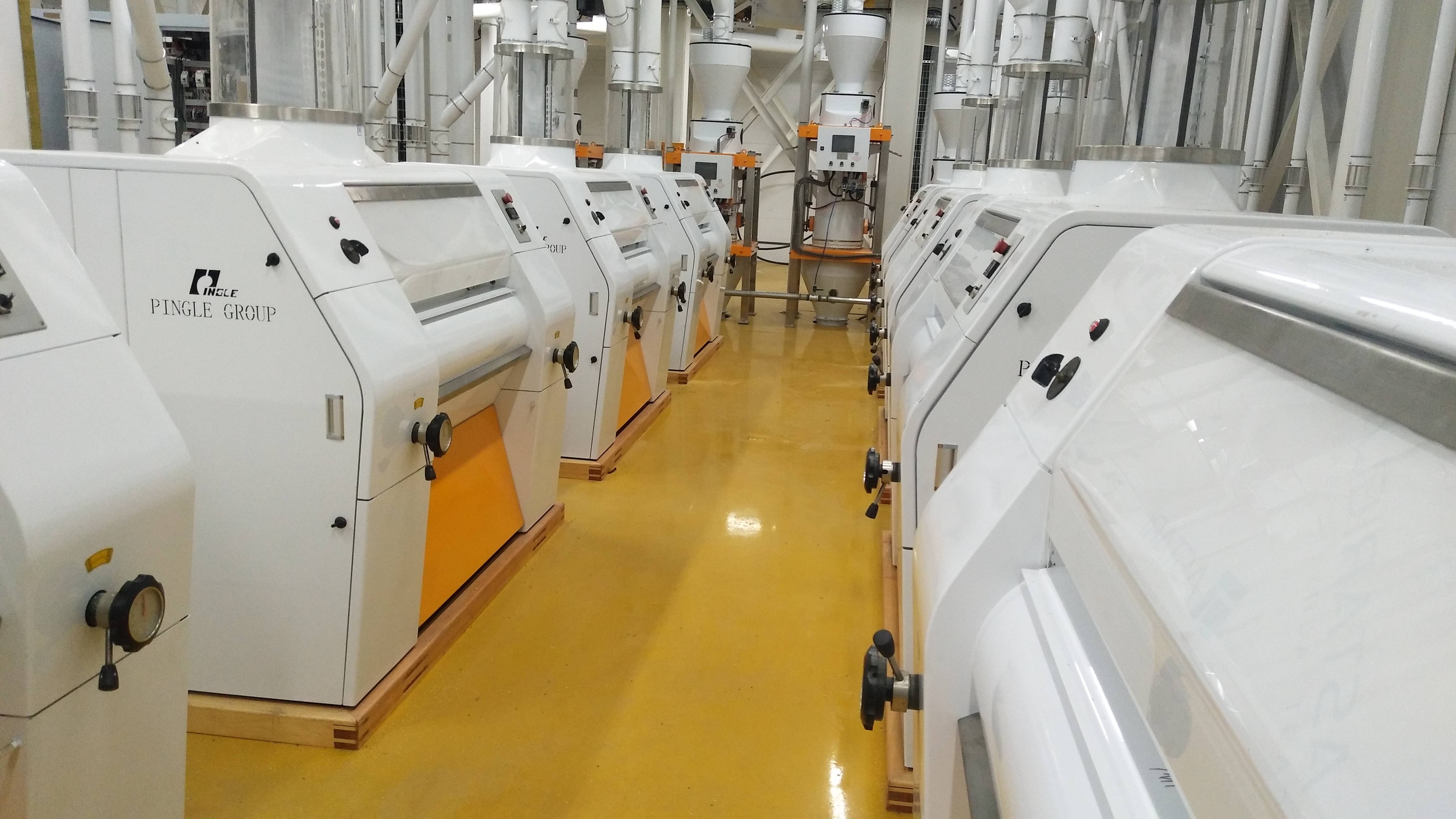
Across the world, flour millers are under constant pressure to boost throughput while cutting energy use and maintaining consistent quality. In recent years, China's flour processing machinery sector has risen to that challenge with a wave of engineering breakthroughs—smarter automation, precision roller mills, and energy-saving sifting systems. At the heart of this shift is PINGLE, a brand that has been quietly redefining what modern milling lines can achieve. This post explores the key innovations driving global milling efficiency and why PINGLE's approach is turning heads far beyond China's borders.
Direct-Drive Rollers Are Rewriting Maintenance Schedules in Chinese Mills
For years, mill floors across China ran on a familiar rhythm: scheduled downtime every few weeks, grease guns at the ready, and a maintenance log that read like a countdown to the next bearing failure. The shift toward direct-drive rollers has changed that cadence almost overnight. By eliminating the gearbox, belts, and couplings that once sat between motor and drum, these systems remove the very parts that demanded constant attention. What used to be a half-day shutdown for lubrication and alignment now happens once a quarter—or in some plants, not at all.
Operators on the ground notice the difference in more than just the calendar. A direct-drive roller runs with less vibration and no chattering backlash from worn gears, which means the whole conveyor line stays straighter and quieter. One maintenance supervisor in Shandong put it bluntly: “We used to keep spare gear oil by the barrel. Now I can’t remember the last time we opened a gearbox, because there isn’t one.” That kind of change doesn’t just save labor hours—it rewires how a crew plans its week, shifting focus from emergency fixes to actual process improvements.
The real payoff, though, shows up in the plant’s uptime numbers. Mills that once accepted two or three unplanned stops per month as normal are now running six, eight, even twelve weeks without touching a roller. With fewer rotating components to inspect and no belts to track or tension, the failure points drop dramatically. And because direct-drive motors often come with built-in status monitoring, crews can see bearing temperature and load data from a screen instead of walking the line with an infrared gun. In an industry where every hour of downtime hits the bottom line hard, rewriting the maintenance schedule isn’t just a convenience—it’s a quiet competitive edge.
Modular Cleaning Sections That Swap In Without Halting the Line
Traditional bottling and canning lines often require a full stop whenever a different container size or product residue profile enters the schedule. Modular cleaning sections eliminate that bottleneck by treating each sanitation stage as a self-contained cartridge that can be pulled, recalibrated, or replaced while the rest of the line keeps moving. A brewery switching from 12-ounce cans to 750-milliliter bottles no longer waits for a complete rinse-and-sterilize cycle. Instead, the twist-rinse module slides out, a neck-focused spray block clicks into its rail, and the conveyor maintains its cadence. Maintenance teams appreciate the approach because a struggling filter or a worn brush array can be serviced offline without triggering a cascade of upstream starvation or downstream pile-ups.
The real advantage shows up in mixed-pack operations where two product families share the same conveyor. Rather than dedicating separate lines for dairy-based drinks and acidic juices, a plant can run a common backbone and rotate cleaning cartridges at scheduled intervals. Each module carries its own fluid manifold, quick-disconnect fittings, and sensor package, so the line controller recognizes the swap and adjusts spray pressure or drying time automatically. This keeps changeover windows under ten minutes in many facilities—a figure that used to require a full afternoon of manual scrubbing and re-validation. Operators like the fact that the modules are color-coded and keyed, which prevents a high-pH rinse from being accidentally installed where a low-foam sanitizer belongs.
Maintenance is simplified further by off-the-shelf compatibility. Because the modules use standard mounting rails and common pneumatic or electric interfaces, a facility can stock spare sections without committing to a single vendor's proprietary wash architecture. That flexibility extends to capacity planning: when a new product line requires an extra final rinse or an ultraviolet pass, engineers simply add another module bay and slide in the appropriate section. The line never needs to be re-timed from scratch, and the existing clean-in-place loops remain untouched. For plants that face seasonal surges or frequent recipe changes, this swap-in philosophy turns sanitation from a scheduled interruption into a routine, almost invisible, part of the shift.
The Quiet Spread of Energy Recovery Loops Through Pneumatic Systems
On factory floors, a subtle shift is underway. Energy recovery loops—once confined to niche research—are finding their way into standard pneumatic circuits. These loops capture compressed air that would otherwise be exhausted and feed it back into the system, trimming electric demand without altering the rhythm of production.
The appeal lies in simplicity. A well-designed loop can reuse a portion of the exhaust stroke from one cylinder to pre-fill another, or route it to a storage reservoir. No new energy source is required; the system simply stops throwing away work it has already paid for. Engineers note that even modest recovery rates, around 20 to 30 percent, compound into meaningful savings on multi-shift lines.
Adoption has been quiet because the components don't look revolutionary. Valves, accumulators, and tubing are arranged with minor changes to manifold logic. Yet in sectors like automotive assembly and packaging, maintenance teams are beginning to treat exhaust not as waste, but as a resource. As compressed air remains one of industry's most expensive utilities, this quietly spreading practice may soon become standard.
Why Real-Time Ash Sensing Is Moving from Lab to Mill Floor
Ash content used to be a lab-only number because the muffle furnace method took hours and arrived too late to change what was already milled. Portable near-infrared and X-ray fluorescence units have changed that. They scan whole kernels or mill streams in seconds, which makes the old once-a-shift lab result feel almost historical when operators are trying to hold a tight spec on a live line.
Putting sensors directly on the mill floor closes the loop between detection and action. An operator can see bran carryover or a shift in flour purity as it happens, then adjust roll gaps, purifier settings, or wheat blend on the spot. That removes the usual wait-and-hope pattern, cuts rework, and keeps the mill running closer to target without holding silos for a lab number.
Cost pressure and tighter customer specs are pushing the same direction. When a shipment fails an ash test after the fact, the loss is already baked in. Real-time ash sensing turns a delayed lab metric into a continuous process variable, and that is why mills are adding sensors at multiple points instead of relying on a single end-of-line check.
Compact High-Capacity Plansifters Built for Tight Retrofit Windows
Retrofitting a legacy mill often means wrestling with doorways too narrow for standard equipment, floor-to-floor heights that leave barely enough headroom for a sifter, and production targets that don't forgive downtime. The newest compact plansifters are built exactly for that scenario: a footprint up to 40% smaller than conventional machines, yet they push through the same—or higher—throughput by stacking sieve decks vertically and using high-efficiency drive systems that waste less energy as heat.
What sets these units apart isn't just a shorter chassis. Manufacturers have reworked the internal flow path so product enters and exits from the same side, eliminating the need for extra ducting in cramped corners. The sieve frames slide out on telescoping rails, so routine screen changes happen in minutes without unbolting the entire stack. And because they're designed around standard flange patterns, they drop into an existing mill's pneumatic conveying lines without a full pipe rework.
For plants where every square meter of floor space is accounted for, that combination—small outer dimensions, high sifting capacity, and a gentler learning curve for maintenance teams—makes the compact high-capacity plansifter less of an equipment upgrade and more of a way to keep aging mills profitable while they wait for a larger expansion.
How Chinese Manufacturers Are Exporting Uptime, Not Just Equipment
For decades, the story of Chinese manufacturing exports was one of metal, motors, and circuit boards shipped in bulk. But a quieter shift is underway: the most valuable thing leaving Chinese ports is no longer just the machine itself, but the promise that it will keep running. This is the export of uptime—a bundle of remote diagnostics, predictive maintenance algorithms, and spare-part logistics that turns a one-time hardware sale into a continuous service relationship.
In practice, this means a factory in Vietnam buying a Chinese CNC lathe now gets more than a crate. It receives real-time vibration sensors feeding data back to engineers in Shenzhen, who can flag a bearing failure two weeks before it happens. The contract often includes a guaranteed operational availability percentage—say 98.5%—with penalties if the machine sits idle. This shifts the manufacturer's incentive from selling replacements to preventing downtime, a model borrowed from aviation but now applied to textile looms and injection-molding machines.
The result is a form of industrial soft power. Chinese firms are not undercutting rivals on price alone; they are out-servicing them. Buyers in emerging markets, who once viewed imported machinery as a risky capital expense, increasingly see it as a subscription to productivity. And as these uptime guarantees scale across entire production lines, the equipment itself becomes almost secondary—a physical anchor for a stream of data, expertise, and reliability that travels far beyond the factory floor.
FAQ
Optical sorters with higher resolution cameras, automated roller gap adjustment based on real-time particle size feedback, and energy-recovering pneumatic conveying systems are some of the notable upgrades. Several mills also report better extraction rates after switching to laser-engraved rolls designed to maintain sharpness longer under high loads.
Many newer lines use variable frequency drives that match motor speed to the actual load, so equipment isn't running at full power during low-demand periods. Air recirculation systems in the purifiers and improved sifter balancing also cut down wasted motion, which reduces kilowatt-hours per ton of wheat processed.
The main draws are shorter lead times, more flexible customization for regional wheat types, and competitive pricing that still includes features like stainless steel contact parts and centralized dust collection. Chinese suppliers have also gotten better at on-site commissioning support, which used to be a weak point.
Automation is no longer just about central control panels. Mills now use in-line moisture sensors, automatic bran and germ separation adjustments, and recipe-based operation that lets operators switch between flour grades without stopping the line. Touchscreen interfaces with remote access have become standard on mid-range and high-capacity plants.
Yes. Integrated near-infrared analyzers track protein, ash, and moisture continuously, and the control system adjusts tempering time and roll pressure accordingly. This means a mill can shift from hard red winter wheat to soft white wheat in a few hours while keeping the extraction rate and flour color within tight tolerances.
Most major manufacturers now offer modular spare part kits matched to the specific machine serial numbers, and some have regional warehouses in Africa, Southeast Asia, and Latin America. Remote troubleshooting via secure video link is common, and several companies provide training for local technicians at no extra charge during the first year.
Smaller mills benefit from compact, pre-assembled units that can be installed in a few weeks rather than months. The reduced energy and water use directly lower operating costs, which helps them compete with larger industrial mills. Payback periods on these smaller Chinese lines often fall between eighteen and thirty months.
Expect more predictive maintenance powered by machine learning, where vibration and temperature data flag problems before they cause downtime. There is also growing interest in dry cleaning systems that use less water, and in modular expansion designs that let a mill increase capacity from 60 to 150 tons per day without replacing the entire sifting section.
Conclusion
Across China’s flour milling sector, direct-drive rollers are quietly eliminating the gearbox failures that once dictated rigid maintenance calendars. Instead of shutting down for scheduled teardowns, mill operators now monitor bearing temperatures and vibration signatures in real time, swapping components only when data signals wear. This shift from fixed intervals to condition-based care cut unplanned stops at several Shandong plants by double digits within a year, freeing technicians to focus on line-wide improvements rather than repetitive lubrication rounds.
Meanwhile, modular cleaning sections are being designed to slide out on rails without depressurizing the pneumatic network—a trick that slashes changeover time from hours to minutes. Combined with energy recovery loops that capture exhaust heat from air compressors and feed it back into tempering bins, Chinese mills are squeezing more tonnes per kilowatt than ever. Real-time ash sensors, once confined to lab benches, now clamp onto process streams and adjust roll gaps automatically, keeping flour spec tight despite raw wheat variability. Compact high-capacity plansifters fit into narrow retrofit gaps, letting older lines match modern throughput. The result is not just cheaper machines leaving Chinese ports, but a full uptime playbook: installation teams train local crews on predictive maintenance, remote diagnostics, and modular retrofits, so buyers inherit the same operational resilience that keeps Chinese mills running through harvest spikes and power dips alike.
Contact Us
Contact Person: Jiakuo Wu
Email: [email protected]
Tel/WhatsApp: +86-13011566087
Website: https://www.pinglemachine.com