
China Hook Type Shot Blasting Machine Exporter You Can Rely On for Superior Finishing
2026-09-14
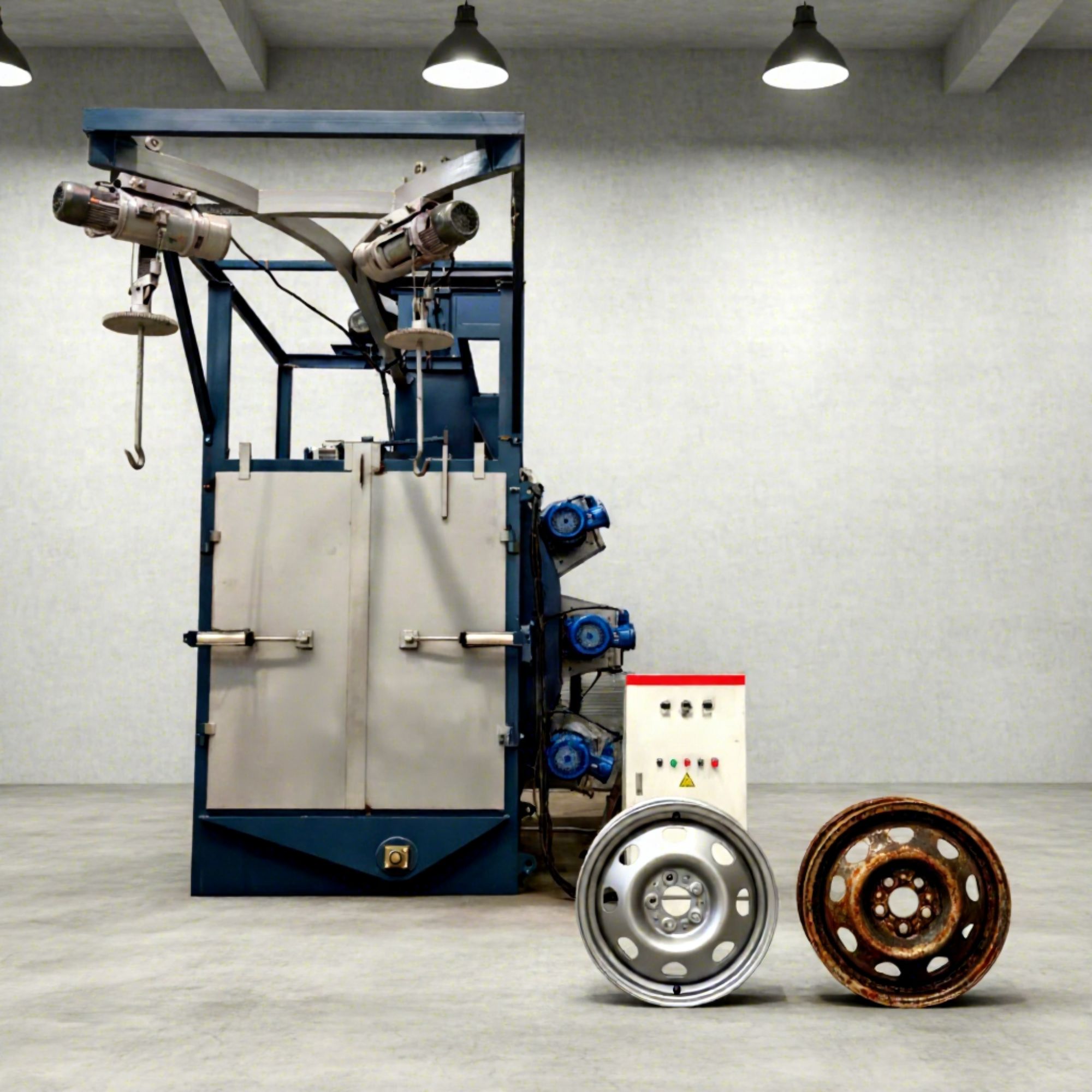
When surface finishing quality can make or break your production line, settling for less isn't an option. PuHua, a leading China hook type shot blasting machine exporter, has spent years perfecting equipment that delivers superior results without the guesswork. In this post, we'll explore what sets their machines apart and why so many manufacturers rely on them.
Why Hook Type Machines Outperform Wheel Blast Systems on Complex Parts
Hook type machines suspend parts individually from rotating hooks, so each workpiece travels through the blast stream without rubbing against its neighbors. That simple change eliminates the dents, edge rounding, and abrasive entrapment that typically occur when complex parts tumble together in a conventional wheel blast drum. Intricate castings, welded assemblies, and components with protruding bosses or delicate threads stay stable, and the operator does not have to sort out media lodged in blind holes after the cycle ends.
The real advantage comes from how the blast wheels can be aimed. On a hook machine, two or more wheels are usually mounted at different angles around the cabinet, letting the abrasive reach deep pockets, internal passages, and the underside of flanges. As the hook rotates continuously, every face of the part passes through the hot zone at the same speed, which reduces shadowing and keeps thin sections from being over-blasted. Table and tumble systems struggle here because the part rests on a surface or rolls against others, blocking access to exactly the areas that need cleaning or profiling.
Custom fixturing adds another layer of control for irregular profiles. A hook can hold a gearbox housing, a hydraulic manifold, or a fabricated bracket in a fixed orientation, while the rotation speed and blast duration are tuned to the part’s geometry. That flexibility means one hook type machine handles a broad mix of complex parts without tooling changes between every job, whereas wheel blast systems built around a rotating barrel or a fixed table often force a compromise between coverage and part damage.
A Closer Look at the Abrasive Flow Inside the Chamber
In a typical abrasive flow setup, the chamber becomes a confined conduit where a viscoelastic carrier loaded with hard particles is forced through restrictions and cavities. Pressure gradients between the inlet and outlet push the media forward, but the actual cutting action depends on how the abrasive grains interact with the wall. Near sharp edges and narrow passages, flow accelerates and the shear rate rises, causing more frequent grain contact and localised material removal. By contrast, wide open zones may see lower velocities and less aggressive abrasion, which is why fixtures often include removable inserts to redirect or choke the flow where stock removal is needed most.
Particle concentration and media stiffness also shape the outcome. A thicker carrier can maintain abrasive suspension longer, but it may resist squeezing through tight corners. Finer grains tend to follow the streamlines more closely, polishing surfaces without dramatically changing geometry, whereas coarser grit creates deeper scratches and rounds edges faster. Operators adjust pressure, cycle count, and sometimes temperature to keep viscosity stable, since even a small shift in flow behaviour can alter where the abrasive spends its time inside the chamber.
How We Match Machine Size to Your Daily Throughput
Rather than asking for a single hourly rate, we start with your actual daily total — including peak orders, slower shifts, and any regular downtime for cleaning or changeovers. From there, we work backwards to figure out the real operating window a machine needs to cover, not just a theoretical maximum.
Daily throughput rarely spreads evenly across eight or ten hours. We look at your busiest blocks, the quiet gaps, and how much buffer you want for unexpected rushes. Then we size the machine so it runs comfortably in the 70–85% capacity band during normal days, leaving headroom for spikes without forcing you into a much bigger, costlier model.
That practical fit also accounts for material handling, operator breaks, and occasional minor stops that eat into effective output. If you tell us your target daily volume, we can often narrow the options to one or two machine sizes — each with a clear note on how future growth of 10–20% would affect performance, so you choose based on real production habits instead of guesswork.
Export Documentation and Packaging That Avoid Customs Delays
Getting export paperwork right isn’t just about ticking boxes. A missing certificate of origin, an incomplete commercial invoice, or inconsistent harmonized system codes can hold a shipment at the border for days. The simplest way to keep goods moving is to treat documentation as part of the product itself—review it against the destination country’s requirements before the cargo is packed, not after.
Packaging choices matter just as much as paperwork. Customs officers often flag shipments with unmarked or poorly labeled pallets, especially when wood packaging lacks the required ISPM-15 treatment stamp. Use durable, clearly printed labels with exact product descriptions and quantities, and avoid vague terms like “miscellaneous parts.” When the paperwork matches the physical package down to the last detail, clearance tends to be routine rather than a costly exception.
Field Reports from Foundries Using Our Hook Type Units
A ductile iron plant in northern Indiana put our hook type units on their mold handling loop about eight months ago. The previous setup used a set of C-hooks that had to be reshanked twice a year due to wear at the pivot. Since the switch, the only attention those units have needed is a weekly visual check. One operator on the night shift said the hooks don't chatter the way the old ones did when a mold line slowed down, which makes the whole floor quieter.
Down in Alabama, a steel foundry ran a side-by-side comparison for a full quarter between our hook type units and their standard J-hooks on the same cleaning room conveyor. The report from their maintenance lead listed zero unplanned stops on our units versus eleven on the legacy hooks, most of them from jammed links. They ended up standardizing on our units for all three shifts and have since ordered a second batch for the riser knock-off station.
A smaller bronze foundry in Pennsylvania mentioned that the hook profile made a difference on their flask transfer car. The old hooks would occasionally catch the flask trunnions when the car indexed, bending the hook tips. Our design keeps the load pocket deeper, so the trunnions settle in without hanging up. Their plant manager now keeps a set of our hooks on the shelf as spares, which tells you more than any spec sheet.
Maintenance Schedules That Prevent Downtime Before It Starts
The most effective maintenance schedules rarely follow a fixed calendar. Instead, they respond to actual equipment condition. A pump that runs eight hours a day in a clean environment wears differently than an identical unit running twenty-four hours in dust. When you schedule oil changes or bearing replacements purely by date, you're guessing. Some components get serviced too early, wasting money and risking new-part defects. Others get serviced too late, after small problems have already grown into failures. Shifting to condition-based triggers—like vibration signatures, temperature trends, or particle counts in lubricants—turns maintenance from a ritual into a decision.
Vibration analysis is one of the most reliable early warning systems. A healthy rotating machine produces a stable, low-amplitude frequency pattern. When a bearing starts to spall or an imbalance develops, that pattern shifts long before a human ear can hear it. Thermal imaging works similarly for electrical connections and motor windings; a hot spot that runs ten degrees above the surrounding panel often signals a loose lug or degrading insulation. Oil analysis goes deeper: wear metals, water content, and viscosity changes reveal internal friction that no external inspection can see. The key is to set thresholds that match your specific equipment history—not generic industry defaults—so alerts arrive when action is genuinely needed.
None of this works well if maintenance teams are overwhelmed by false alarms or buried in paperwork. The best programs pair condition-monitoring data with a CMMS that automatically opens a work order when a measured value crosses a pre-set limit. This closes the loop between detection and action without waiting for a weekly meeting or a manager's approval. It also creates a feedback loop: every completed work order includes notes on what was found, which refines the thresholds for next time. Over a year or two, the schedule becomes less about predicting the future and more about listening to the equipment. That's what prevents downtime before it starts—not a prettier spreadsheet, but a system that learns.
FAQ
It's mainly used for cleaning, descaling, and surface preparation of metal parts that can be hung on hooks or fixtures. Think of castings, forgings, welded structures, or even heat-treated components that need a uniform blasted finish without getting damaged in a tumbling action.
The hook rotates inside the blasting chamber while multiple high-powered turbines throw abrasive from different angles. That rotation ensures every exposed surface gets hit evenly. You avoid the part-to-part contact you'd get in a tumble blast machine, so complex shapes keep their edges and critical dimensions intact.
Chinese manufacturers have invested heavily in shot blasting technology over the past decade, so you get modern designs, solid build quality, and very competitive pricing. The key is finding an exporter that actually understands your application instead of just pushing a standard model. Look for one with real technical support and spare parts availability, not just a low upfront quote.
We use wear-resistant manganese steel for the blast chamber lining and direct-drive turbines with fewer moving parts to reduce downtime. The hook spindle and bearing assembly are oversized for the rated load, and the abrasive recycling system includes a multi-stage air wash separator to keep dust and broken media out of the circuit. That combination holds up well in foundries and forge shops running multiple shifts.
Yes, and that's where proper setup matters more than the machine itself. We adjust turbine speed, abrasive type, and blast duration based on the part geometry. For example, using steel shot instead of grit gives a peening effect that's gentler on machined areas. We usually run test samples first to lock in the right parameters before full production.
You can consistently achieve a surface cleanliness of Sa 2.5 or better, with a roughness profile between 40 and 75 microns depending on the abrasive mix. That range gives coatings excellent adhesion without over-roughening the substrate. We also tune the abrasive flow to avoid embedding particles into softer metals like aluminum.
We provide complete foundation drawings, electrical schematics, and a detailed commissioning checklist. Remote video guidance is available during installation, and for larger projects we can send an engineer to your site. Spare parts like blades, impellers, and liners are kept in stock and can be shipped by air if you have an urgent breakdown.
Look beyond the price tag. Ask about the turbine brand and its service life, the thickness of the chamber lining, whether the abrasive separator is air wash or simple screen type, and what kind of dust collector is included. Also check if they offer sample testing and how responsive they are with technical questions. A good exporter will ask about your part size, production rate, and current surface condition before even quoting.
Conclusion
When finishing intricate castings or welded assemblies, hook type shot blasting machines consistently deliver cleaner results than conventional wheel blast systems. The parts hang from rotating hooks, so every hidden recess gets hit by abrasive from multiple angles, while wheel systems often leave shadowed areas. Inside the chamber, the abrasive flow is directed to create a rolling, tumbling motion across surfaces rather than just blasting from a fixed line. That makes a real difference on parts with deep pockets, threads, or complex geometry. As a China-based exporter, we don't just ship a standard model—we calculate your daily throughput, maximum part envelope, and cycle time to recommend the right chamber size, hook capacity, and blast wheel power. Before the machine ever reaches your dock, export documentation and packaging are handled with care: rust preventative coatings, sea-worthy crating, and full commercial invoices with correct HS codes all help your shipment clear customs without extra storage fees or inspection delays.
Foundries that run our hook type units report fewer rework hours because the finish is more uniform across each load. Instead of rotating parts manually or blasting twice, operators can load once and let the hook indexing handle the sequencing. That translates directly into more finished parts per shift. On the maintenance side, we provide schedules tied to actual hours of abrasive consumption and dust collector pressure drop, not generic calendar intervals. Checking wear plates, adjusting the abrasive metering valve, and inspecting hook bearings before they reach failure points keeps the system running between planned shutdowns. This approach removes much of the guesswork from shot blasting economics. The result is a machine that stays productive longer, costs less to run per ton, and produces surfaces ready for coating, painting, or further machining. That is why manufacturers looking for a reliable exporter of hook type shot blasting equipment keep coming back to us for their finishing lines.
Contact Us
Contact Person: Bruce
Email: [email protected]
Tel/WhatsApp: +86 15166629468
Website: https://www.povalchina.com/