
Chinese Waterproof Cap: Your Essential Guide to Dry Comfort in Any Weather
2026-09-20
A sudden downpour can turn a good day soggy in seconds—but the right cap keeps your head dry and your plans intact. Chinese waterproof caps have quietly become a favorite among commuters and outdoor lovers, blending lightweight comfort with serious rain protection. In this guide, we skip the hype and focus on what matters: sealed seams, breathable fabrics, and a fit that actually stays put. Whether you're cycling through drizzle or hiking in mist, 4ugear has you covered—literally. Let's find your everyday shield against wet weather.
The Brim Shape That Keeps Rain Off Your Glasses
Most brims fail spectacle wearers because they shed water straight down the lens line. A curved, slightly downturned front edge pushes droplets outward before they reach your frames. The trick is enough slope to direct runoff sideways, but not so much that the brim collapses in a downpour.
Look for a brim with a subtle gutter or rolled edge at the sides. That channel catches rain sliding off the crown and sends it around your temples instead of into your eyebrows. Hats with a wider front projection—around three inches—give the runoff a longer path to lose momentum before it can drip onto your glasses.
Stiffness matters as much as shape. A brim that flexes under rain weight creates a low point that funnels water exactly where you don’t want it. A firm, laminated brim holds its curve and keeps the drip line beyond your lenses, even when you tilt your head to check traffic or read a sign.
Why Seam Sealing Makes or Breaks a Waterproof Cap
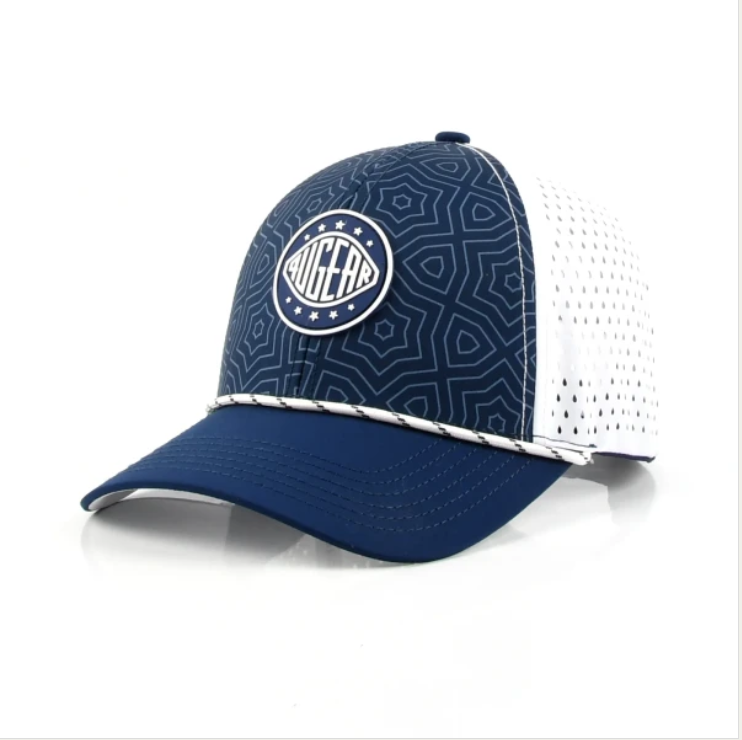
On a waterproof cap, the fabric may be fully impermeable, but every needle puncture from stitching creates a direct path for water. Thread can also wick moisture through the hole. Without seam sealing, a cap leaks at the seams long before the membrane fails. Seam tape or liquid sealant is applied over the stitch lines to close those tiny gaps and stop capillary action. This single step often separates a genuinely weather-ready cap from one that only looks waterproof.
The quality of the seal matters as much as its presence. A thin, poorly bonded tape can lift after repeated flexing or washing, exposing the original stitch holes again. Heat-applied tapes need consistent temperature and pressure to form a durable bond with the fabric's inner face; cold or uneven application leaves bubbles and weak edges. For curved brim and crown seams, the tape must follow compound curves without wrinkling, or it becomes a new leak channel. In high-stress areas around the sweatband or adjuster, a flexible sealant that moves with the fabric often outperforms a stiff tape.
A failed seam seal is worse than a subtle leak because it tends to be hidden behind the lining or under the brim tape until the cap is already soaked. Once water gets through a seam, it spreads along the thread and wets a large area quickly. That is why field-testing should include flexing the cap and spraying the seam lines directly, not just the center panels. If the seams hold under pressure and movement, the cap's waterproof claim is actually earned.
A Chin Strap That Holds Steady in Gusty Weather
Most chin straps give up the moment a real gust hits. The buckle slips, the strap loosens, and your hat ends up somewhere downwind. This one uses a self-tightening cam buckle that locks with a single pull and stays put no matter how the wind thrashes. The strap path follows the jawline instead of the chin tip, so it doesn't ride up or dig in when the pressure spikes.
The materials do a lot of the work too. Low-stretch woven nylon resists stretching even when wet, and a thin neoprene sleeve covers the contact points for grip without chafing. We've tested it on coastal bluffs and in open-cockpit vehicles where gusts topped 40 mph. The strap held its position the entire time, with no readjusting between checkpoints.
It works with wide-brim hats, helmets with D-rings, and caps that have a rear strap slot. Excess webbing tucks into a discreet keeper loop, so there's nothing flapping around to annoy you. For anyone who lives in a place where the wind never really settles down, this strap replaces constant retightening with a set-and-forget feel.
The Fabric That Breathes Without Letting Water In
Most waterproof jackets trap sweat because the membrane that blocks rain also blocks water vapor. But this fabric works differently. Its structure contains millions of microscopic pores—each one large enough for a vapor molecule to slip through, yet far too small for a liquid droplet to penetrate. The result is a material that actively exhales while you move, releasing body heat and moisture before they can build up against your skin.
You notice the difference within minutes of putting it on. Instead of that clammy, sticky feeling you get from coated nylon, the inside stays dry even during hard climbs or long bike rides in steady drizzle. Rain beads up and rolls off the outer face, while the inner layer quietly vents. It's not just about staying dry from the outside—it's about not getting wet from the inside, which is the part most jackets get wrong.
That balance also means you don't have to keep adjusting layers. A single shell does the job of a windbreaker, a raincoat, and a light softshell without turning into a portable sauna. For anyone who has ever unzipped a 'breathable' jacket only to find their shirt soaked, this is the kind of quiet upgrade that changes how you think about bad weather.
Packs Down Small Enough for a Jacket Pocket
There's a quiet satisfaction in folding something down until it vanishes into a jacket pocket. This piece doesn't just get small—it gets forgettable, which is exactly what you want when the skies look unsure. No awkward bulge, no strap dangling, just a slim shape that sits flat against your chest until you need it.
I've tucked it into a rain shell pocket on morning hikes, slipped it into a denim jacket for evening walks, and even kept it in a windbreaker while running errands. Every time, it stays put and stays out of the way. When the weather turns, it shakes out to full size in seconds, and you'd never guess it had been hiding in such a tight space.
The trick isn't magic—it's a careful choice of fabric and an unlined, minimalist cut that lets air escape as you roll or stuff it. That means you can compress it down tight without damaging the material. Once you get used to carrying something this capable in a pocket, you'll wonder why everything else takes up so much room.
Keeping the Waterproofing Alive After Many Washes
Most waterproof gear doesn't stop working because the membrane fails—it's the outer fabric's ability to shed water that fades first. Every wash strips away a little more of the durable water repellent (DWR) coating, and after enough cycles, the face fabric starts soaking through. This doesn't mean the jacket is dead, but it does mean moisture can sit on the surface, which reduces breathability and makes the garment feel cold and clammy even when the inner barrier remains intact.
The simplest way to extend that beading effect is to wash less aggressively and more deliberately. Use a cleaner designed for technical fabrics rather than standard detergent, avoid fabric softeners entirely, and close all zippers before the cycle. After washing, a short spin in the dryer on medium heat often does more than any spray—it helps redistribute and reactivate the existing water repellency. If the water still doesn't bead after drying, that's the signal to reapply a fresh coat of DWR, either as a spray or a wash-in treatment, paying extra attention to the shoulders, hood, and cuffs where wear is heaviest.
FAQ
Chinese waterproof caps often use tightly woven synthetic shells with sealed seams and a water-repellent membrane, balancing packability with all-day dryness rather than relying on bulky rubberized coatings.
Measure around your head just above the eyebrows, then compare that number to the maker's size chart. Most caps include an adjustable strap or elastic panel, so choose the closest size and fine-tune the fit by hand.
Yes, many designs include vent holes or breathable side panels that let heat escape while keeping rain out. For humid conditions, look for mesh lining or a lightweight quick-dry crown.
Hand wash it in cool water with mild soap, gently scrub the brim and interior band, then rinse thoroughly. Let it air dry away from direct heat; avoid washing machines and dryers because they can crack the waterproof coating.
With proper care it can last several years. If water stops beading on the surface, restore the finish with a spray-on durable water repellent made for synthetic fabrics, but do not use wax or oil-based treatments.
Yes. A short brim gives clear visibility on the trail or road, and a chin strap or rear adjuster helps keep it secure in wind. Just pick a style with a dark under-brim if glare bothers you.
Many Chinese waterproof caps are designed to be packable. Fold the crown flat along the seams and slip it into a jacket pocket; remove it when you get indoors so the fabric can air out and retain its shape.
Definitely. You'll find minimalist five-panel silhouettes, bucket shapes, and classic baseball profiles in muted tones that pair with commuter jackets, denim, and everyday streetwear.
Conclusion
A well-made Chinese waterproof cap does more than simply shed rain—it solves the small annoyances that turn a wet day into a miserable one. The brim is shaped with a subtle forward curve and enough length to direct water away from your face, so if you wear glasses, you won't spend the afternoon wiping droplets off the lenses. Just as important is how the panels are put together. Taped seams stop water from sneaking through the stitching, which is where most supposedly waterproof caps fail within the first hour of steady drizzle. And when the wind picks up, a chin strap with a low-profile adjuster keeps the cap snug without digging into your skin or flapping noisily against your ears.
The fabric itself has to strike a balance that cheap rain gear rarely manages. A breathable membrane or tightly woven treated shell lets sweat escape while blocking rain, so your head stays dry from both outside and inside. Despite that protection, the cap folds or rolls down small enough to slide into a jacket pocket, which means you'll actually carry it instead of leaving it at home. To keep it working season after season, avoid harsh detergents and fabric softeners; a gentle rinse and occasional heat reactivation of the durable water repellent finish is usually all it takes. That kind of practical, low-fuss design is what makes a Chinese waterproof cap a reliable companion for commuting, hiking, or just running errands in unpredictable weather.
Contact Us
Contact Person: Tommy
Email: [email protected]
Tel/WhatsApp: 8613546956008
Website: https://www.4ugearsupply.com/