
Continuous Operation Air Compressors for Construction: 24/7 Reliability
2026-07-16
In the demanding world of construction, equipment failure isn't an option—especially when it comes to air compressors. Downtime means wasted time and lost money. That's why 24/7 reliability is non-negotiable. Enter Seize Air, a brand built for continuous operation, ensuring your projects stay on track around the clock. But what makes a compressor truly capable of nonstop performance? Let's explore key features and innovations that keep the air flowing when you need it most.
When Stopping Isn’t an Option: Air Compressors That Work as Hard as Your Crew
On a job site, downtime isn’t a minor inconvenience—it’s a direct hit to the bottom line. When your crew is on a roll, the last thing you need is an air compressor that trips a breaker or overheats after a few solid hours. That’s why the gear you choose has to match the relentless pace of the people using it. We’re talking about machines that shrug off dust, vibration, and back-to-back shifts without missing a beat. No delicate electronics that panic at the sight of a little moisture, no undersized tanks that leave you waiting for pressure to build. Just brute dependability that keeps the tools spinning and the work flowing.
Real-world demands don’t follow a spec sheet. Whether you’re running multiple nail guns on a framing crew, powering a jackhammer in a remote trench, or feeding a spray booth that can’t stop mid-coat, the air compressor becomes the heartbeat of the operation. It needs to deliver consistent output without spiking or fading, and it needs to do it in conditions that would choke lighter-duty equipment. This isn’t about a fancy warranty or a glossy brochure—it’s about a hunk of iron and steel that runs until you tell it to quit. When stopping isn’t an option, you choose the compressor that treats endurance like second nature, not a stretch goal.
The Heartbeat of the Job Site: Continuous Air Supply Without Interruptions
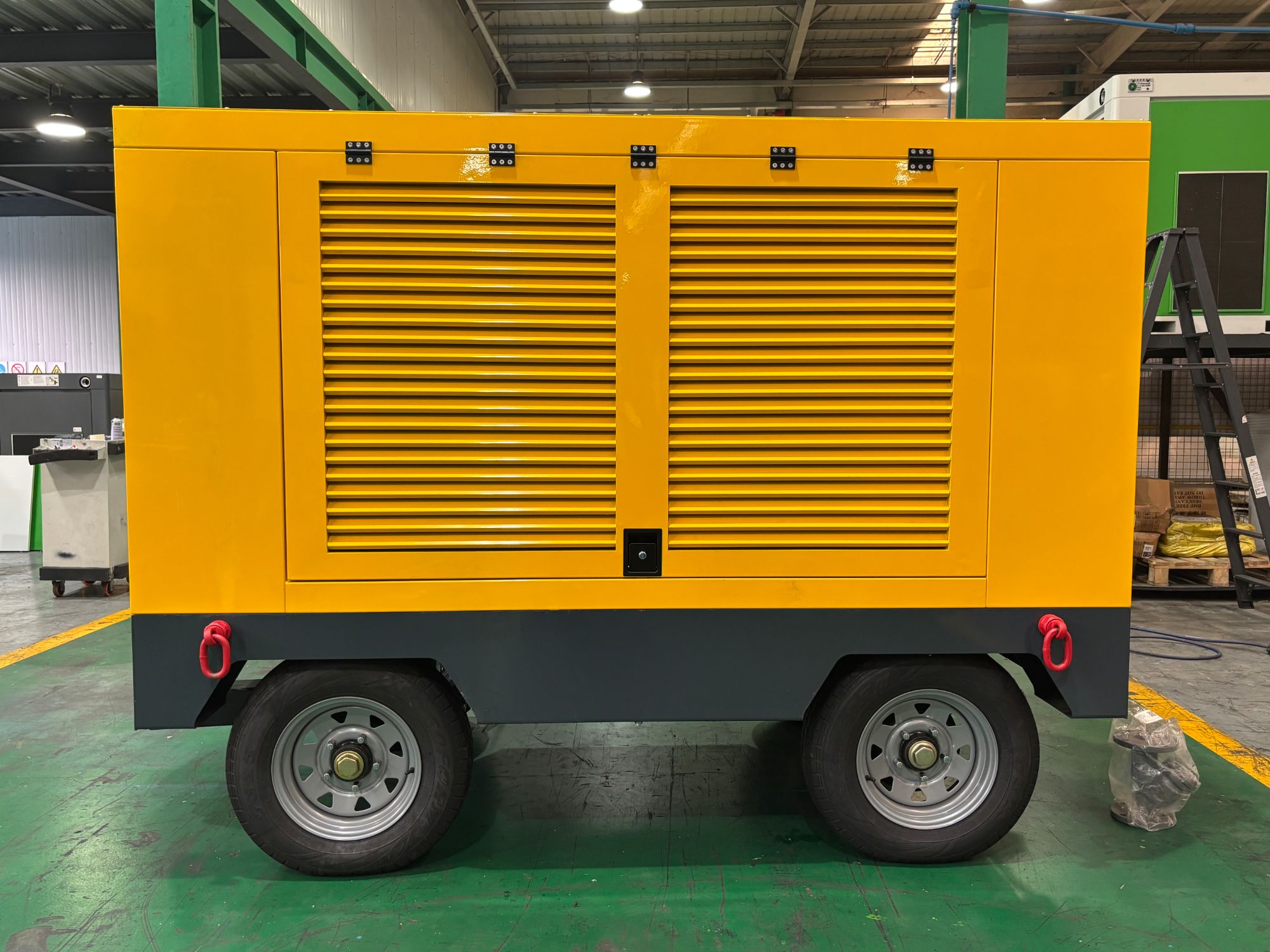
On a busy job site, the air compressor isn't just another piece of equipment—it's the pulse that keeps everything moving. When the air stops, so do the tools, the progress, and the morale. That's why uninterrupted air delivery feels less like a feature and more like a basic necessity.
Think about the moment a nail gun runs dry mid-task or a jackhammer loses pressure right when you need it most. Those seconds of interruption snowball into minutes of resetting, recalibrating, and refocusing. A steady air supply erases those hidden productivity drains, letting the crew maintain a rhythm that turns hours of work into minutes.
It's not just about keeping tools spinning; it's about the quiet confidence that comes with a system you don't have to babysit. When air flows without hiccups, the site hums along with a kind of self-sufficiency. Workers plug in, get going, and trust that the compressor won't be the reason they fall behind.
Engineering Out Downtime: What Makes a Compressor Truly Reliable?
Real reliability isn't about adding more backup units—it's baked into the design from the start. The most dependable compressors share a common philosophy: every potential failure point is engineered out before the machine ever leaves the factory floor. This means oversized bearings running well within their load limits, labyrinth seals that never contact the shaft, and cooling passages sized to handle peak summer heat without breaking a sweat. When you eliminate weak links like spring‑loaded thrust discs or flimsy coupling guards, you eliminate the root causes of unplanned shutdowns. It's a mindset that treats each component as if the entire plant depends on it—because eventually, it will.
The difference between a compressor that runs for decades and one that racks up maintenance hours often comes down to what you can't easily see: material choices and assembly precision. Rotors machined from a single forging resist fatigue in ways welded assemblies never can. Bearings mounted with a carefully specified preload won't develop the slop that leads to vibration spikes. Even the oil gets engineered into the equation—synthetic lubricants with precise viscosity indices keep films intact at start‑up, when most wear occurs. This level of detail extends to the piping, too; gas pulsation studies and acoustic modelling prevent resonance that would otherwise shake connections loose. Every decision funnels back to a single goal: keep the machine turning without unexpected interruptions.
Downtime isn't just about mechanical failures—it's about knowing something's wrong before it escalates. Today's most reliable compressors integrate sensors that track vibration spectra, bearing temperatures, and rotor position in real time, feeding that data into algorithms that learn normal behavior. A slight change in a vibration frequency flags an imbalance weeks before it would trip a shutdown threshold, giving maintenance crews a planned window to act. This shift from reactive to prescriptive maintenance changes the reliability equation entirely. Instead of nursing a failing machine through a production run, operators catch drift early and schedule repairs during low‑demand periods. Combined with robust engineering, this approach turns compressor downtime from an expected headache into an avoidable anomaly.
Night and Day, Rain or Shine: Weatherproofing for Constant Performance
Reliable performance regardless of weather hinges on thoughtful design from the inside out. Sealed housings, precision-fit gaskets, and corrosion-resistant materials form the first line of defense, keeping moisture, dust, and debris away from sensitive components. Even small details like drainage channels and protective coatings on circuit boards can make the difference between a device that thrives outdoors and one that fails after the first storm.
Testing is where real confidence is built. Units are subjected to driving rain, rapid temperature swings, and intense UV exposure in chambers that mimic years of seasonal extremes in days. This accelerated aging catches weak points early, ensuring that every product not only meets ingress protection ratings but also maintains full functionality when it matters most—through a nighttime downpour or under a scorching midday sun.
The payoff for users is simple: uninterrupted operation without constant maintenance or worry. Whether it’s a security camera monitoring a remote entrance or a sensor tracking environmental data on a hillside, weatherproof construction means the gear stays in service day after day, quietly doing its job no matter what the sky decides to throw at it.
Smart Controls, Smarter Operation: The Tech Keeping Compressors Running
Modern compressors aren't just mechanical beasts—they're intelligent systems. Smart control modules continuously adjust motor speed, monitor temperature, and anticipate load changes, ensuring that the machine never works harder than necessary. This real-time adaptation slashes energy waste and keeps internal components from burning out prematurely.
Beyond basic automation, these controllers now connect to wider facility networks. They stream performance data to maintenance teams, flagging subtle vibration shifts or pressure irregularities long before a breakdown. It's the kind of proactive insight that transforms a repair call into a quick, planned adjustment, saving hours of downtime.
What really sets advanced controls apart is their ability to learn. Over weeks of operation, algorithms map the compressor's optimal curve against actual demand patterns, then fine-tune timing and staging. The result? A system that practically runs itself, threading the line between peak efficiency and understated reliability without an operator lifting a finger.
Not Just Tough—Relentless: Redefining On-Site Air Power
When you think of on-site air power, the image that often comes to mind is one of brute strength—machines that can take a hit and keep flying. But in today’s contested environments, toughness alone won’t cut it. The new benchmark is relentlessness: the ability to sustain operations long after expected limits, to adapt when the plan falls apart, and to deliver decisive effect without blinking. It’s not about being the biggest or loudest on the apron; it’s about being the one that’s still there, still relevant, when everything else has gone quiet.
This shift demands a fundamental rethink of how we design, deploy, and support tactical air assets. It’s about architectures that thrive on austerity—operating from damaged runways, with minimal logistic footprints, and under constant electronic pressure. Relentlessness means an airframe that doesn’t just survive but grows sharper with every sortie because its systems learn, its maintainers have what they need before they need it, and its presence reshapes the adversary’s calculus. It’s the quiet confidence of a platform that treats sustainment not as a vulnerability, but as its sharpest weapon.
Ultimately, redefining on-site air power is a bet on human-machine fusion at its grittiest. It’s about crews and machines that refuse to become a static target, that move, hide, and strike in rhythms the enemy can’t predict. Relentless air power isn’t flashy—it’s the unglamorous, steady pulse that wins campaigns. It’s the difference between a show of force and a persisting, grinding advantage that leaves no doubt who owns the sky.
FAQ
They're built with heavy-duty components like oversized coolers, high-capacity filters, and reinforced bearings that handle constant thermal and mechanical stress. Many also feature duplex control systems that alternate between pumps to prevent overheating, allowing uninterrupted air supply even during prolonged use.
Reliability comes from design elements such as integrated aftercoolers that keep discharge temperatures low, automatic condensate drains that prevent moisture buildup, and advanced monitoring systems that adjust operation parameters in real time. Regular duty cycles are managed by smart controllers to avoid overloading any single component.
The biggest advantage is zero downtime for air tools, which keeps crews productive around the clock. They also reduce energy waste by avoiding start-stop cycles, deliver consistent pressure even under fluctuating demand, and typically have longer service intervals thanks to robust engineering.
Look for a 100 percent duty cycle rating, cast iron or other durable cylinder materials, a large receiver tank to buffer pressure changes, and a cooling system designed for high ambient temperatures. Vibration isolation mounts and soundproof enclosures also help when the unit runs continuously near workers.
Continuous operation units often use industrial-grade valves, thicker cylinder walls, and better air filtration to handle dust and debris. Their frames and guard components are typically welded and reinforced rather than bolted, which resists fatigue from constant vibration much better than entry-level compressors.
Daily checks of oil levels, air filters, and condensate drains are essential. Compressors need cooler core cleaning every week on dusty sites, and belt tension or direct-drive couplings should be inspected monthly. Using synthetic lubricants and sticking to the manufacturer’s overhaul schedule makes a big difference when the machine never rests.
Yes, most are designed with variable speed drives or multi-stage unloading systems that match motor output to actual air demand. This prevents pressure drops when multiple tools start at once and avoids wasted power during lighter usage, so the compressor runs efficiently across the entire shift.
Conclusion
On construction sites where deadlines dictate progress and every minute of downtime bleeds money, air compressors must operate with an almost stubborn resilience. When stopping isn’t an option, the machinery becomes the crew’s silent heartbeat—delivering a steady, uninterrupted air supply that keeps jackhammers pounding, nail guns firing, and concrete vibrators humming through double shifts. True reliability is engineered into every component: oversized cooling systems prevent heat fade during marathon runs, reinforced bearings shrug off dust and debris, and seals are designed to laugh at the constant vibration that kills lesser machines. Downtime is systematically eliminated, not just minimized, with designs that swap out filters and fluids in minutes without full shutdowns. Rain, scorching sun, or freezing nights—weatherproof enclosures and advanced corrosion resistance ensure the unit churns on regardless of what the sky throws at it, because the job site never closes.
Yet brute toughness alone isn’t enough; smart controls quietly orchestrate the relentless output. Onboard diagnostics and adaptive load-sensing technology let the compressor anticipate demand surges, adjusting motor speed in real time to avoid wasteful energy peaks and the stress of constant cycling. This isn’t just durability—it’s a redefinition of on-site air power, where the machine thinks alongside the crew. Alerts for preventive maintenance arrive before a part can fail, and remote monitoring means even the night watch can sleep easier. The result is a compressor that doesn’t merely survive harsh conditions but thrives in them, turning what used to be a fragile link in the chain into the most dependable asset on the site. It’s not about being tough; it’s about being relentless, working as hard as the people who rely on it, day and night, without drama or delay.
Contact Us
Contact Person: Mia
Email: [email protected]
Tel/WhatsApp: +86 19821985894
Website: https://www.seize-air.com