
Coordinate Measuring Machine Wholesale Buying Guide for Precision Manufacturers
2026-11-22
Precision manufacturing rarely forgives guesswork. If your measurement data drifts, so do tolerances, rejects, and your margins. Yet many shops still treat the coordinate measuring machine as a commodity purchase—comparing only stroke length and price while ignoring the metrology strategy behind it. That is where costly surprises begin. In this guide, we look past spec sheets and sales pitches to examine what actually separates a dependable CMM investment from a workflow bottleneck. Along the way, we also highlight how JATEN approaches real-world metrology challenges, giving you a clearer reference point before you commit capital.
Match CMM Accuracy to the Tolerances Your Parts Actually Demand
Plenty of shops still chase the highest accuracy specification on a datasheet, then measure parts whose tolerances could be handled by a far simpler machine. Start with the drawing, not the brochure. If the tightest feature you actually inspect sits at plus or minus five thousandths, a mid-range CMM will do the job without burning capital on resolution you will never use.
The old ten-to-one rule for measurement uncertainty is a useful guide, but it should not become a reflex. Tight bores and bearing fits may justify a more accurate sensor, slower scanning, and stricter thermal control. Loose bracket holes do not. Matching accuracy to the tolerance band also keeps programming and fixturing practical; you stop forcing every part through the same heavy inspection routine.
A better habit is to sort parts by what they actually demand. List the functional tolerances, identify the worst-case feature, and choose equipment that clears that bar with a little headroom. That way the CMM becomes an inspection tool sized to the work, not a trophy spec that only impresses during an audit.
Look Past Sticker Price in Wholesale Quotes
Most wholesale price sheets are built to get your attention, not to reflect what you will actually write on the check. A low sticker price often sits next to assumptions about minimum order size, packaging, freight, or payment terms that can quietly add 15 to 30 percent before the goods reach your dock.
Ask suppliers to requote the same item with your actual quantities, delivery window, and labeling needs. The difference between two vendors is rarely the headline number; it is how each one handles split shipments, pallet configuration, and reorder lead time. Those details show up later as either labor costs or lost sales.
A smarter comparison starts with landed cost per sellable unit. Once freight, duties, defects, and payment float are included, the "expensive" quote sometimes becomes the cheaper way to keep shelves stocked without tying up cash in slow-moving inventory.
Compare Bridge, Gantry, and Horizontal CMM Frames
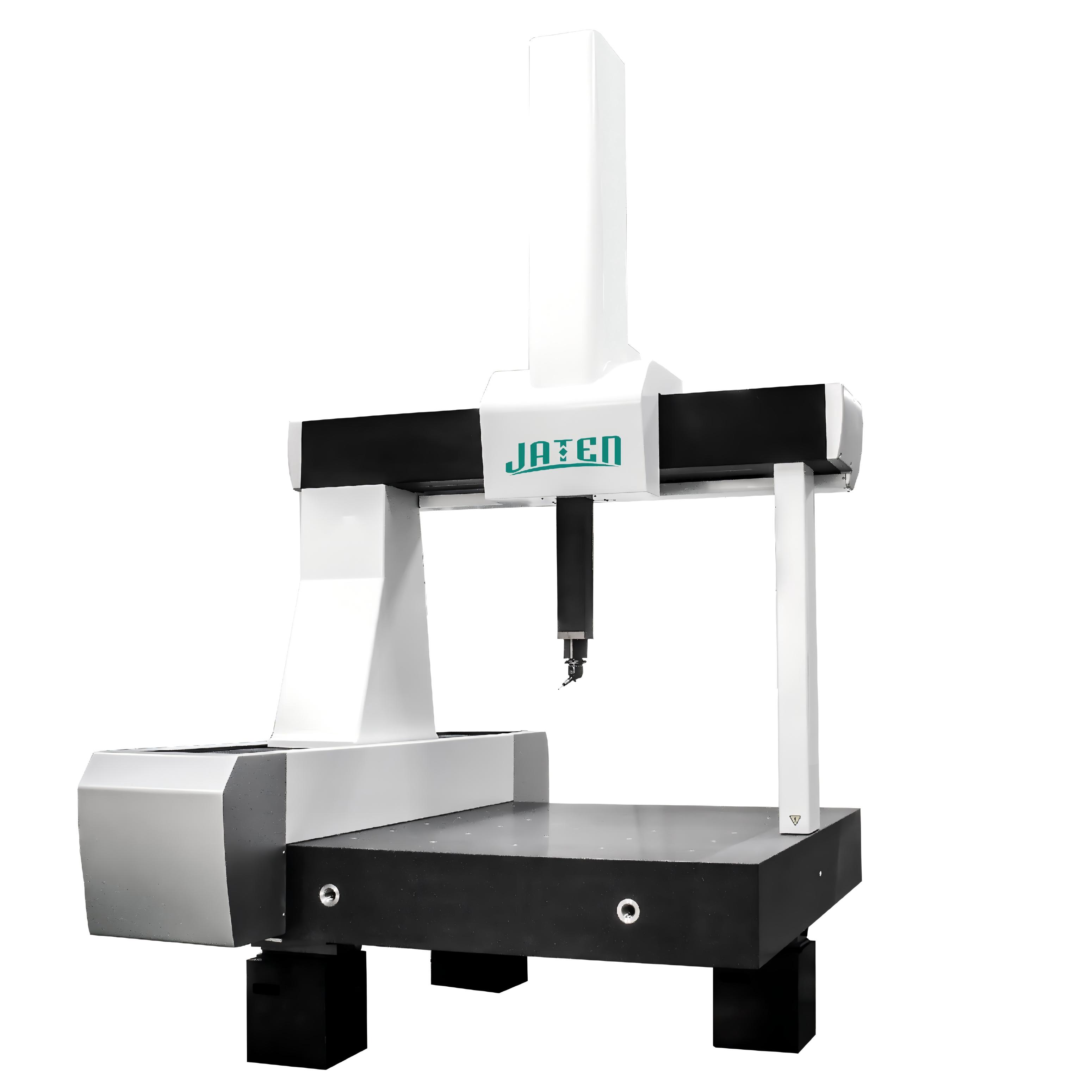
Bridge frames keep the measuring axes on a stationary granite base, so moving mass stays low and rigidity is strong for small to mid-size parts. That usually translates into very stable volumetric accuracy if the part fits within the Y-axis travel. The main limitation is loading access—the overhead structure wraps around the table and can make side loading of long or irregular workpieces more difficult than it first appears.
Gantry frames move the bridge on floor-level rails instead of a machine table, which lets the workpiece remain stationary while the measuring system travels around it. This is a practical answer for large, heavy components that would be impractical to move repeatedly. The trade-off is usually in the foundation and environment: the open span needs more floor space, a stable base, and close attention to thermal drift if you want to maintain tight tolerances over the full volume.
Horizontal arm CMMs take a different route by extending a cantilever probe from a vertical column, so the measuring head approaches the part from the side. That arrangement is particularly useful for automotive body panels, frames, and large sheet-metal assemblies where access points are easier to reach from a horizontal orientation. The unsupported arm introduces more deflection than a fully bridged structure, so results depend heavily on arm stiffness, counterbalancing, and the way probe paths are planned.
Vet Suppliers Beyond the Spec Sheet
A spec sheet gives you concentrations, volumes, and storage ranges, but it stays quiet about what happens when a delivery gets caught in a heat wave or a return lands on a Friday afternoon. Experienced clinics learn to ask about batch-to-batch consistency, how long a product actually holds up after the seal is broken, and how fast the manufacturer shares a known issue. Those unprinted details shape daily practice far more than another row of technical data.
Good suppliers also reveal themselves in ordinary moments. A rep who notices your ordering rhythm can flag a backorder before your shelf runs empty. Packaging that survives a wet loading dock keeps labels readable instead of turning into pulp. A distributor willing to split a case without acting like you have ruined their day saves real storage space and cash flow. None of that appears on a datasheet, but it determines whether a product works inside your clinic's routines.
Lock In Calibration and Support Commitments Early
Calibration has a way of getting slippery when it’s left until after kickoff. Teams nod along in early calls, assume alignment on what “supported” means, and then discover gaps once real work starts. Getting the details on paper before that happens changes the tone of the whole engagement. It’s less about pinning people down and more about removing guesswork from decisions that will otherwise resurface at the worst moment.
The practical move is to treat support commitments as a design question rather than a side note. Ask what normal hours look like, what counts as urgent, how escalations actually travel, and what the client team is expected to own. When those answers arrive early, they can be reflected in staffing, response times, and documentation instead of layered on as exceptions later. That early clarity also gives internal teams a fair chance to push back before the agreement hardens.
It’s tempting to keep things loose to preserve goodwill, but looseness tends to cost more trust than it saves. A short working session that names constraints and confirms boundaries tends to feel collaborative, not contractual. Once those commitments are locked, the work has a firmer edge, and support conversations stop being negotiations and start being follow-through.
Prepare Your Shop Floor and Team for Installation
Before the equipment arrives, walk the entire path from the loading dock to the final position. Move any idle pallets, tool carts, or half-finished jobs out of the way, and check the width of doorways and turns against the crated dimensions. If the route crosses a high-traffic aisle, plan the move for a shift change or break when the floor is quieter. Mark the exact spot where the machine will sit, and confirm that the concrete is level within the manufacturer's tolerance. A small crown or dip that no one noticed before can turn a one-day install into a week of shimming and realignment.
Give your own crew clear roles before the riggers show up. One person should own the walkthrough, one should handle utilities, and another should stay with the installers to document progress with a phone camera. This is not the time for vague statements like "everyone pitch in." Print a simple task list and tape it near the install area. Let the team know which breakroom or restroom the outside installers can use, and where they can stage tools without blocking forklift traffic. Small practical details tend to set the tone more than a polished kickoff meeting.
Finally, prepare for the first hour after the machine is set but before it is handed over to production. Clear a space for the startup checklist, and gather the manuals, lockout tags, and any calibration fixtures in one place. If the install includes software or network setup, make sure the relevant login credentials are available to the technician, not just stored in a manager's inbox. That last half-day is where schedules usually slip, and a little advance staging keeps the handoff clean.
FAQ
Look beyond the stated accuracy specs. Confirm the machines will hold calibration in your shop's temperature range, check air supply requirements, probe connection types, and whether the controller supports the inspection software you already run. If possible, test the same part on a demo unit at the supplier's facility and compare the output to your current gaging results.
Start smaller than you think. A pilot order of two or three units gives you enough run time to judge repeatability, service response, and how well the machines fit your operators' workflow. Expand after the first full calibration cycle, not before.
It depends on the work mix. Bridge machines suit small to mid-size precision parts, horizontal arm designs handle long automotive or sheet metal components, and gantry systems make sense for large molds or aerospace structures. If the shop covers all three, a mixed order often beats trying to force one platform across every job.
Clean dry air, temperature stability, probe styli, fixture plates, annual calibration, software maintenance, and operator training all add up. Many shops also underestimate the cost of downtime when a machine is waiting on a replacement probe head or a service visit.
Yes, and that is often the smart approach. Keep the inspection software and probing ecosystem as consistent as possible so programs and spare probes can move between machines. Otherwise you create extra training and inventory work for the quality team.
Ask for realistic response times in your region, whether loaner machines or critical spare modules are available, how calibration certificates are handled, and if remote diagnostics are included. A low purchase price means little if a downed machine sits idle for three weeks.
Factor in measuring speed, automation readiness, rigidity, thermal compensation, and the cost of the service plan over five years. A machine that is fifteen percent cheaper but slower and harder to support will erase that savings quickly in a production environment.
Standard shop-floor models may ship in four to eight weeks, but large gantry systems or custom probing packages can take several months. Install, leveling, air hookup, and calibration usually add another week or two per machine, so plan the layout and utilities early.
Conclusion
A precision manufacturer rarely wins by chasing the tightest CMM specs on paper. The smarter move is to anchor the purchase to the tolerance bands your own parts actually require, then check how each machine holds those numbers across temperature swings, part loads, and daily shift patterns in your facility. Bridge, gantry, and horizontal frames each earn their keep in different situations; a bridge design may offer the reach and rigidity you need for mid-size prismatic work, while a gantry suits large weldments and a horizontal arm often proves more practical for sheet metal or body-in-white inspection. No single frame type is inherently superior, and forcing the wrong configuration into your workflow tends to erase any upfront savings.
Wholesale quotes deserve a harder look than a bottom-line figure. Ask what is actually bundled: probing systems, rotary tables, thermal compensation, fixturing, and software licenses can shift real cost more than the base unit price. Vet suppliers on how they handle installation quirks, training, spare parts lead times, and software updates rather than relying on a polished brochure. Calibration history and ongoing support commitments should be negotiated before the order is signed, not after the first out-of-tolerance report. Finally, prepare the shop floor for foundation requirements, air supply, and vibration isolation, and give operators time to learn the software before production pressure builds. These steps make wholesale buying less about getting a discount and more about securing a measurement system that stays dependable long after the warranty ends.
Contact Us
Contact Person: Volien
Email: [email protected]
Tel/WhatsApp: +86 18029161762
Website: https://www.jatentech.com/