
Corrugated Box Die Making Creasing Cutting Machine Manufacturer Builds Durable Tooling for High Volume Packaging
2026-11-16
When your corrugated packaging line is running flat out, the difference between meeting deadlines and missing them often comes down to tooling that refuses to quit. ADEWO builds die making, creasing, and cutting machines with durable tooling engineered for high-volume production. Here’s what makes their approach worth a closer look.
Hardened Creasing Rules That Outlast Corrugated Abrasion
Corrugated board acts like a low-grit sandpaper on creasing rules, eroding the working edge after a few thousand impressions. Hardened rules counter this by pushing surface hardness well beyond standard steel, often through heat treatment or a wear-resistant coating. The result is a creasing edge that keeps its profile longer under repeated abrasive contact.
Hardness alone is not enough. A rule that is too brittle will chip or crack under the repeated shock of cutting and creasing dense board. The better hardened rules balance surface hardness with a tough core, so the edge resists wear while the body absorbs impact. Some suppliers refine grain structure through deep cryogenic treatment, which adds a measurable gain in fatigue life without making the rule difficult to cut or bend.
In practice, that translates to fewer changeovers and cleaner fold lines on long runs. Corrugated converters running double-wall or high-recycled-content board see the biggest benefit, since those materials chew through unhardened rules quickly. The upfront cost is higher, but the cost per impression drops once you stop replacing rules mid-job.
Die Boards Engineered for Constant Knockout Cycles
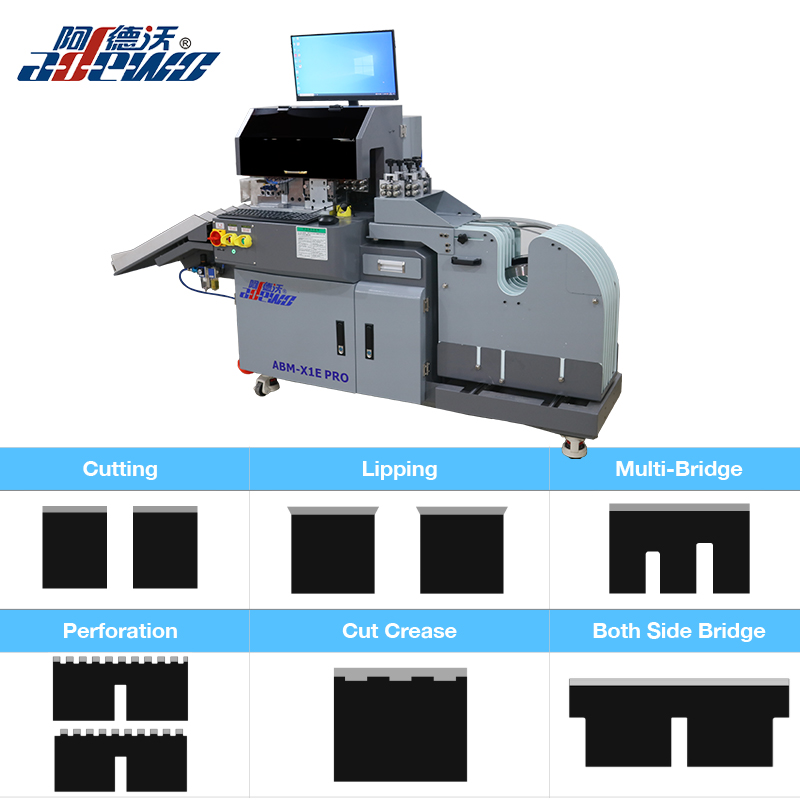
Most die boards fail long before the cutting rule does. The board itself takes the brunt of every strike, and after a few thousand cycles, microfractures start spreading from the laser slots. That’s why the material spec here leans toward high-density, void-free maple ply that resists compression set. Instead of relying on a single adhesive layer, the cross-laminated core alternates grain direction to stop cracks from traveling in a straight line.
What really keeps these boards in rotation is how the slot geometry matches the rule profile. Overly tight slots crush the rule foot and split the wood on insertion; overly loose slots let the rule rock under load. The production run uses a CNC laser with a kerf tuned to the actual steel thickness, so each knockout hits the same spot without wandering. That repeatability means fewer adjustments on the press and fewer boards pulled for rework after a shift.
Edge sealing matters more than people expect, especially where the board slides against the chase. A light paraffin blend is applied after cutting to keep moisture out of the plies without adding drag. That keeps dimensions stable through humidity swings, so the board doesn’t swell tight around the rules or bow in the center after repeated impact.
Crease Depth Consistency at 12,000 Sheets Per Hour
The real challenge at 12,000 sheets per hour is not just hitting the correct crease depth once, but holding it across mixed stock, temperature drift, and gradual roll wear. A fixed mechanical stop cannot account for the way paper caliper shifts from one pallet to the next, or for the slight swelling that occurs when moisture enters the pressroom. That is why the creasing unit relies on a closed-loop servo that measures the actual fold resistance after each crease and adjusts the depth before the next sheet reaches the nip.
Instead of a static creasing channel, the system reads the residual springback of the board and feeds that value into a micro-adjuster mounted behind the creasing rule. Adjustment increments are typically 0.01 mm, which is small enough to prevent cracking on lightweight stock but large enough to correct drift within a few cycles. This loop runs continuously, so switching from a thin label stock to a heavy folding carton board does not require a line stop or manual recalibration.
Operators notice the difference most on long runs: the first sheet and the 50,000th sheet fold with the same resistance, and the crease line stays crisp without cutting through the substrate. That consistency also pays off downstream in folder-gluers, where inconsistent crease depth is a common source of jams and misaligned glue flaps.
Through-Hardened Tooling vs. Surface Coatings for Corrugated
When manufacturing corrugated profiles, the choice between through-hardened tooling and surface coatings often comes down to the kind of wear you expect. Through-hardened tools are treated uniformly throughout their cross-section, which means they can sustain repeated regrinds without losing their core hardness. This is especially useful in high-volume corrugating lines where tool edges gradually blunt from abrasive paper or board stock. The trade-off is that the entire tool must be made from a hardenable alloy, which can drive up material cost and machining time before final heat treatment.
Surface coatings, on the other hand, apply a thin, wear-resistant layer—such as titanium nitride or diamond-like carbon—over a tougher, less brittle base. The coating reduces friction and resists adhesive wear, helping corrugated profiles release cleanly from the tool. However, once the coating wears through on sharp edges, the underlying steel is exposed and must be recoated or replaced. This makes coatings attractive for shorter runs or specialty flutes where geometry changes frequently, but less ideal for continuous production of the same corrugation over months.
Neither approach is universally superior. A few manufacturers run hybrid setups: a through-hardened core for dimensional stability, finished with a low-friction coating on the flute tips to ease forming. The real decision hinges on regrind frequency, stock abrasiveness, and whether tool life is measured in linear meters or number of setup changes. Corrugated converters who track cost per million linear feet often find that through-hardened tooling wins for dedicated, long-run profiles, while coated tooling excels when the corrugation pattern shifts seasonally or between product lines.
Matching Die Geometry to Flute Profiles and Board Thickness
Flute profiles are not interchangeable when it comes to die setup. A-flute, for example, stands roughly 4.5 to 5 mm tall and has a relatively open wave, which means the board compresses more easily but also springs back after cutting. The die must be built with taller creasing rules and wider matrix channels to accommodate that thickness without collapsing the flutes. C-flute sits around 3.5 to 4 mm, while E-flute drops to about 1.5 mm. These differences directly change the required rule height, bevel angle, and channel depth.
Cutting and creasing rules behave differently as board thickness changes. Thinner profiles like E and F flutes need a sharper, finer bevel so the blade slices through the top liner without tearing the underlying medium. On thicker A or B flute boards, a blunter bevel or even a micro-serrated edge works better because it cuts progressively through multiple layers without excessive dust or crushed edges. The creasing channel must also match the flute pitch. If the channel is too narrow, the crease will crack the liner; too wide, and the fold line wanders or loses definition.
Before finalizing a die, measure the actual caliper of the board rather than relying on nominal flute codes. Board from different mills can vary by half a millimeter or more even within the same flute type. Run a short trial with the intended die geometry on the actual board stock, then inspect the cut edges and fold lines under low magnification. Adjust rule penetration, crease depth, or rubber ejection placement as needed. A die that fits the flute profile correctly produces clean cuts, crisp folds, and fewer jam-ups on the converting line.
High-Volume Packaging Demands Tooling Built Like Production Equipment
At high line speeds, packaging tooling stops being a disposable fixture and starts behaving like a critical machine element. The guides, formers, and transfer fingers that shape and move packages must hold their geometry across millions of cycles, which means hardened tool steel, wear-resistant coatings, and tolerances tight enough that a few microns of drift won't trigger a jam or mis-feed.
Frequent product changeovers put another demand on the design. The tooling has to locate itself every time it's swapped, so quick-release clamps, dowel pins, and pneumatic locking features are built in from the start. Operators can drop in a new set and hit the same registration points without spending an hour dialing in positions, and that repeatability is what keeps a high-volume line from losing shifts to setup.
Finally, the tooling must be able to run with the machine's own motion profile. Whether it's driven by cams or servos, the tooling needs mounting surfaces for sensors and enough stiffness to resist deflection at full speed. Companies that treat packaging tooling as production equipment also give it part numbers, spare inventories, and preventive maintenance schedules, which is the only way to keep output predictable when the line never stops.
FAQ
They focus on building creasing and cutting dies that withstand repeated high-volume runs without losing edge quality, which matters when boxes need consistent fold lines and clean trim at speed.
Corrugated board is abrasive and has varying thickness at the flutes, so tooling that dulls quickly creates ragged cuts and weak creases. A well-built die keeps the compression and shear forces balanced over hundreds of thousands of impressions.
Proper creasing compresses the flute structure along the intended fold line so the outer liner bends without tearing. The tooling profile needs to match board caliper and flute type, otherwise the fold becomes a stress point that cracks during box forming.
They should look at frame rigidity, repeatability of the die positioning, ease of die changeover, and how the machine handles variations in board thickness. A robust cutting head and precise depth control prevent over-penetration that wears tooling and damages anvil surfaces.
The tooling can be adapted for regular slotted containers, die-cut mailers, trays, and multi-depth designs. Changeable creasing rules and cutting blades allow the same machine to switch between layouts without sacrificing registration accuracy.
You start seeing micro-cracks along fold lines, fuzzy edges on cuts, increased dust in the die-cutting station, and more frequent jam-ups. At that point regrinding or replacing the tooling is cheaper than producing rejected boxes or slowing the line.
Regular cleaning of adhesive residue and paper dust, checking rule height after every production batch, and rotating dies to balance wear help extend service life. The manufacturer often provides a wear-measurement guide so operators can predict when to schedule regrinds.
It uses adjustable creasing depth and pressure settings that can be saved per board specification. The tooling is machined to match common flute heights, so a quick setup change lets you run B-flute, C-flute, or E-flute jobs without manual shimming every time.
Conclusion
Corrugated box production at high volumes quickly exposes the weaknesses in ordinary die tooling, so this manufacturer builds creasing and cutting systems from the ground up for abrasion resistance and repeatability. Instead of relying on surface treatments that wear away under the constant friction of corrugated board, the creasing rules are through-hardened to maintain their edge profile and crease depth long after standard rules would have rounded over. The die boards themselves are engineered to survive thousands of knockout cycles without delaminating or losing registration, which is a common failure point when operators push machinery to 12,000 sheets per hour. At that speed, crease depth consistency is not a luxury; it is the difference between boxes that fold squarely on automated lines and ones that jam or tear. The tooling geometry is also matched to specific flute profiles and board thicknesses, so a B-flute job gets a different crease rule height and bevel than an E-flute or double-wall board. This attention to substrate variation keeps the score from cracking the liner or crushing the flute, which directly affects stack strength and box performance.
Surface coatings may look attractive on a spec sheet, but in corrugated converting they tend to flake or chip under repeated impact, exposing softer steel underneath. Through-hardened tooling, by contrast, distributes wear resistance through the entire cross-section, so the working edge remains sharp even as the tool slowly wears. That matters because high-volume packaging is not a short-run craft market; it is production manufacturing. The die making equipment is built with the same mindset as the box plants that use it: heavy frames, precision-ground components, and tooling that can be pulled, sharpened, and reinstalled without recalibrating the whole machine. When a manufacturer commits to this level of durability, the result is less downtime for die changes, fewer rejected sheets from inconsistent creases, and a lower cost per thousand boxes over the life of the tooling. For converters running multiple shifts, that kind of reliability is not a feature; it is the baseline expectation.
Contact Us
Contact Person: KAELYN LEE
Email: [email protected]
Tel/WhatsApp: +86 15012673758
Website: https://www.china-adewo.com