
Corrugated Boxes Worth Recommending for Reliable Shipping and Storage
2026-11-16
Some corrugated boxes get chosen because they're cheap. The ones worth recommending get chosen because they hold up when it matters—stacked in a humid warehouse, dropped by a courier, or reused for storage long after the tape has been replaced. That kind of reliability is rare, and it rarely happens by accident. Below, we look at the design details, board grades, and structural choices that separate dependable shipping boxes from ordinary cartons. Along the way, you'll see why ShiTeng Packaging keeps showing up in conversations about packaging that works.
The Hidden Engineering Behind a Sturdy Shipping Box
A shipping box looks like folded cardboard until you cut through its wall. The middle layer is a wavy flute, glued between two flat liners, and that shape does most of the quiet work. When weight presses down, the flutes act like tiny arches, transferring force to the corners instead of letting the panels buckle. This is why a box can hold far more than the same sheet of paperboard would on its own.
The real margin of safety comes from less visible choices: flute pitch, liner weight, and adhesive type are adjusted for humidity, rough handling, and long truck rides. The corners are double-walled or reinforced because those vertical edges carry nearly all the stacking load. Even the hand holes and vent slots are placed where stress concentrates less, so a simple brown carton survives conditions that seem unreasonable for paper.
Board Grades and Fluting: What Actually Matters
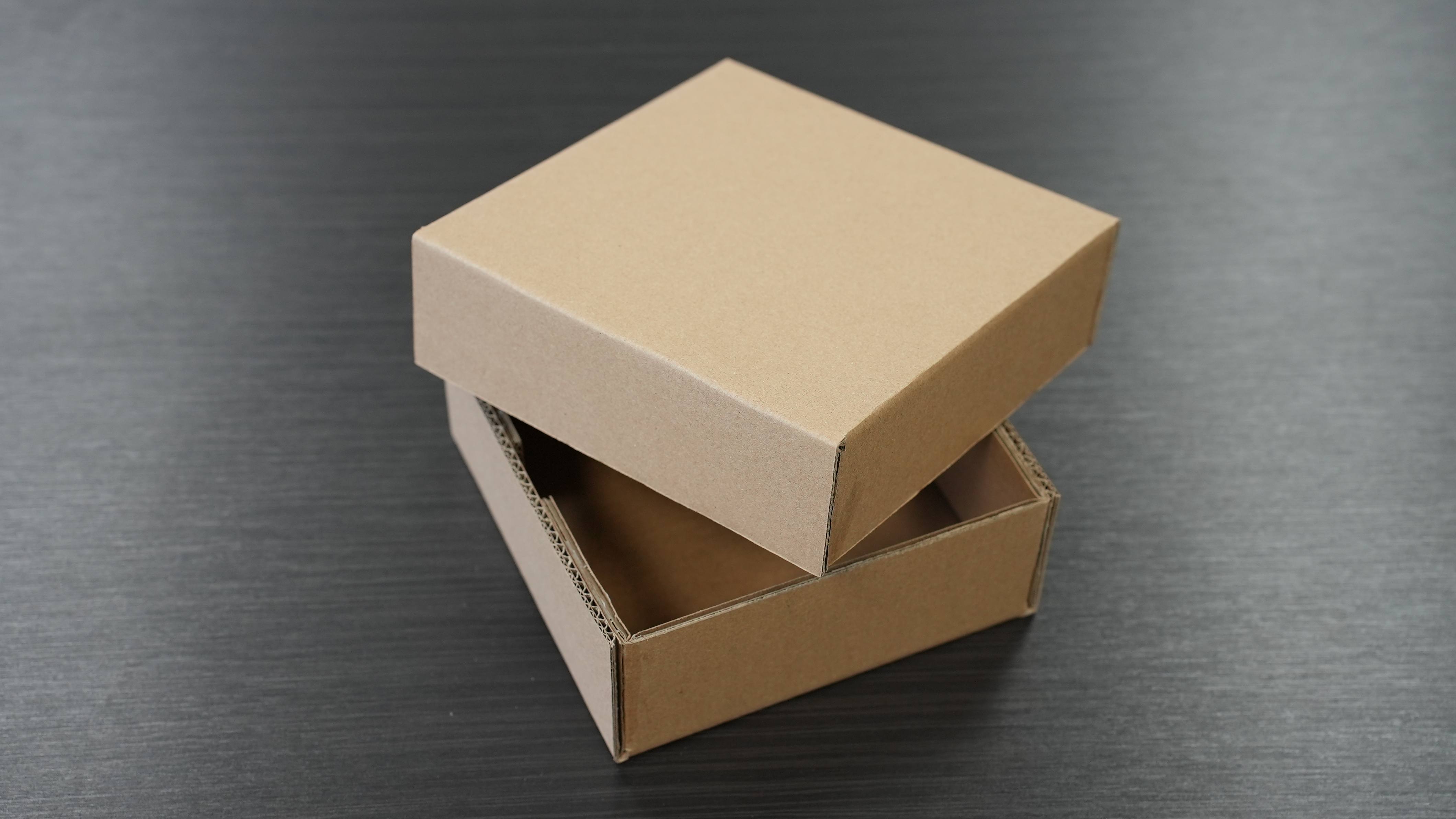
Most of the conversation around corrugated board gets stuck on labels—single-wall, double-wall, C-flute, E-flute—as if the name alone decides performance. What actually matters is the combination of liner weights, medium type, and flute geometry working against the specific stress the box will face. A heavier grade does not automatically mean a better box if the failure mode is puncture or humidity, not top-load compression.
Flute height and spacing change how the board handles crush, cushioning, and print finish. A-flute offers more cushioning and stacking strength on its own, while B-flute gives a flatter surface and better puncture resistance. E and F flutes are chosen less for structural strength and more for retail-ready appearance and reduced storage bulk. The decision should follow the load path and handling environment, not a spec sheet cliché.
For most packaging engineers, the useful number is edge crush test rather than the older burst test, because edge crush tracks more closely with how stacked boxes actually fail in a warehouse. That said, real-world performance also depends on scoring depth, moisture, print coverage, and pallet configuration. If the board grade and flute profile are not matched to those conditions, even an impressive test value can mislead.
How to Pick a Box Size That Reduces Movement
Shipping damage rarely comes from the box being crushed—it comes from the item inside having room to slide, bounce, or slam against the walls. A box that fits too loosely forces you to pile in crumpled paper or air pillows, which shift during transit and leave corners exposed. Instead of guessing, measure the item's length, width, and height, then add no more than two inches total to each dimension for cushioning. That snug starting point keeps the product centered and makes the protective layer work the way it should.
Think about how the item sits inside the box, not just whether it technically fits. A rectangular product packed diagonally in a square box creates empty triangles where movement concentrates. Rotate the item or choose a box shape closer to the product's own proportions. For oddly shaped goods, wrap the irregular parts first so the final package presents a stable, block-like form. This cuts down on the instinct to overfill with void fill, which often does more to hide the problem than solve it.
Finally, test the fit before sealing. Close the flaps and give the box a gentle shake at chest height. If you hear or feel shifting, the item needs either a smaller box or more strategic padding—not just more padding. Dense foam inserts or custom cardboard dividers in the gaps beat loose peanuts every time. A box that passes the shake test with only the faintest movement will survive drops and conveyor belts far better than one that arrives looking like a rattling gift.
Edge Crush, Burst Strength, and Other Useful Numbers
A box can look sturdy on the shelf, but what you really want to know is whether it will hold up when stacked, shipped, or dropped. That's where test numbers come in. Edge crush strength is the one to watch if you're stacking boxes high in a warehouse. It measures how much pressure a corrugated panel can take before its vertical edge crumples, and it's expressed in pounds per inch. Higher numbers mean better stacking performance without the corners folding under the load.
Burst strength tells a different story. Instead of slow compression, it's about sudden force from inside or outside the box. Think of a box getting punctured by a fork truck or rough cargo pressing against the walls. The test uses hydraulic pressure on a small area of the board, and the result appears in pounds per square inch. A high burst number means the box resists blows, punctures, and rough handling. If edge crush is about patience under weight, burst is about surviving an impact.
There are other numbers worth keeping an eye on. Puncture resistance is similar to burst but simulates a sharp, pointed hit rather than a broad one. Flat crush measures how much pressure the flutes take before collapsing sideways. And then there's the box compression test, which applies weight to a whole finished box to find the point where it fails. None of these exist in isolation; a good packaging decision usually balances two or three of them depending on what the box will actually go through.
Moisture, Dust, and Temperature: Storage Factors People Forget
Moisture rarely announces itself until a box of photographs turns wavy or a tool handle grows a pale fuzz. The usual suspect is a damp basement, but an unsealed concrete floor can release enough vapor to rust metal shelving even when the air feels dry. Cardboard boxes sitting directly on that slab act like wicks, pulling water upward into papers and fabrics. Moving items onto raised racks, leaving a small gap behind furniture, and using a basic hygrometer can catch the problem before mildew does.
Dust seems harmless because it is mostly invisible, yet it works its way into fan bearings, camera lenses, and the folds of stored clothing. In a room with no regular airflow, that fine grit mixes with humidity and forms a sticky film that is difficult to remove from wood and plastic. A quick wipe of shelves is not enough; sealed plastic bins and breathable fabric covers for furniture keep most of the grit out without trapping moisture underneath.
Temperature extremes matter less than the speed at which they change. An attic that bakes at noon and chills after dark forces wood, leather, and electronics through repeated expansion and contraction, which loosens joints and cracks finishes over time. A closet on an interior wall is often a safer bet than a spot near a heating vent or a sun-soaked window. Stable, boring conditions usually beat the perfect number on a thermostat.
Small Upgrades That Make Ordinary Cartons Much Safer
Most cartons fail long before the cardboard itself gives out. The weak points are almost always the same: a bottom flap that gets damp and springs open, a single strip of cheap tape running across the top, or corners that crush when the box is slid across a warehouse floor. Swapping that flimsy tape for a wider water-activated kraft tape turns the entire top into a rigid bridge, and it bonds into the fibers instead of peeling away in heat. On the bottom, a simple full-flat seal with reinforced paper tape costs a few cents more but prevents the most common drop-through failure.
Inside the box, small changes matter just as much. A folded corrugated pad placed at the base spreads weight evenly and keeps heavy items from shifting into the corners. For anything sensitive to moisture, a single desiccant sachet tucked under the flap is often enough to stop condensation from turning the carton soft. And when the closure is easy to open by hand—like a tear strip instead of layers of stubborn tape—people are far less likely to stab at the box with scissors or keys, which is where many accidental product damages begin.
FAQ
For dense or oddly shaped products, double-wall or even triple-wall corrugated boxes tend to be the most dependable. They give you extra crush resistance at the corners and edges, which is where damage usually starts.
Look closely at the corners, score lines, and taped seams. If the board feels soft, has tears near the flaps, or no longer springs back when pressed, it has probably lost enough rigidity to protect the contents.
Sort them by size and keep the largest panels flat against a wall or under a shelf. Bundle them with twine or a light strap, and label the bundle by dimensions so you can grab the right one without digging through a leaning stack.
Not necessarily. Thicker walls help with stacking and puncture resistance, but the internal fit matters more for fragile goods. A single-wall box with properly sized inserts or void fill can outperform a double-wall box that lets the item shift around.
Flaps transfer pressure from the top and bottom of the box down through the side walls. When they meet squarely and are taped along the full seam, they create a stronger structural load path, so the box is less likely to buckle when stacked.
Use a tear strip or perforated opening line built into the packaging, or run a single strip of reinforced tape across the center seam. Avoid cutting deep finger holes into the side walls, since those openings create weak points that can collapse under load.
Keep a small range of box sizes that fit the majority of your orders, then use adjustable dividers, paper fill, or air pillows to account for the remaining space. This approach lowers storage needs while still preventing items from rattling.
Corrugated mailers work well for flat, low-profile items like books, prints, or thin apparel. They save tape and void fill, reduce dimensional weight, and still provide enough edge protection when the item fits snugly.
Conclusion
A box that holds up during transit rarely gets that way by accident. The difference usually comes from board construction and how well the fluting matches the load. For heavier items, a higher-grade corrugated board with tighter flute profiles tends to resist buckling far better than a thicker-looking but cheaper alternative. Just as important is choosing dimensions that keep the product from shifting. When a carton leaves too much empty space, it invites crushing because the walls end up carrying force they were never meant to absorb. A snug fit, even if it requires adding a filler, does more for protection than extra tape ever will.
Numbers like edge crush and burst strength are helpful, but they only tell part of the story if storage conditions are ignored. Damp air, dust, and temperature swings can quietly weaken cardboard before it ever leaves a warehouse. In practice, boxes with moisture-resistant liners or at least stored off concrete floors tend to survive longer. Small changes also go a long way: reinforcing the center seam, using corner inserts, and switching to consistent box styles for stacking all reduce damage far more than expected. The boxes worth recommending are not simply the strongest on paper; they are the ones matched to the product, the route, and the place they will sit before opening.
Contact Us
Contact Person: Mr. Ge Man
Email: [email protected]
Tel/WhatsApp: 8613710506492
Website: https://www.shitengzx.com