
Custom Push Button Switch Supplier for Industrial and Consumer Applications
2026-06-24
In the world of switches, off-the-shelf solutions often fall short for specialized applications. Whether designing rugged industrial controls or sleek consumer devices, the right push button can make all the difference. That’s where KEJIAN ELECTRONICS comes in—a custom push button switch supplier dedicated to bridging the gap between standard components and your unique requirements. From tactile feedback to environmental sealing, we craft switches that perform reliably where others fail. Dive in to discover how tailored switching solutions can elevate your next project.
Tailored Switch Solutions for Every Industry Need
Every industry has its own operational quirks and technical demands, so a one-size-fits-all switch simply won't do. We craft solutions that match your specific voltage, environmental, and form-factor requirements—whether you're automating a dusty factory floor or integrating controls into a sleek medical device.
Our engineering team works closely with your product or project leads to bake ruggedness, sensitivity, or space-saving designs directly into the hardware. From IP-rated enclosures that shrug off washdowns to feather-touch actuators that improve user experience, the result is always a component that feels like it was designed just for you.
Beyond the physical build, we also fine-tune electrical characteristics and certifications to fit regional standards and niche applications. This approach shortens your prototyping cycle and eliminates compromises, giving you a switch that integrates without friction and performs reliably for years.
From Concept to Production: Your Partner in Custom Switches
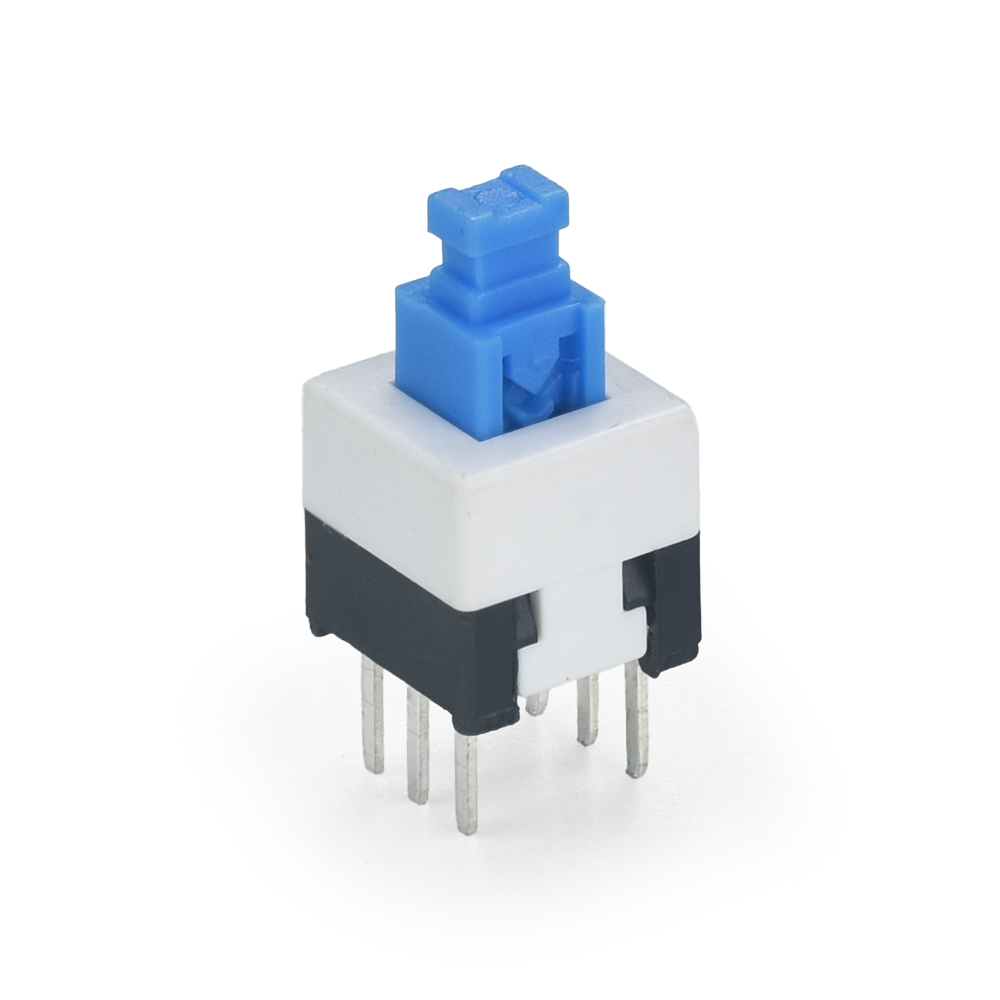
Bringing a new switch design to life often starts with a sketch on a napkin or a rough idea during a team meeting. We take that spark and turn it into a tangible prototype, refining the tactile feel, actuator shape, and electrical specs until the sample in your hand feels exactly right. Our engineers sit down with your team, learn about the end-user environment, and tackle challenges like IP ratings, haptic feedback, or silent operation early on, so you avoid costly redesigns later.
Once the prototype earns a nod of approval, we manage the transition into full-scale manufacturing without the usual headaches. Our in-house tooling and production lines are built around low-to-mid volume runs, meaning you get consistent quality and quick turnarounds even for 5,000 units instead of 500,000. We also handle compliance testing and supply chain quirks behind the scenes, so you can focus on your product launch while we keep the switch supply steady.
Throughout the process, you’re not just another project number. You get direct access to the same engineers who designed your switch, and we treat your feedback on pre-production batches like gold. Whether you need a subtle logo embossed on a rocker or a custom LED light pipe that doesn’t leak, we sweat the small stuff so your end product stands out for all the right reasons.
Rugged Push Buttons Built for Industrial Demands
In factories, construction sites, and processing plants, control interfaces face constant abuse—vibration, moisture, chemical splashes, dust. A push button that can’t withstand these conditions becomes a weak link. That’s why rugged construction matters: every component, from the actuator to the housing, is engineered to absorb impacts, seal out contaminants, and keep operating long after standard buttons would quit.
What sets these controls apart isn’t just durability on paper. It’s the tactile certainty you feel through heavy gloves, the seamless stainless-steel face that shrugs off daily pressure washing, and the internal contacts rated for millions of cycles without signal degradation. Whether mounted on a crane pendant or a food processing panel, they’re designed to be forgotten—not because they’re unimportant, but because they simply never fail.
Behind that reliability is a mindset that refuses to overcomplicate things. The mounting collars lock tight without specialized tools, terminal screws stay torque-stable through temperature swings, and replacement parts slot in like they’ve never been apart. In an industrial world that punishes fragility, these push buttons prove that toughness and simplicity can coexist.
Elevating Consumer Devices with Bespoke Switch Designs
In a market flooded with uniformity, the tactile sensation beneath a user’s fingertip can define a product’s identity. Bespoke switch designs move beyond off-the-shelf components, allowing brands to craft a distinct haptic signature—whether it’s a subtle, dampened click for a meditation device or a crisp, metallic snap for a gaming peripheral. This attention to the physical interaction elevates a device from functional tool to an extension of personal experience, fostering a deeper emotional connection that generic switches simply cannot replicate.
Custom switches also open doors to innovative form factors that mass-produced alternatives fail to accommodate. Ultra-slim profiles, irregular shapes, and integrated illumination become seamless possibilities when engineers collaborate directly with manufacturers to tailor every actuator and contact mechanism. Such flexibility not only enhances aesthetic appeal but also solves ergonomic challenges, ensuring that controls feel intuitive regardless of how compact or oddly contorted the device might be.
Reliability gains equal footing with creativity in these made-to-order solutions. By specifying exact materials, contact plating, and actuation forces, designers can optimize longevity for their specific use case—whether enduring millions of presses in a public kiosk or resisting moisture in outdoor gear. This granular control over performance parameters transforms switches from potential failure points into dependable cornerstones of a product’s reputation, giving manufacturers a competitive edge that resonates long after the unboxing.
Precision Engineering for Reliable Performance
Every surface, every clearance, every alignment is deliberately engineered to eliminate the small inconsistencies that, over time, become big problems. Instead of relying on generous tolerances and hoping for the best, we target exact fits that keep components running true under load, vibration, and temperature swings. That attention to detail shows up in ways you can measure: less friction, quieter operation, and parts that hold their original geometry far longer than industry norms would suggest.
The machinery used to produce these parts is held to the same uncompromising standards as the parts themselves. Temperature-controlled grinding, multi-axis turning centers with in-process gauging, and final lapping that removes the last micron of variation—these steps aren’t extras; they’re how we convert raw materials into assemblies that mate with predictable preload and minimal runout. Material selection plays an equally critical role: bearing-grade steels, thermally stable polymers, and specialized coatings are chosen not because they sound technical, but because they actually resist wear in demanding applications.
What you get from this approach is reliability that doesn’t depend on frequent adjustments or early replacement cycles. Equipment built this way tends to settle into a steady state where performance becomes boringly consistent—start-ups are smooth, maintenance intervals stretch out, and the unexpected downtime that plagues lesser machines simply doesn’t happen. Precision engineering isn’t about chasing numbers on a spec sheet; it’s about delivering a system that you can install, commission, and then trust to do its job for years without drama.
Seamless Integration: Custom Switches that Fit Your Product
Getting a switch to feel like a natural extension of your product isn’t just about picking a standard part off the shelf. It’s about fine-tuning every detail—from the actuator shape and travel distance to the tactile feedback and mounting style—so that it blends into the user interface without compromise. When the switch matches the contours of your device and the intended user experience, it stops being a component and starts being part of the design language.
From early-stage prototyping through to final assembly, close collaboration with engineering teams makes the process smoother, sidestepping common integration pitfalls. Tailored electrical ratings, custom LED placements, and bespoke sealing options mean the switch doesn’t just fit physically—it slots into your supply chain and performance requirements as though it was always meant to be there.
FAQ
We offer full customization including button shape, color, actuation force, travel distance, terminal type, LED illumination, and custom engraving or symbols. Materials can also be selected to match specific durability or aesthetic needs.
Our industrial-grade push buttons are sealed to IP67 or higher, withstand extreme temperatures from -40°C to 85°C, and use corrosion-resistant contacts. They’re tested for vibration and shock according to IEC standards, ensuring reliable operation in factories, heavy machinery, and outdoor equipment.
Absolutely. We design low-profile, stylish switches with soft-touch feedback and silent operation for devices like smart home panels, audio equipment, kitchen appliances, and wearable gadgets. Customizable backlighting and haptic feel make them ideal for consumer interfaces.
A reliable supplier should demonstrate in-house engineering support, rapid prototyping, material traceability, and proven testing capabilities. Look for someone who offers flexible MOQs and openly shares lifecycle test data rather than just catalog specifications.
You start with a concept sketch or spec sheet—we review it within 24 hours. Then we create 3D renderings, refine the design together, build functional samples in about 7 days, and proceed to production only after your full approval. Every step includes real-time tracking access.
Our facilities are ISO 9001 and IATF 16949 certified. Each switch undergoes automated electrical and mechanical testing, with lifecycle ratings typically exceeding 500,000 cycles. We provide full inspection reports and RoHS/REACH compliance for every batch.
Sample production takes around one week. For volume orders, standard lead time is 3–4 weeks, but we offer expedited services for critical deadlines. We also maintain buffer stock for recurring clients to shorten turnaround.
Yes, our application engineers are available to assist with integration issues, wiring guidance, or field performance analysis. We often provide schematic reviews and on-site troubleshooting for large-scale deployments—continuing support for the product’s lifetime.
Conclusion
At our core, we build custom push button switches that balance the ruggedness of industrial demands with the finesse required by consumer electronics. This starts long before any physical switch takes shape—our engineers embed themselves in your project, understanding not just the electrical and mechanical specs but the environment your product will live in. For factory control stations exposed to coolant spray or vibration, we design heavy‑duty actuators with reinforced bezels, sealed contacts, and optional anti‑vandal features that never compromise tactile feel. The same curiosity drives our work on the production line: we iterate rapidly through 3D‑printed prototypes, fine‑tuning actuation force and travel until the switch feels like a natural extension of the operator’s hand. By owning the entire journey from concept sketches to final assembly, we eliminate the friction that usually comes with adapting off‑the‑shelf components, giving you a switch that is genuinely purpose‑built rather than merely adapted.
When the switch moves into a consumer context—say, a high‑end audio interface or a smart thermostat—the conversation shifts to how it can lift the user’s emotional connection to the product. We obsess over the micro‑details: the soft click that signals premium quality, the subtle halo glow that guides fingers in low light, the surface texture that remains smudge‑free after months of use. These aren’t just cosmetic choices; they are precision‑engineered outcomes where every dimension, material selection, and contact plating is tested to survive millions of cycles without drift or degradation. Integration becomes invisible with our custom‑molded connectors and flex circuits that let your design team focus on the overall industrial design, not on making room for a switch. The result is a component that disappears into your product’s identity while delivering the reliability you’d expect from a mission‑critical industrial control—a rare blend that turns a simple push into a lasting impression.
Contact Us
Contact Person: Anna lin
Email: [email protected]
Tel/WhatsApp: +86 13567768885
Website: https://www.kjele.com/