
Custom Ultrasonic Spray Nozzle Design: What to Consider for Uniform Thin-Film Coating
2026-08-13
Achieving uniform thin-film coatings is a persistent challenge in precision manufacturing, yet the nozzle—the very component that atomizes the coating solution—often receives surprisingly little attention. A custom ultrasonic spray nozzle can make the difference between a flawless, even film and one riddled with defects, but only if its design aligns with your specific fluid properties and substrate geometry. From nozzle orifice size to vibration frequency, every parameter matters. At Siansonic, we’ve seen how a well-engineered nozzle can transform coating consistency. So what exactly should you consider before committing to a custom design?
Matching Nozzle Materials to Your Coating Chemistry
The first step is understanding what your coating actually contains. Solvent-heavy formulas, high-solids systems, waterborne resins, and abrasive slurries all interact with nozzle surfaces differently. A stainless steel nozzle might hold up fine for a mild water-based latex, but the same part can degrade within weeks when exposed to an acidic catalyst or a chlorinated solvent. Rather than relying on generic material charts, pull the safety data sheet and note any corrosive constituents, pH extremes, or reactive functional groups. That chemical profile tells you which families of materials—from hardened stainless steels to ceramics and engineered polymers—deserve a closer look.
Wear is rarely just chemical attack. Many coatings carry fine pigments or fillers that erode the nozzle orifice over time, changing the spray pattern and flow rate long before the part fails outright. If your formula includes titanium dioxide, silica, or metal flakes, prioritize materials that combine corrosion resistance with high hardness. Tungsten carbide, for instance, can handle both acidic conditions and abrasive wear better than most tool steels. On the other hand, if the coating is highly alkaline or contains strong oxidizing agents, a ceramic such as silicon carbide or alumina may outperform even the hardest metals. The goal is to match the material's failure mode to the dominant stress in your process.
There is also a practical side: cost, availability, and thermal shock resistance. Some premium ceramics handle aggressive chemistries beautifully but crack when the nozzle is cleaned with cold water while still hot from the spray booth. And a highly specialized alloy might be overkill for a low-volume operation that replaces nozzles frequently anyway. Keep a log of nozzle life, spray quality drift, and the specific chemistry used in each run. Over time, that record becomes far more useful than any generic recommendation, letting you narrow down to two or three proven materials for your coating line instead of guessing each time a new formula arrives.
Why Nozzle Geometry Dictates Spray Pattern Uniformity
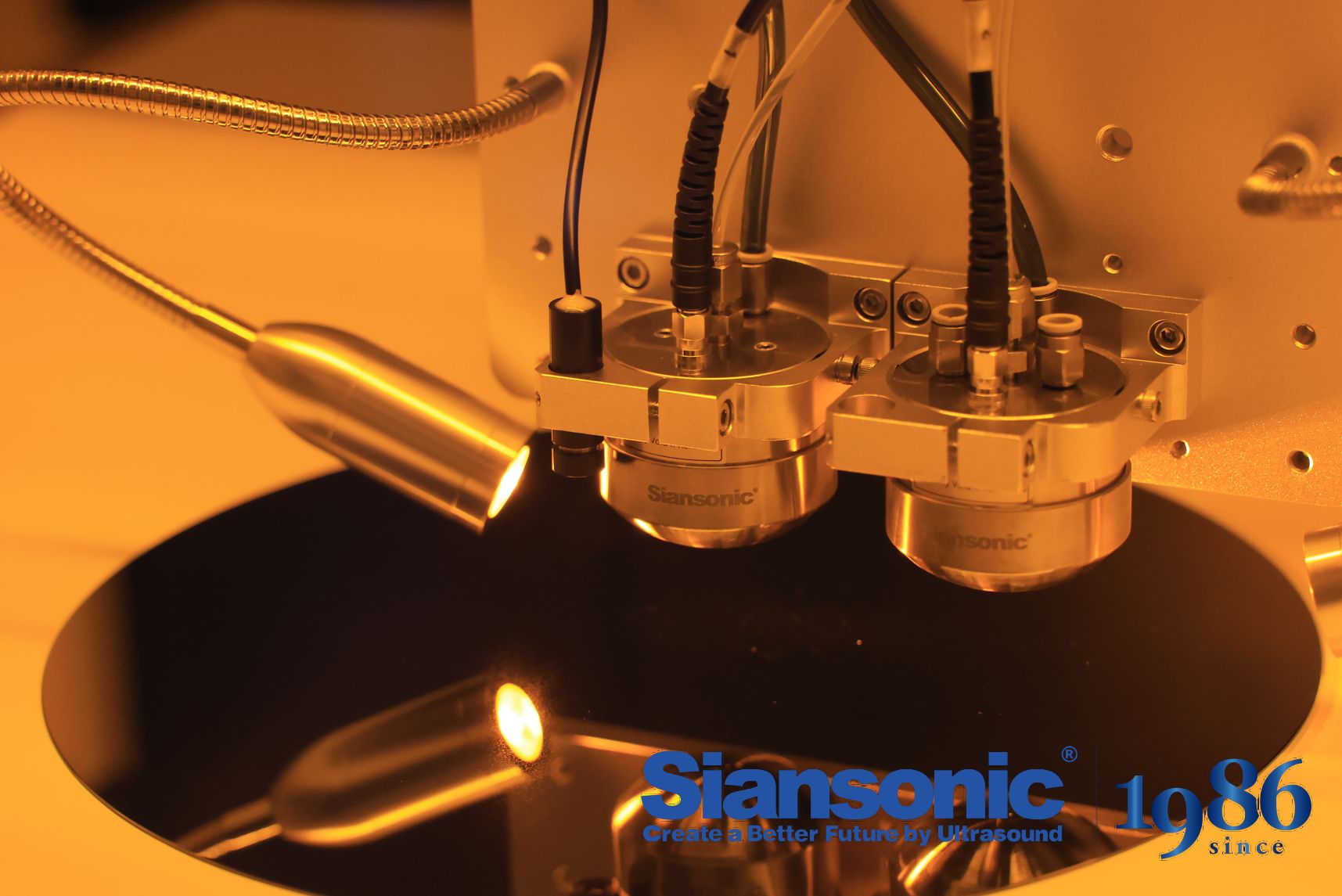
The internal contours of a nozzle do far more than simply channel fluid—they shape every droplet's trajectory before it ever leaves the tip. Sharp edges, gradual tapers, and the length of the straight bore all interact with liquid velocity and viscosity in ways that either stabilize or disrupt the emerging sheet. When those contours deviate even slightly from the intended profile, the spray fans out unevenly, with dense cores and faint edges that undermine coverage.
A well-machined orifice with a precise inlet angle encourages laminar flow right up to the exit plane, allowing the liquid to break into droplets of consistent size and velocity. Conversely, rough surfaces or abrupt diameter changes create localized turbulence and cavitation, which tear the sheet unpredictably. The result is a pattern that shifts with pressure fluctuations, leaving operators chasing uniformity that the geometry itself cannot deliver.
This is why two nozzles with identical flow ratings can perform so differently in the field—one produces a crisp, even band while the other streaks and drifts. The difference is rarely in the fluid or the pump; it lives in the subtle geometry of the discharge orifice, the approach channel, and the edge finish. Mastering those details is the real key to consistent coverage across every pass.
Fine-Tuning Frequency for Consistent Atomization
Finding the right drive frequency is rarely a set-and-forget task. Small changes in liquid temperature or batch-to-batch viscosity shifts can pull the atomizer away from its resonant peak, causing droplets to grow unevenly. By sweeping the frequency in tight increments—often as little as 0.5 kHz at a time—you can lock back onto the point where the standing wave pattern stabilizes and the plume returns to a uniform mist.
Some systems benefit from a short calibration run before each production shift. During this run, the controller monitors backpressure or optical droplet size and adjusts the frequency upward or downward until the spray cone narrows and the droplet distribution tightens. This approach avoids the common mistake of compensating with higher liquid flow, which tends to produce larger, irregular droplets rather than fixing the atomization problem.
It also helps to log frequency adjustments alongside ambient conditions. Over time, patterns emerge: a rise in humidity may call for a slight downward shift, while a drop in liquid level changes the acoustic load on the transducer. Fine-tuning with these trends in mind keeps atomization consistent without repeated manual intervention.
Controlling Droplet Size Without Sacrificing Throughput
Traditional droplet generators often force a trade-off: smaller droplets require tighter channels or lower flow rates, which throttles overall output. Newer designs sidestep this by decoupling droplet formation from throughput entirely. Instead of relying on channel geometry alone, these systems modulate interfacial tension or introduce a secondary pressure pulse that pinches off droplets at a precise point in the flow, regardless of how fast the continuous phase is moving.
One practical approach uses a dual-pump configuration where the dispersed phase is delivered through a narrow capillary while the continuous phase sweeps past at a much higher velocity. By adjusting only the frequency of a mechanical oscillator attached to the capillary tip, droplet volume can be shifted across a wide range without altering the flow rates that determine how many droplets are produced per second. This means a single setup can generate monodisperse droplets from 10 to 200 microns while maintaining the same production speed.
The payoff is substantial for applications like single-cell encapsulation or high-throughput screening, where both size consistency and sheer numbers matter. Operators no longer need to choose between fine control and fast output; the two parameters become independent. As a result, process development cycles shorten, and the same platform can serve multiple product specifications simply by tweaking a control parameter rather than swapping hardware.
The Role of Liquid Feed Stability in Even Film Deposition
Maintaining a consistent liquid feed is one of those quiet details that separates a flawless coating from a patchy one. When the feed flow wavers, even by a fraction, the film thickness drifts with it. You can see it as faint bands or subtle ripples across the substrate, and no amount of downstream correction fully hides the defect. The real work happens before the coating head, where temperature swings, dissolved gas, and particulate settling all conspire to unsteady the stream. A stable feed means the fluid reaches the deposition zone with the same viscosity, density, and composition every second, giving the wet film a fighting chance to level out uniformly.
The connection between stability and evenness becomes obvious once you trace the path of a single droplet. In slot-die coating or curtain coating, pressure fluctuations upstream translate directly into local thickness variations. A tiny air bubble collapsing inside the feed line can leave a thin spot that persists for meters. Similarly, if solids settle in a suspension, the top and bottom layers of the reservoir differ in solids content, so the film inherits that gradient. Stirring alone is not enough; the circulation loop, filter placement, and even the length of piping contribute to whether the fluid reaches the applicator as a homogeneous, pulse-free sheet.
What often gets overlooked is that stability is not a static property but a dynamic one. It must hold across an entire production run, not just during startup. Thermal drift in the feed system can slowly change the fluid's rheology, while evaporation from an open tank shifts concentration. A well-designed feed system treats the liquid as a living thing that needs constant, gentle correction. Pulse dampeners, jacketed lines, and slow recirculation all help smooth out the noise. When every drop arrives with the same history and the same momentum, the deposited film can spread evenly and dry without internal stress, giving the final product a surface that feels deliberate rather than accidental.
Surface Finish and Its Hidden Impact on Spray Performance
Most people treat surface finish as a cosmetic afterthought, but it quietly shapes how a sprayed coating behaves the moment droplets hit the substrate. A highly polished surface is not always your friend. On very smooth metal or plastic, atomized liquid can bead up, skid, or run before it has time to wet out and form a continuous film. A fine, controlled texture—whether from blasting, etching, or machining—gives the fluid microscopic purchase, helping it spread evenly and hold on vertical or curved sections.
The real trouble is that these effects don't show up in a quick visual check. Micro-valleys and peaks in a rough surface trap air and solvent as the film settles, which later appears as pinholes, craters, or a patchy dry spray edge. On the flip side, an overly slick surface encourages sagging and edge pull-back. Production parts rarely match the finish of lab test panels, so a spray recipe that works on a polished coupon can fail on a cast or brushed component. Reading the actual texture—not just a single Ra number—and adjusting fluid flow, air pressure, or gun angle accordingly is what separates a reliable finish from one that looks fine until it cures.
FAQ
Frequency dictates median droplet size. Higher frequencies like 120 kHz produce finer droplets for thinner, smoother films, while lower frequencies handle higher viscosity but may create larger droplets and more texture. Matching frequency to the coating's target thickness and rheology is the first real cutoff.
Start with viscosity, surface tension, and solids content. Low-viscosity, low-surface-tension fluids atomize well at moderate power; higher solids or shear-sensitive materials may need a wider orifice or gentler amplitude. A quick bench trial with adjustable power and flow rate reveals the stable atomization window far better than any datasheet.
The internal feed path, O-ring placement, and front horn shape all affect how liquid reaches the atomizing surface. Dead zones or sharp transitions can cause pulsation or intermittent drying at the tip, which shows up as banding or streaks in the coating. A custom geometry can keep the fluid velocity consistent right up to the atomization point.
Typically from 0.1 to 30 ml/min per nozzle, but stable atomization depends on power density and liquid properties. Too low a flow may cause intermittent droplet formation; too high can flood the tip and create large droplets. For ultra-thin films, staying in the lower third of the stable range often yields better uniformity.
Edge defects usually come from spray pattern overlap, substrate temperature gradients, or air currents. Use a narrow, well-defined spray plume with adjustable shaping air, and program a slight acceleration or overspray at the edges. Controlling evaporation rate with a heated chuck also reduces pinhole formation from trapped solvent.
Build in easy access to the atomizing surface and use chemically compatible seals. A sealed transducer housing prevents liquid ingress, and a replaceable tip cartridge allows quick swaps without recalibrating the whole line. Periodic amplitude checks under load are more useful than visual inspection alone.
If the substrate width exceeds about 150-200 mm or throughput demands high line speeds, a single nozzle scanning can create stitch lines or uneven dwell time. A fixed array with carefully overlapped plumes can deliver more consistent coverage, but it requires tighter flow matching and alignment to avoid interference between adjacent nozzles.
Use a combination of contact and optical methods: stylus profilometry or ellipsometry for thickness maps, plus visual inspection under grazing light for streaks. Measure both within-wafer or within-panel uniformity and run-to-run repeatability. A robust design should hold thickness variation below 3-5% after a brief warm-up period.
Conclusion
Getting a consistent thin film from an ultrasonic nozzle starts well before any liquid reaches the tip. The nozzle body has to survive constant contact with solvents, precursors, or nanoparticle suspensions, so material selection is rarely a generic choice; a chemistry that etches stainless steel may demand titanium or a fluoropolymer-lined flow path. Beyond chemical compatibility, the internal and external geometry determines how evenly the spray fans out. A poorly machined orifice or an off-center feed channel can create streaks or edge-heavy patterns even when the transducer is perfectly tuned. Frequency adjustments then act as the fine control for droplet formation: running slightly off the nominal resonance can shift the atomization energy enough to produce a narrower size distribution, but only if the nozzle was designed to tolerate that offset without losing stability.
Droplet size and throughput usually pull in opposite directions, so the real challenge lies in shaping the amplitude and flow rate together rather than pushing one at the expense of the other. A stable liquid feed is just as critical; pulses or micro-bubbles from a peristaltic pump translate directly into thickness variation on the substrate, so gravity-fed or pressure-dampened systems often outperform simple tubing setups. The internal surface finish is easy to overlook but has a measurable effect. Roughness near the atomizing surface can trap particles or create nucleation sites that disrupt the capillary wave pattern, leading to spitting or periodic density changes. Polishing those surfaces to a consistent low Ra, and verifying cleanliness after machining, removes one of the last hidden variables. These details are why custom ultrasonic nozzles are not just scaled-down versions of standard designs; each element has to be matched to the coating fluid and the target uniformity.
Contact Us
Contact Person: Ivy Zhang
Email: [email protected]
Tel/WhatsApp: +86 1081502288
Website: https://www.siansonic.com/