Grating Clip Supplier Insights: Quality Clips for Secure Grating Installations
2026-06-12
Grating installations demand more than just sturdy panels—they rely on the small but critical components that hold everything together. A single compromised clip can trigger cascading failures, making clip selection a non-negotiable priority. At Sino Grating, we’ve seen how quality clips transform installations from vulnerable to virtually unshakeable. Dive into the essentials of clip performance, materials, and design that keep your grating safe and secure for the long haul.
What Makes a Grating Clip Truly Reliable?
A reliable grating clip starts with material integrity. It’s not just about using stainless steel or galvanized alloys; it’s about the grain structure and corrosion resistance that hold up under thermal cycling and chemical exposure. In facilities where washdowns are daily or salt air is constant, subtle pitting can start a cascade of failures. The best clips are forged or stamped from grades like 316L or duplex stainless, with a finish that resists crevice corrosion. You can spot quality in the uniform thickness and absence of sharp edges that stress the grating itself. It’s the kind of detail that separates a fix that lasts a decade from one that rusts through in two years.
Locking mechanism design is the second pillar. A clip can be made of the best metal but still fail if it can’t stay put under vibration or heavy foot traffic. True reliability comes from a positive retention system—think saddle clips with a serrated fastener or a wedge that bites into the grating bar without deforming it. The twist-test reveals a lot: a properly seated clip won’t budge even if you hit it with a rubber mallet. Installation torque matters too. Over-tightening strips threads; under-tightening invites movement. The most dependable designs include a visual indicator or a built-in stop to guide the installer, removing guesswork. That’s how you get consistent clamping force across thousands of clips on a single platform.
Finally, dimensional compatibility can’t be an afterthought. Grating comes with slight variations—bearing bar spacing, height, and thickness can deviate within tolerances. A clip that only works on perfectly uniform panels is a liability. Reliable clips accommodate real-world fabrication variances with adjustable features or flexible engagement. The profile should sit flush against both the bar and the supporting member, distributing load without point loading. When you can walk across a grating and not feel a single clip move under your boots, you know the engineering got it right. It’s that combination of material, mechanism, and fit that makes a grating clip truly reliable—not just a commodity part, but a fastening solution that keeps people safe without constant maintenance.
Avoiding Installation Pitfalls with the Right Clips
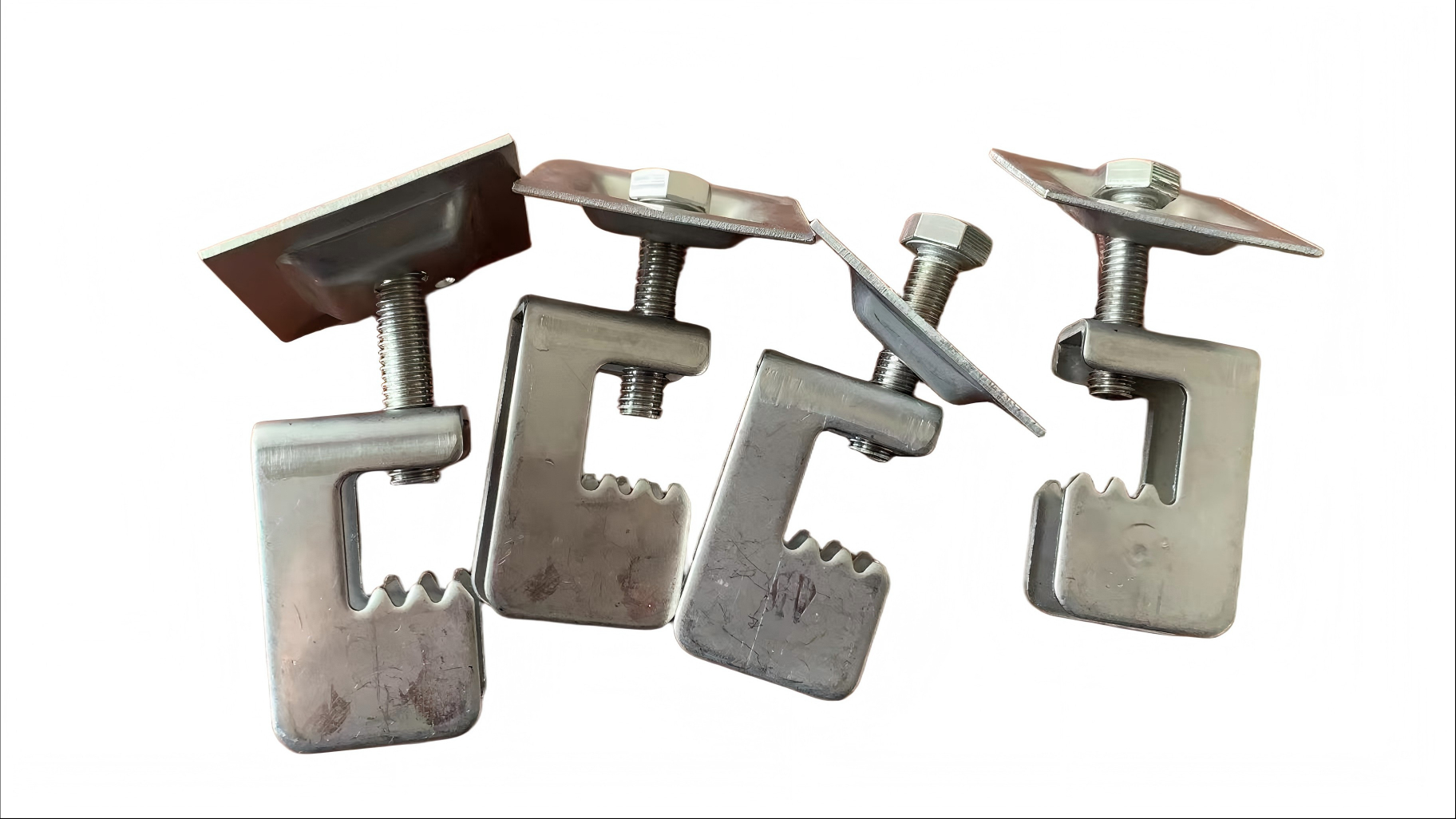
One of the most overlooked details during installation is the humble clip. Relying on generic fasteners can lead to sagging panels, stripped threads, or even structural issues down the road. The right clip, however, is designed to accommodate the specific material thickness and texture, providing a snug grip without gouging or warping. When every component stays exactly where it should, you eliminate the need for frustrating mid-project adjustments and callbacks.
Another common misstep is ignoring environmental factors. Outdoor installations, for instance, demand clips with corrosion-resistant coatings, while high-vibration settings require locking mechanisms that won’t loosen over time. Pairing the clip to the real-world conditions—not just the surface—keeps your work stable and maintenance-free. A little research upfront avoids the domino effect of a single failed fastener compromising an entire assembly.
Installers often learn the hard way that speed matters, but not at the expense of reliability. Specialized clips often feature alignment tabs or integrated levels that slash labor time without sacrificing precision. By investing in purpose-built solutions, you transform a potential headache into a seamless process, ensuring the finished project looks crisp and stays that way for years.
Materials That Withstand Harsh Environments
When you push a machine beyond its comfort zone—think jet engines roaring at temperatures that melt ordinary steel, or subsea valves grinding against abrasive slurries miles underwater—the material it's made from isn't just a passive shell. It's the frontline defense. Harsh environments don't just test tensile strength on a spec sheet; they attack with corrosion, thermal shock, erosion, and fatigue in ways that are often unpredictable. A nickel-based superalloy that laughs at 1,000°C might suddenly crack under rapid cooling. A polymer seal that's perfect in acid can swell and fail when a trace of hydrocarbon sneaks in. Real material selection becomes more of a dark art than a checklist, blending experience with a healthy respect for how things break when nobody's watching.
What's quietly shifting the field isn't just one miracle alloy, but a broader willingness to borrow from biology and embrace imperfection on purpose. Porous ceramics that survive thermal cycling by sacrificing a micro-layer each time, much like our own skin. Hydrate-swollen hydrogels that replicate the slickness of fish scales to cut drag in water treatment pipes. Even commodity steels get a second life with nitriding baths that diffuse nitrogen deep into the grain, creating a gradient shell that resists wear without the brittleness of a hard coating. The luxury of picking the "perfect" material rarely exists—you've got cost, weight, and machinability breathing down your neck—so the clever solutions often hide in the processing, the heat treat, or a thousand tiny compromises that add up to a part that simply refuses to die early.
The Role of Clip Design in Long-Term Stability
Clip design often gets overlooked when people talk about long-term stability, but it’s actually one of the most decisive factors. The geometry of the clip—everything from the angle of the clamping arms to the distribution of contact points—determines how evenly force is spread across the mating surfaces. If the design is too rigid in the wrong places, it can concentrate stress and lead to gradual deformation or micro-slippage. On the other hand, a well-thought-out shape can absorb vibrations and thermal expansion without loosening, essentially buying years of reliable performance.
Material choice is just as crucial, and it’s not simply a matter of picking the strongest alloy. A clip needs to maintain its spring properties across the entire operating temperature range, resist corrosion, and avoid cold welding with the parts it touches. Sometimes, a slight reduction in initial clamping force is worth it if the material stays more consistent over a decade of thermal cycling. The interaction between the clip and the substrate matters too—hardness mismatches or galling tendencies can silently eat away at stability long before anyone notices a visible problem.
Installation itself is a wildcard that clip design can either tame or amplify. If the clip is forgiving to minor assembly variations, it seats correctly every time, even when alignment isn’t perfect. Features like guide-in chamfers or designed-in flex zones reduce the installer’s influence on the final joint quality. That kind of robustness at the initial stage pays dividends later because a clip that starts off less stressed stays consistently engaged through years of use, shock, and changing environmental conditions.
Expert Tips for Sourcing High-Quality Clips
Finding clips that actually hold their own in a project starts with knowing where to look and, just as importantly, what to ignore. Skip the sprawling aggregators that promise millions of files, because volume rarely equals value. Instead, get familiar with niche libraries curated by editors who understand licensing nuance and technical benchmarks. It’s the difference between endless scrolling and landing on footage that already fits your timeline’s color grade, frame rate, and resolution without a second round of fixes.
The real trick is building a network of contributors and small studios that shoot with intention. When you connect directly with creators, you’re not just licensing a clip—you’re tapping into b‑roll that carries a distinct visual language, often with cleaner metadata and far fewer compression artifacts. Ask for previews that go beyond the hero shot; request the full log of what was captured around it. That stray detail—a quiet reaction, a shift in light—often becomes the shot that ties your sequence together.
Before you commit, run a quick forensic test: open the clip on a calibrated display, push the exposure a couple of stops, and look for banding or sensor noise that’s been masked by the preview render. High‑quality sources hold up under post‑production stress without breaking apart. The best clips aren’t the ones that look flawless on the surface—they’re the ones that keep their integrity when you actually treat them like raw material, not finished product.
Real-World Applications: Where Quality Clips Shine
When you think about projects that genuinely move people, it’s often the quality of the clips that makes the difference. In advertising, a well-curated set of high-end footage doesn’t just sell a product—it creates a mood, tells a story, and leaves a lasting impression. The right visuals can turn a simple message into something aspirational, making viewers feel like they’re part of something bigger than a transaction.
Documentaries and branded content rely on the same principle. Raw, poorly lit clips rarely evoke the emotional weight needed to keep an audience engaged. But when every shot is crisp, intentionally composed, and rich in detail, the narrative becomes impossible to ignore. It’s why production houses invest in premium libraries—those clips act as the backbone of projects that aim to inform, inspire, or provoke thought.
Even in corporate settings, where the goal might be internal training or executive presentations, quality footage can transform dry material into compelling storytelling. It signals professionalism and respect for the viewer’s time. The bottom line is simple: whether you’re crafting a social media ad or a feature-length piece, superior clips don’t just fill screen time—they elevate the entire project, making it memorable for all the right reasons.
FAQ
Grating clips are fasteners designed to secure metal grating panels to their support structures, preventing movement, shifting, or lifting. They're essential for creating stable walking surfaces in industrial platforms, catwalks, and drainage covers.
Start by identifying the grating type, bar thickness, and flange dimensions. Consider the load requirements and environmental conditions – for corrosive settings, choose stainless steel. Proper fit is critical, so always match the clip to the exact grating specifications.
Common materials include galvanized steel for general use, 304 or 316 stainless steel for corrosion resistance, and sometimes aluminum for lightweight applications. The choice depends on the installation environment and required durability.
High-quality clips ensure a tight, reliable hold under heavy traffic and vibration, reducing maintenance and eliminating safety hazards caused by loose grating. Investing in durable clips prevents costly repairs and extends the life of the installation.
If you have basic mechanical skills and the right tools, many clip types are straightforward to install following manufacturer guidelines. However, for large-scale or complex configurations, bringing in an experienced installer ensures every clip is properly seated and torqued.
Look for visible rust or corrosion, cracks in the clip body, loose bolts, or any movement of the grating panel when walked on. Unusual noises or rocking panels are clear indicators that clips need inspection or replacement.
Schedule routine visual inspections to check for loosening, corrosion, or damage. Tighten fasteners as needed, replace corroded clips promptly, and keep the area clean of debris that can accelerate wear. A little preventive care goes a long way.
Conclusion
The reliability of a grating clip hinges on a blend of thoughtful design and robust material selection. A clip that truly secures grating over time must resist lateral movement and vibration without compromising the structural integrity of the grating itself. Stainless steel and advanced alloys dominate the field for their corrosion resistance, especially in chemical plants or coastal installations where salt spray and moisture are constant threats. Beyond material, the clip geometry plays an underappreciated role: features like saddle-shaped saddles, precision serrations, and integrated locking mechanisms distribute load evenly and prevent loosening. Installation pitfalls often stem from mismatched clip types or improper torque, which can lead to grating lift, noise, or premature wear. Choosing the right clip for the specific grating type and environment is not just a precaution—it’s a fundamental step toward a maintenance-free installation.
Sourcing high-quality clips requires a discerning eye. Suppliers with in-house testing capabilities, such as salt-spray and load-cycle tests, offer an added layer of assurance. Look for expertise in custom fabrication, as off-the-shelf solutions rarely address every challenge, from open-area requirements to fire-rated conditions. Real-world success stories reveal that quality clips excel in demanding settings: offshore platforms, wastewater treatment facilities, and pedestrian bridges where safety and longevity are non-negotiable. In these applications, a well-chosen clip becomes invisible yet indispensable, silently upholding grating performance year after year. Partnering with a supplier that understands the interplay between material science, design, and on-site realities transforms a simple fastener into a cornerstone of secure infrastructure.
Contact Us
Contact Person: Nicholas Zhu
Email: [email protected]
Tel/WhatsApp: 18921275456
Website: https://www.sino-grate.com