
Hidden Attractions in Lijiang: A Guide to Experiencing Them Authentically
2026-08-01
Lijiang’s ancient town is no secret, but beyond its cobbled lanes and bustling squares lies a quieter, more enchanting world. Tucked into the foothills at the base of Jade Dragon Snow Mountain, Jade Water Village feels like a realm forgotten by time—where crystal springs weave through stone courtyards and Naxi culture breathes in every wooden carving. This isn’t the Lijiang you’ll find on postcards; it’s the one you stumble upon when you wander just a little further. In this guide, we’ll peel back the layers of Lijiang’s hidden attractions, showing you how to experience them with authenticity and heart.
Wandering the Back Lanes of Dayan After Dark
As the last glimmers of daylight fade behind the rooftops, Dayan’s back lanes transform into a world apart. The din of the main squares subsides, replaced by the soft, orange glow of lanterns swinging gently in the evening breeze. Here, the cobblestones, worn smooth by centuries of footsteps, seem to exhale stories. You might hear the distant strum of a guitar from an open courtyard, or catch the scent of woodsmoke and spices wafting from a hidden kitchen. It’s in these narrow passageways, away from the throngs, that the old town truly comes alive, intimate and unhurried.
Stray from the well-trodden path and you’ll find tiny plazas where local elders gather on wooden stools, their murmured conversations punctuated by the clack of domino tiles. A cat slinks along a wall, eyeing you with mild curiosity before disappearing into a crack. You might stumble upon a small shop still open, its keeper carving intricate designs into leather by the light of a single bulb. These moments feel like secrets whispered just for you, far from the selfie sticks and souvenir stalls. The darkness isn’t something to fear here; it acts as a curtain, drawing back to reveal the town’s quieter, more honest self.
Every turn offers a new vignette: an ancient well adorned with faded prayer flags, a doorway framed by cascading bougainvillea that glows under the moon. The air carries the occasional laughter from a rooftop terrace, mixing with the melody of a distant flute. In these lanes, time seems to loosen its grip, inviting you to wander without purpose and soak in the gentle magic of Dayan after dark.
A Farmer’s Breakfast in a Stone Village Above the Clouds
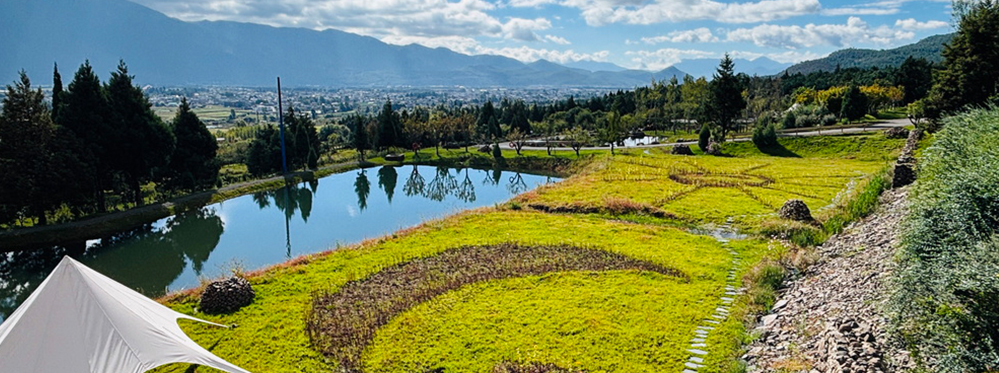
In this mist-wrapped hamlet perched high above the valleys, morning begins not with alarms but with the gentle crackle of a wood fire. The farmer’s breakfast is honest and unhurried, a ritual shaped by stone and soil. Thick slabs of homemade bread, still warm from the outdoor oven, are torn by hand and dipped into golden olive oil pressed from the village’s own gnarled trees. A wedge of sharp sheep’s cheese, aged in the cool cellars beneath the houses, crumbles onto a plate alongside a handful of sun-dried tomatoes that taste of last summer. There’s no menu, no rush – just the quiet pleasure of food that remembers where it came from.
What makes this meal extraordinary isn’t any single ingredient but the way they all speak to the place itself. Eggs, yolks the colour of marigolds, come from hens that scratch between the cobblestones, and they’re fried in a blackened pan until the edges are lacy and crisp. A spoonful of wild herb pesto – made from marjoram and thyme gathered on the slopes – cuts through the richness. Even the tea is local: dried mint leaves steeped in water boiled over the embers, served in a chipped enamel cup. Eating here, at a table worn smooth by generations, you taste the altitude, the thin air, the limestone. Nothing is hidden behind sauces or garnishes; the flavours are as direct as the people.
Breakfast stretches long here, often leading into conversations with neighbours who stop by to share gossip or a handful of almonds. The stone walls of the house hold the coolness of the night, and through the open window, clouds drift at eye level. It’s a meal that nourishes more than the body – it reconnects you to a rhythm of life that the lowlands have nearly forgotten. By the time the last bit of bread is used to mop up the plate, the sun has burned through the fog, but the taste of that simple feast lingers, a reminder of mornings lived close to the sky.
Learning the Art of Dongba Paper from a Quiet Master
The master rarely spoke. His hands, weathered and stained with plant dyes, did the teaching. When I first arrived, he simply handed me a stack of dried wikstroemia bark and pointed toward the stone basin. No explanation — just the soft rustle of fiber and the distant rush of mountain water. It took me three days to understand that the lesson wasn't in his words, but in the rhythm of his movements: the patient soaking, the mindful beating of pulp, the way he tilted the screen just so against the morning light.
I learned to listen to the vat. The pulp whispered when it was ready — a subtle change in sound as the slurry thickened. The master would occasionally place a calloused finger on my wrist, adjusting my dipping angle by a fraction, then retreat to his corner to strip more bark. As the days passed, my sheets grew thinner, more even. One afternoon, without praise, he held one of my sheets to the sun, and the cosmos of plant fibers glowed. He nodded once, and I felt I had received the entire lineage of the Naxi ancestors in that small gesture.
The Forgotten Monastery Where Time Moves Slower
Tucked into a fold of the mountains where mist never fully lifts, the monastery reveals itself stone by weathered stone. No tour buses rumble up here, no gift shop peddles postcards—only the slow drip of water from a leaking gargoyle and the shuffle of a monk’s sandals on flagstones worn smooth over centuries. Inside, the air tastes of cold stone and beeswax, and light falls in dusty columns through windows set high in the walls. There is no schedule, no rush; even the Gregorian chants seem to stretch time, each note held long enough to lose itself in the rafters.
The monks here keep no clocks, following instead the tilt of the sun and the rhythm of the seasons. You might wander into the herb garden and find a brother pruning rosemary with the patience of someone for whom tomorrow and today are nearly the same leaf. In the scriptorium, visitors are invited to sit—not to pray, unless they wish, but simply to be still. It’s in that stillness that the oddest thing happens: fifteen minutes can feel like an hour, and yet the hour passes without you noticing. Some say the altitude changes your perception; others believe the thick walls somehow insulate the place from the modern world’s frantic pulse.
What stays with you is the silence—or rather, the depth of it. It’s not an absence but a presence, filled with the creak of ancient beams, the distant bleat of a goat, the scratch of a nib in the next room. You leave with the sensation that time here is not a line but a pool, deep and clear and barely rippling. And when you finally descend back into the valley, the sun still high though you’ve been gone all day, you understand why this place was never “forgotten”—just kept safe from those who would hurry through it.
Riverside Picnics with a View of Jade Dragon’s Hidden Face
There's a quiet stretch along the river where the willows dip low, and you can spread a blanket right at the water's edge. The current murmurs over smooth stones while you unpack fresh bread, local cheese, and a few ripe peaches. Across the valley, Jade Dragon Snow Mountain looms in its usual cloak of mist—only offering fleeting glimpses of its glaciated peak when the clouds shift just so. It’s not a postcard view you can count on, but that’s exactly what makes it feel earned.
The mountain has a way of playing hide-and-seek all afternoon. One moment you're slicing fruit, the next someone gasps because a sliver of white breaks through the gray. Everyone stops mid-bite to watch, as if the mountain might vanish again if they look away. Locals say the peak only shows itself to those who aren't in a hurry, and there's something to that when you're lying back on a blanket with nowhere else to be. The hidden face stays hidden most of the time, and that rarity pulls you into the moment.
As the light softens toward evening, the river catches a silver glow and the air cools just enough to make you pull on a sweater. You might hear distant cowbells from a farm across the water or catch the scent of woodsmoke drifting from a village up the road. The mountain, for a few brief minutes, might fully reveal its jagged spine, and the entire scene feels like a secret you stumbled upon by accident. By the time you pack up, with grass stains on the blanket and a little sand in your shoes, you realize the imperfections were the whole point.
Finding the Heart of Lijiang in Its Rooftop Gardens
In the old town of Lijiang, the true pulse of the city doesn't beat along its crowded cobblestone lanes or within its bustling tea houses—it hums quietly above, on the rooftop gardens that crown nearly every traditional Naxi home. These elevated pockets of green, often overlooked by visitors rushing from one landmark to the next, offer an intimate window into the daily rhythms and spiritual life of the people who have lived here for centuries. Up here, among pots of blooming rhododendrons, trellises heavy with grapes, and wooden racks drying golden chrysanthemums, you'll find a world that remains stubbornly authentic, untouched by the tide of tourism below.
Each rooftop tells a story. Some are practical, filled with vegetables and herbs that will become the next meal, while others are designed for quiet contemplation, with a single wooden bench positioned to catch the last rays of sun over Jade Dragon Snow Mountain. It's common to see an elderly Naxi woman watering her plants in the early morning, her blue apron a familiar flash against the weathered tiles, or a young couple sharing tea as the paper lanterns begin to glow at dusk. These scenes are not staged for cameras; they are the real, unscripted moments that reveal how deeply the Naxi culture is tied to nature, family, and the simple art of cultivating beauty in the spaces between waking and sleep.
To truly find the heart of Lijiang, you need to look up, or better yet, gain an invitation to one of these rooftop sanctuaries. Many guesthouses now open their upper terraces to overnight visitors, and some families will welcome you for a cup of locally grown tea if you show genuine curiosity and respect. Once there, linger long enough to hear the flutter of dove wings, the distant murmur of the canals, and the soft creak of ancient timber—sounds that have echoed across these roofs for generations. In that suspended stillness, far from the jostle of tourists and the glow of souvenir shops, you'll discover a Lijiang that still breathes, still dreams, and still belongs to itself.
FAQ
Beyond the usual stops like Jade Dragon Snow Mountain, places like Wenhai Village, the hamlets near Baisha Murals, and Liming’s Thousand Turtle Mountain stay wonderfully quiet and raw.
Skip the staged shows. Stay at a family guesthouse in Baisha or Shuhe, learn to make baba bread with your hosts, or join a village bonfire gathering—it’s far more genuine.
Absolutely. Shigu Town, perched beside the First Bend of the Yangtze, has almost no commercial feel. Even more striking is Baoshan Stone Village, a settlement built entirely on a massive rock.
Head to the eateries around Xiangshan Market. A steaming pot of cured pork rib hotpot or a plate of chickpea jelly there tastes exactly like what locals cook at home. If the owner’s too busy to chat, you’re in the right place.
Instead of the crowded Baisha ticket booth, wander deeper into the village. You’ll stumble on small, unmarked temples with genuinely old, faded murals. Also, Yufeng Temple in spring, with its 500-year-old camellia tree in full bloom, is a quiet marvel.
Try Shaxi Ancient Town, just over an hour away. Once a bustling market on the Tea Horse Road, its old theater and village gate remain intact. Friday mornings still draw local traders with baskets on their backs—time truly slows down here.
In autumn, Zhongji Lake turns sapphire blue, framed by golden metasequoias, and you’ll share the view with barely anyone. In winter, take a 20-minute taxi to Wenbi Lake to watch black-necked cranes in blissful silence.
Conclusion
As dusk settles over Dayan, the usual crowds thin and the ancient town reveals a quieter self. Slip into the back lanes where lantern light spills unevenly across cobblestones, and the only soundtrack is the distant murmur of a Naxi lullaby drifting from a wooden doorway. There’s no map for this—just a willingness to turn left where others go right, to follow the scent of woodsmoke until you find a courtyard where elders still trade stories over tea. Come morning, the experience deepens beyond the old town. High in the mountains, a stone village perches above the clouds, its terraced fields catching the first light. Here, breakfast is an unhurried ritual: thick slabs of baba bread torn by hand, a bowl of yak butter tea that warms you from the inside, and the farmer’s quiet pride as he gestures toward the peaks he’s called home for generations. It’s a taste of Lijiang that no restaurant can replicate, rooted in soil and season.
The authentic soul of Lijiang also reveals itself through hands and stillness. In a small workshop tucked away from the tourist trails, a master of Dongba papermaking works in near silence—his hands moving through the ancient motions of soaking bark, pounding fibers, and pressing sheets with a patience that feels almost meditative. To learn from him is to touch a lineage that predates the printed word. Equally unhurried is a forgotten monastery up a winding path, where prayer flags flutter in thin air and a lone monk might offer you a cup of jasmine tea. The minutes don’t tick here; they dissolve. Down by the river, the best seat is a mat spread on the grass, a picnic of cured ham and wild mushrooms laid out as Jade Dragon Snow Mountain reveals its elusive face between swirling mists. And when you climb to a rooftop garden at the city’s edge—tended by a grandmother who speaks no English but communicates through the roses she’s nurtured for decades—you realize Lijiang’s heart isn’t found in a landmark. It’s in these quiet intersections, where place, tradition, and people still breathe together.
Contact Us
Contact Person: Changhong He
Email: [email protected]
Tel/WhatsApp: 086-0888-5190152
Website: https://vip.e-baixing.com/ysh