
High Titanium White Masterbatch – Which One Is Best for Your Needs?
2026-08-28
Not all high titanium white masterbatches are created equal. Some promise brightness but deliver chalky surfaces; others offer opacity at the cost of processability. So which one actually deserves a place in your production line? That is the question we are answering today—with insights on what separates a premium high titanium white masterbatch from the rest, and why Xinwancai has become a go-to choice for demanding applications.
Titanium Loading Alone Won’t Fix Your Opacity Problem
Many formulators reach for more titanium dioxide the moment opacity drops, but that instinct often backfires. Titanium dioxide delivers hiding power through light scattering, which depends heavily on how well the particles are separated. If the pigment is already flocculated or crowded, adding another bag simply forces particles closer together, reducing scattering efficiency and wasting money.
The real issue is usually dispersion quality and the surrounding formulation. Overgrinding can break down pigment aggregates but also destabilize the dispersion, while undergrinding leaves clusters that behave like larger particles with lower hiding power. Resin demand, extender selection, and the overall pigment volume concentration shift the effective spacing between TiO₂ particles more than a modest loading increase ever will.
Instead of chasing opacity with more titanium dioxide, check the grind fineness, adjust dispersant demand, or reformulate with extenders that create dry hiding. A well-dispersed system at lower TiO₂ levels frequently outperforms a highly loaded, poorly dispersed one—and at a fraction of the cost.
Carrier Resin Mismatch Is a Silent Line Stopper
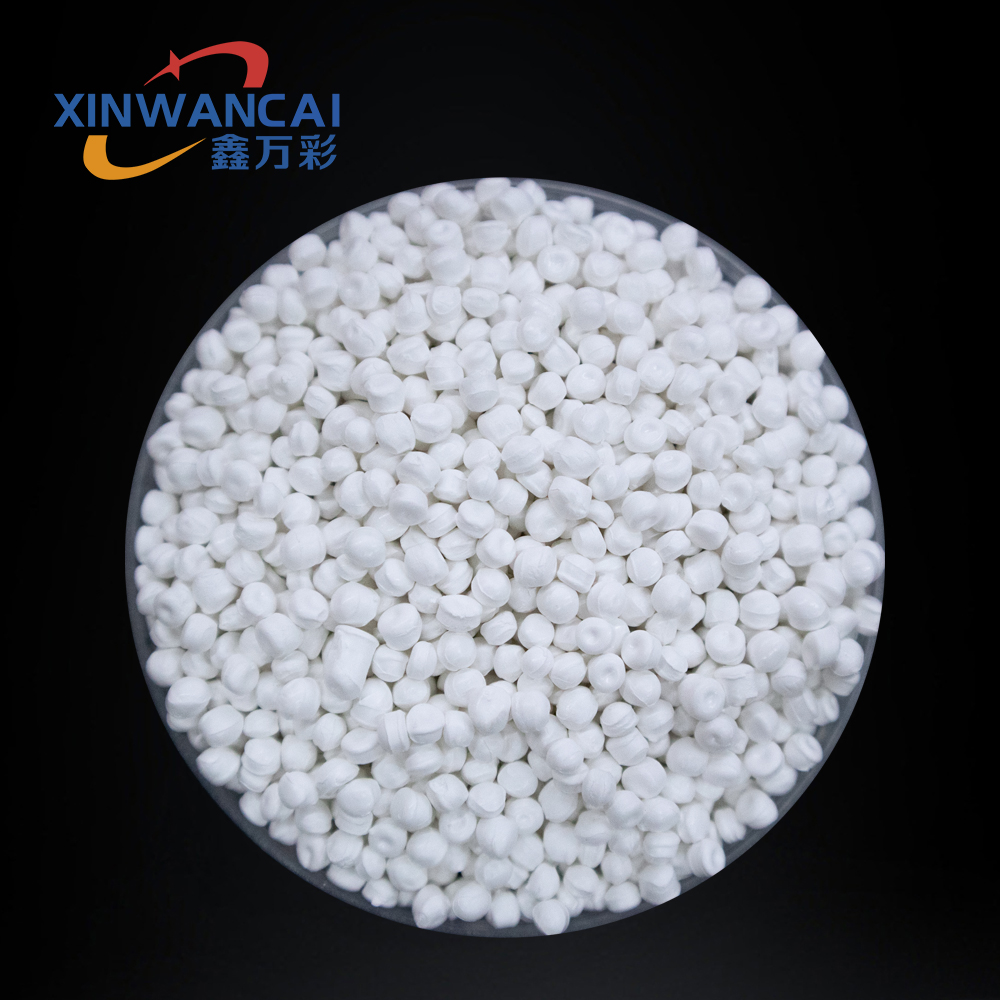
In masterbatch and compounding work, the carrier resin is rarely the first thing anyone checks when a line begins to slow. It sits behind the pigment or additive load, doing a quiet job: carrying the active ingredients into the host polymer and letting them disperse. But a mismatch between that carrier and the base resin can produce a slow, creeping failure that looks like a dozen other problems. Operators adjust temperatures, tweak screw speed, and change filters, yet the real culprit remains hidden in the feedstock.
The damage often appears only after the product has moved further down the line. A polyethylene-based carrier dropped into nylon, for example, can create micro-domains that weaken thin wall sections or leave inconsistent surface gloss. Because these flaws don't always show up in immediate visual checks, entire shifts can run before someone notices a rising defect rate. That delay is what makes the issue a line stopper—not because equipment halts suddenly, but because production must eventually be paused for diagnosis and cleanup.
Avoiding this hidden failure doesn't require exotic tools. It starts with a direct comparison of the carrier's melt flow, thermal stability, and chemical compatibility against the host resin. Small-scale trials and a quick look at the supplier's recommended carrier for the material grade are often enough. When the carrier and the base resin share a similar molecular backbone or at least overlapping processing windows, the line keeps moving and the scrap rate stays predictable.
Dispersibility: Where Cheap Masterbatch Falls Apart
Take a close look at a molded part or film made with budget masterbatch and you'll likely spot tiny specks or streaks where pigment clumped instead of spreading out. Those defects aren't random—they're the direct result of poor dispersibility. When colorant particles refuse to separate and distribute evenly through the polymer melt, you get visible agglomerates that ruin surface finish, weaken mechanical properties, and make every production run a gamble.
The root cause usually sits in the recipe. Cheap masterbatch skips high-quality carrier resins, effective wetting agents, and proper pigment pre-dispersion. Instead, raw pigment is tossed together with minimal processing, leaving large agglomerates that survive compounding and only break apart under high shear—if at all. In contrast, a well-formulated masterbatch uses dispersants and optimized screw profiles to break particles down to their primary size, something budget suppliers simply don't invest in.
What often surprises processors is that fixing poor dispersion by cranking up barrel temperatures or screw speed rarely works. The damage is already baked into the masterbatch. You end up with higher scrap rates, inconsistent color between lots, and the constant threat of customer complaints. Over time, the so-called savings from cheap masterbatch evaporate once you factor in rejected parts and downtime for purging contaminated material.
Weathering Tests Often Miss These Two Variables
Most weathering standards do a decent job of matching total UV dosage, temperature cycling, and spray frequency. But dig into the details and you'll find two variables that quietly decide whether a material survives outdoors: the precise spectral distribution of the light source and the way moisture actually interacts with the surface between cycles.
A xenon arc with the right filters can approximate sunlight's UV portion, but it rarely matches the sharp rise in irradiance below 300 nanometers that happens during certain seasons or at high-altitude sites. Fluorescent UVA-340 lamps, on the other hand, emphasize a narrow band and can underrepresent the damaging effects of shorter wavelengths. If your material is sensitive to photodegradation near the cutoff, you might see great lab results and terrible field performance.
The second variable is less obvious: how water arrives, lingers, and leaves the surface. Most chambers spray on a schedule, then dry with heat. Real outdoor exposure involves dew that condenses slowly at night, sits in microcracks, and evaporates as the sun comes up. That wet-dry pulsing drives hydrolysis, blistering, and adhesion loss in ways a timed spray simply doesn't replicate. Without deliberate dark-wet and slow-dry periods, your test is blind to a whole class of failure modes.
The Price per Kilogram Can Lie
A kilogram of laundry powder isn't always the same thing. One brand might be dense and concentrated, so a small scoop does the job, while another is fluffy and full of fillers that force you to use twice as much per wash. The price tag shows the cost per kilo, but it never tells you how many loads you'll actually get.
The same trick appears in canned tomatoes, frozen vegetables, or even pet food. Some products are packed in heavy syrup or brine, so you're paying for water weight rather than the good stuff. Comparing price per kilogram without checking the drained weight or the recommended serving size is like comparing apples to apple pie filling.
A Sampling Plan That Catches Bad Batches Early
Most sampling plans are built around a fixed number of units pulled near the end of a production run. By then, a bad batch has already consumed time, material, and line capacity. A plan that catches problems early places smaller checkpoints at the start and uses the first few results to decide whether to keep testing or stop the line. This turns inspection from a final gate into an early warning system.
One practical approach is to use a sequential sampling rule. Instead of committing to a sample size up front, you evaluate each result as it comes in. If the defect count stays below a lower boundary, you accept and move on. If it crosses an upper boundary, you reject without waiting for the rest of the batch. The middle zone simply triggers another sample. This keeps the average sample size low for good batches and flags poor ones within the first handful of units.
The value shows most clearly with high-volume parts or ingredients that tend to drift. A supplier might start out acceptable and then shift during a shift change. Early checkpoints with tight trigger limits catch that shift before it becomes a full shipment of nonconforming product. You can then adjust the process or quarantine only the suspect portion, rather than dealing with a complete batch failure days later.
FAQ
High titanium refers to the percentage of titanium dioxide pigment loaded into the carrier resin. Standard white masterbatch may contain 20–40% TiO2, while high titanium grades usually start around 50% and can reach 70% or more. This higher pigment concentration allows you to use less masterbatch to achieve the same opacity and whiteness, which can reduce handling and improve dispersion in thin-wall or high-speed processes.
Start with the final product’s thickness and opacity target. Thin films, especially those under 30 microns, often need high titanium masterbatch because lower-loaded grades would require excessive let-down ratios that weaken the film or cause surface defects. If your film needs high hiding power without adding bulk, high titanium is usually the better route.
Not automatically. Whiteness depends on both TiO2 content and the crystal form, particle size, and surface treatment of the pigment. A well-dispersed 60% TiO2 masterbatch can outperform a poorly dispersed 70% grade. Always ask for CIE L*, a*, b* values and compare them under your actual processing conditions rather than relying on the percentage alone.
Match the carrier to your base polymer as closely as possible. For polypropylene, a PP-based carrier or a highly compatible polyolefin carrier minimizes delamination and keeps mechanical properties stable. Avoid universal carriers if you are running high-speed extrusion or injection molding, because viscosity mismatch can cause streaks, poor dispersion, and reduced impact strength.
Titanium dioxide is abrasive, so high loadings can increase wear on screws, barrels, and dies, especially if the pigment is not properly coated or the masterbatch has poor dispersion. Using a masterbatch with a well-chosen lubricant package and a compatible carrier reduces abrasion. Regular maintenance and using bimetallic barrels or hardened screws can extend equipment life when running high titanium formulations.
Typical let-down ratios range from 2% to 5% for high titanium grades, but this depends on the TiO2 concentration and the desired opacity. A 70% TiO2 masterbatch might achieve full hiding at 2–3%, while a 50% grade may need 4–5%. Start with the supplier’s recommended range and adjust based on visual inspection and opacity measurements, not just cost per kilogram.
Check for white specks, streaking, or uneven color on the surface of your molded or extruded part. You can also make a thin film or a pressed plaque and examine it under a light box. Poor dispersion shows up as small agglomerates or cloudy patches. A high-quality high titanium masterbatch should give a smooth, uniform appearance with no visible pigment particles at your normal processing temperature and screw speed.
Yes, food-contact grades must meet specific migration and purity standards, which often means using TiO2 with low levels of extractable heavy metals and a carrier resin that complies with food-contact regulations. Industrial grades may not have those certifications. Always request documentation that matches your end-use requirements, because using the wrong grade can lead to compliance failures or costly recalls.
Conclusion
Choosing a high titanium white masterbatch means looking past the obvious numbers. Titanium loading alone won't solve opacity problems if dispersion is poor or the carrier resin fights your base polymer. A grade with 70% TiO2 can still deliver weak hiding power when pigment agglomerates survive processing. Similarly, a carrier mismatch—even a chemically close one—can create melt filtration headaches, surface defects, or unpredictable letdown ratios that surface only after hours on the line. Dispersibility is where low-cost masterbatch falls apart: the hidden cost shows up as screen pack pressure spikes, die lines, or inconsistent whiteness across a run. Two weathering variables often missed in standard tests are chalking rate under cyclic humidity and gloss retention after repeated thermal shock; these separate a masterbatch that holds up in Arizona from one that only passes a lab QUV panel.
Price per kilogram can lie if you ignore real letdown cost, scrap rate, and line downtime. A cheaper masterbatch that needs 30% higher dosage or clogs filters is more expensive than a premium grade that runs clean at standard addition. The best buying strategy pairs this total-cost view with a sampling plan that catches bad batches early. Split incoming lots, test the first few sacks for filter pressure rise and color drift before releasing to production, and keep a retained sample from every pallet. That way a supply-chain substitution or a mill over-grind won't shut down your extrusion line. In the end, the "best" masterbatch is the one whose carrier, dispersion quality, weathering profile, and real cost per thousand finished parts all align with your specific process—not the one with the highest titanium number on the datasheet.
Contact Us
Contact Person: JACK
Email: [email protected]
Tel/WhatsApp: 86 18650130917
Website: https://www.xinwancai.com/