Industrial Shredder Manufacturer: Key Factors to Evaluate Before You Buy
2026-10-08
Choosing the right industrial shredder manufacturer is rarely about the shiniest brochure or the lowest quote. It’s about digging into the details that determine whether your machine will still be crushing, shredding, and reducing waste efficiently five or ten years down the line. Many buyers rush to compare motor power or cutting chamber size, only to discover later that subpar build quality, weak service support, or mismatched rotor design turns their purchase into a costly bottleneck. Before you commit, you need a clear-eyed evaluation of the factors that actually drive long-term performance, safety, and ROI. This guide breaks down those key criteria—from wear parts and blade metallurgy to testing protocols and after-sales response—so you can make a confident decision. If you’re looking for a partner with a proven track record, Shengzhong Shredder has earned its reputation in demanding industrial environments.
First, Match the Manufacturer's Experience to Your Exact Material
A supplier who has spent a decade machining aluminum won't automatically know how to handle a brittle, glass-filled polymer without cracking it. The tool speeds, cooling methods, and even the way a part is fixtured change completely from one material family to the next. Ask for concrete examples of projects that used your specific resin, alloy, or composite — not just “we work with plastics.”
Look for evidence buried in their past jobs: did they solve warping in thin-walled PEEK parts? Have they held tight tolerances on UHMW without post-machining creep? Those details matter more than a general list of materials on a brochure. A shop that has struggled with and overcome the quirks of your exact material won't need to experiment on your production run.
If your material is unusual or newly developed, don't settle for a manufacturer who only has “similar” experience. Request a trial batch or a small pilot run first. The cost of a failed batch due to overheating, delamination, or chemical incompatibility will dwarf any initial savings from choosing a less experienced shop.
Look Beyond Motor Power: Cutter Geometry and Wear Parts
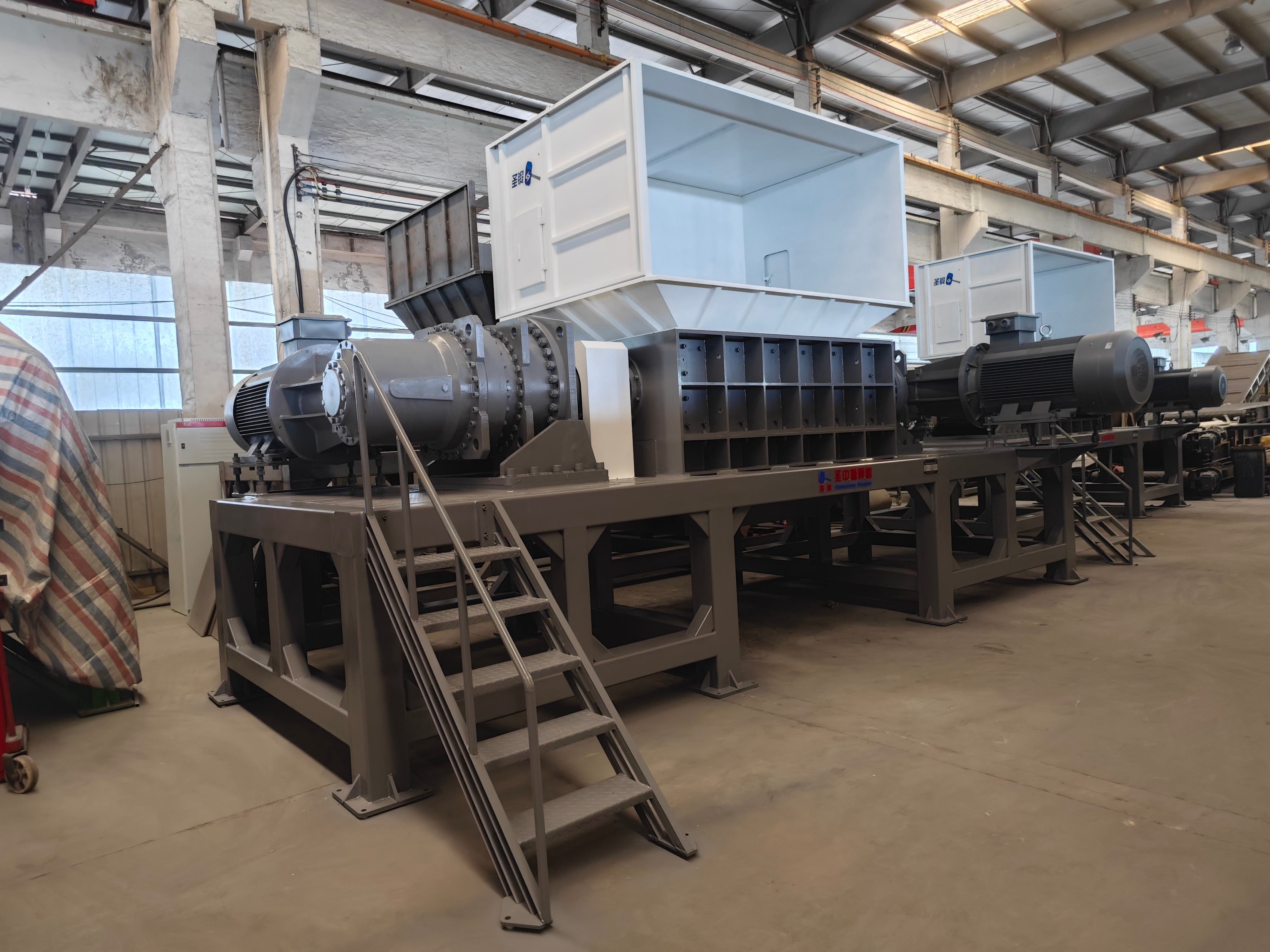
Most buyers fixate on motor horsepower when comparing machines, but that number tells only half the story. A high-torque drive paired with poorly designed cutting tools will still produce uneven chip sizes, excess fines, and premature bearing stress. Cutter geometry—including hook angle, edge profile, and tooth spacing—determines how material enters the cutting zone and how cleanly fibers are severed rather than torn. Small changes in these angles can shift energy consumption by double digits before the motor ever reaches its rated load.
Wear parts are where long-term operating costs quietly accumulate. Rotor knives, bed knives, and screens don't just dull; they change shape under repeated impact and abrasive feedstocks. A blade that drifts from its original profile forces operators to compensate with higher feed pressure or slower throughput, masking the real issue. Checking wear patterns weekly and rotating or resharpening components before visible damage appears keeps the entire system closer to its design geometry.
The smartest equipment evaluations compare how geometry and wear parts work together over hundreds of hours, not just the peak kilowatts listed on a spec sheet. Machines with modular tool holders, adjustable anvils, and easily replaceable wear plates cost less to maintain in the long run, even if the motor seems modest. Power matters, but it is only useful when transmitted through the right cutting edges.
Ask for a Live Demo with Your Own Materials, Not a Stock Video
Stock demo videos rarely show the full picture. They are shot under controlled lighting, with carefully selected samples, and edited to hide hesitation. When you ask for a live run using your own materials, you get a direct read on how the machine handles your exact paper weight, coating, or part geometry. That kind of test exposes feeding issues, alignment drift, and surface defects that a polished clip will never reveal.
Bring the materials you actually plan to process, not just a generic sample from the sales kit. If you cut vinyl, bring the same roll thickness and adhesive backing. If you print packaging, use the board stock your production line runs daily. A live demo with these inputs tells you whether the equipment can hold tolerance at your required speed, and whether the operator has to stop frequently for adjustments.
Pay attention to how the vendor responds when you request this. A confident supplier will welcome the test and even help you set up the fixture. If they push back or insist that stock video is enough, treat that as a warning sign. Real performance shows up in the first few minutes of a live run with your own materials, and that insight is worth far more than a pre-recorded highlight reel.
Service Response and Spare Parts: The Real Hidden Cost
Initial purchase price often dominates procurement discussions, but experienced maintenance managers know that service response and spare parts availability quietly dictate the true long-term cost of equipment ownership. A machine that costs less upfront can quickly become a financial drain if the manufacturer takes days to dispatch a technician or if critical components sit on backorder for weeks. Downtime doesn't just stop production; it cascades into missed deadlines, idle labor, and expedited shipping charges that never appear on the original invoice.
Spare parts present a particularly insidious challenge. Holding too little inventory invites sudden stoppages when a single bearing fails, while overstocking ties up capital in shelves of rarely used components that may degrade or become obsolete. Some vendors further complicate matters by bundling mandatory service contracts or restricting access to diagnostic software, making it difficult for in-house teams to perform simple repairs. The result is a dependency loop where every minor fault requires an expensive service call, and the real cost hides in the fine print of response-time guarantees and parts pricing matrices.
Smart operators shift their focus from sticker price to lifecycle resilience. Before signing a purchase order, they ask pointed questions: What is the guaranteed response window for critical failures? Are common wear parts available from local distributors or only through proprietary channels? Can the equipment run in a degraded mode while waiting for service? Negotiating modular designs, transparent parts catalogs, and realistic stock level recommendations upfront can prevent the slow bleed of hidden costs that eventually dwarf the initial savings.
Local Noise, Dust, and Safety Codes: What to Verify Before Installation
Before a single tool comes out, call your local permit office and ask about noise ordinances. Many towns set strict decibel limits for construction hours, especially in residential zones or near schools. Some require a written notice to neighbors or even a pre-installation sound study if the equipment runs continuously, such as a standby generator or an outdoor heat pump. Don’t assume a rural lot gives you a free pass—county rules can be just as detailed as city ones.
Dust and debris control is another thing inspectors watch closely. If you’re cutting masonry, running ductwork through drywall, or trenching near a shared driveway, you may need to wet down work areas, use a HEPA-filtered vacuum for interior cuts, or install temporary barriers. In some areas, leaving construction dust to drift onto a neighbor’s property can trigger a nuisance complaint or a stop-work order, even if the actual installation is up to code.
Safety codes go beyond the obvious electrical and gas lines. Check required clearance around the unit, whether a dedicated circuit is mandated, and if the installation affects egress windows, fire-rated walls, or CO detector placement. A quick walk-through with an inspector before you start can save you from redoing brackets, relocating vents, or paying a second inspection fee.
Total Cost Per Ton: Calculate Five Years, Not the Invoice Price
A low invoice price can hide a punishing five-year bill. The figure that actually matters is total cost per ton: every dollar spent on fuel, wear parts, unscheduled repairs, and operator hours divided by the material actually moved or processed. One machine may cost $40,000 less upfront but burn 18% more fuel and sit idle three extra weeks a year waiting on filters and hydraulic hoses. Those gaps add up fast once you stop looking at the sticker and start looking at the scale.
Run the numbers over five years and the ranking of “cheap” and “expensive” often flips. Write down realistic annual tonnage for your site, not the manufacturer’s ideal cycle times. Then add the cost of every oil change, track or tire replacement, liner swap, and emergency call-out you can reasonably expect. A machine that costs $12,000 more at purchase but ships with a heavier frame and a proven drivetrain may deliver a lower cost per ton by the second year, simply because it stays on the job instead of in the shop.
Resale value belongs in the same calculation. If your five-year-old unit still holds 45% of its original price, that recovered capital lowers the real cost per ton you paid. Ignore that and you are comparing only half the ledger. The smart buyers quote the five-year cost, set a hard cap per ton, and walk away from any deal that cannot meet it on paper before the first load is ever weighed.
FAQ
A manufacturer with deep engineering roots tends to design machines that handle unexpected materials without jamming or wearing out too quickly. Look for concrete examples of custom rotor designs or proprietary cutter geometries rather than just years in business.
Ask for exact steel grades and hardness values. Blades made from low-alloy tool steel with proper heat treatment hold an edge far longer than generic high-carbon steel. Also check whether the chamber uses replaceable wear liners, because that's where hidden maintenance costs come from.
Yes, especially for high-volume shredding. A facility visit lets you see how they align rotors, balance shafts, and test machines under load. You can also talk to the assembly team directly, which reveals more about quality control than any brochure.
Provide the manufacturer with a detailed material profile: type, size distribution, moisture content, and contamination level. Ask them to run a sample through their test lab and then compare the actual output against their quoted capacity. Always get the test report in writing.
Look for a manufacturer that offers more than a phone number. You want guaranteed response times for critical parts, local service technicians or certified partners, and remote diagnostics access. Ask directly about average spare part delivery times for your region.
They help, but don't stop at a CE mark. Check for compliance with relevant machine safety standards like ISO 12100 or ANSI B11.0. Also ask how the manufacturer handles lockout/tagout, emergency stop placement, and guarding for your specific installation.
Often yes, if they specialize in your material type. A smaller shop may offer more flexible customization and direct access to engineers. However, you need to verify their supply chain for critical components like gearboxes and motors, and ask for at least three reference customers running similar material.
Look beyond the initial price. Ask about energy consumption per ton, blade replacement intervals and cost, wear liner lifespan, and whether preventive maintenance is included. Also clarify who covers freight, installation alignment, and operator training.
Conclusion
When evaluating an industrial shredder manufacturer, the first thing to dig into is whether they have actually processed your exact material—not just something similar. Plastics, rubber, e-waste, and metals all behave differently under stress, and a manufacturer with deep experience in one category may struggle with another. Cutter geometry, blade material, and wear-part design matter far more than raw motor power on paper. A high-horsepower machine with poorly matched rotors will still jam, overheat, or create fines that cost you money. Insist on a live demonstration using your own materials, not a polished stock video. Seeing how the machine handles your specific feed size, moisture level, and contaminants reveals performance that spec sheets cannot.
Service response and spare parts availability are the real hidden costs that often get ignored during the sales pitch. Ask about local inventory, average dispatch time, and whether technicians are based near your facility. A shredder down for two weeks waiting on a wear plate can wipe out months of savings. Before installation, verify local noise, dust, and safety codes—some regions require enclosures, spark detection, or specific dust extraction that add significant cost if not planned upfront. Finally, calculate total cost per ton over a five-year horizon, including energy, blades, screens, and downtime, rather than comparing invoice prices. A cheaper machine with higher wear and slower throughput can easily cost more per processed ton than a pricier, better-built unit.
Contact Us
Contact Person: Leon
Email: [email protected]
Tel/WhatsApp: 8615385558866
Website: https://www.shred-waste.com