
Laser Safety House: Best Practices for a Secure Setup
2026-06-02
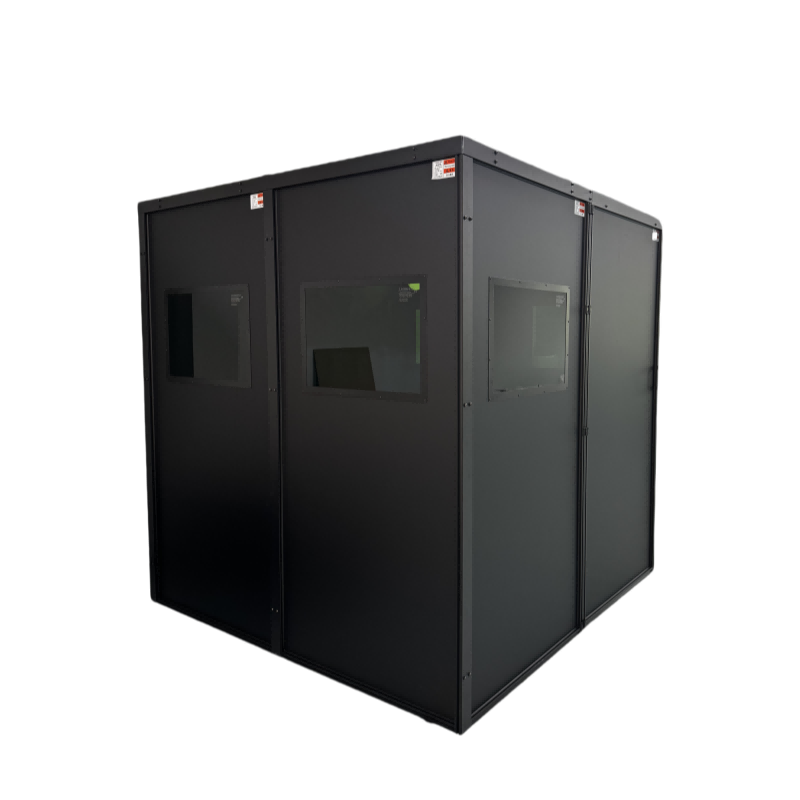
Setting up a laser safety house isn't just about throwing up a few warning signs—it demands a meticulous approach to shielding, interlocks, and operational discipline. Whether you're protecting a home workshop or a dedicated studio, getting the setup right from the start prevents costly mistakes and dangerous exposure. This guide walks you through the best practices that make your enclosure truly secure, from beam path containment to fail-safe controls. Along the way, we'll explore how partnering with experts like LASERPAIR can streamline compliance and ensure your workspace meets the highest safety standards without cutting corners.
Why Your Laser’s Beam Path Demands a Second Look
Over time, even the most carefully aligned optical setups drift. Thermal cycling, subtle vibrations, and material creep slowly nudge mirrors and lenses out of position. What was once a crisp, centered spot on your target might now be a faint, misshapen glow eating away at your system’s efficiency. Revisiting the beam path isn’t about distrusting your initial work—it’s about respecting the physics that constantly push against it.
A slight angular error at the first steering mirror can cascade into a significant displacement downstream, turning a precision tool into a source of frustration. When you trace the path with a fresh eye, you often uncover hidden losses: a mount that’s loosened just enough to shift, or a lens that’s collected a fine layer of dust, scattering precious power. These aren’t dramatic failures you’d notice in day-to-day operation, but they quietly rob performance and repeatability.
There’s also an element of system evolution. Upgrades, swapped components, or even changes in ambient conditions can introduce new constraints that your original alignment never accounted for. Taking that second look transforms the beam path from a static installation into a living part of your experiment—one that adapts and stays honest under real-world demands.
The Overlooked Danger: Fumes and Airborne Particles
When we talk about workplace hazards, the conversation usually starts with slips, trips, and heavy machinery. But there's a quieter threat drifting through the air in countless factories, workshops, and studios—one that doesn't knock you off your feet but can lodge deep in your lungs. Fumes from welding, soldering, or chemical processes often carry microscopic particles that bypass the body's natural defenses. Over time, what seems like a harmless haze can escalate into chronic respiratory issues, neurological damage, or even cancer. The scary part? Many of these symptoms take years to appear, so the link between the exposure and the illness is frequently missed.
Airborne particles aren't always visible, and that's precisely what makes them so treacherous. A plume of smoke is obvious, but the ultrafine particles that hang around long after the visible cloud has cleared are the real culprits. They can be metallic, like hexavalent chromium from stainless steel welding, or organic, like isocyanates from spray painting. These substances don't just sit in the air; they react with other compounds, forming new hazards that safety data sheets rarely cover. Even in spaces that seem well-ventilated, dead zones can trap and concentrate these fumes, turning a corner of the workshop into a silent danger zone.
Protection goes beyond strapping on a basic mask and hoping for the best. The right respiratory gear needs to match the specific particle size and chemical composition, yet many worksites rely on one-size-fits-none solutions. Air monitoring often happens sporadically, if at all, leaving workers to gauge risk by smell or visible haze—two notoriously unreliable indicators. Effective control demands a layered approach: source capture systems that pull fumes away before they spread, routine filter changes that aren't postponed until the next budget cycle, and a culture where speaking up about a lingering chemical odor isn't seen as overreacting. Until that shift happens, the invisible cloud remains a daily gamble.
Interlock Systems: More Than Just a Switch
At first glance, an interlock might seem like a simple on-off mechanism, but its true role is far more nuanced. These systems act as silent guardians, enforcing a predetermined sequence of operations that prevents catastrophic overlaps. Whether it's ensuring a machine guard is fully closed before a high-speed spindle engages, or verifying that a high-voltage circuit is de-energized before accessing a panel, the interlock's intelligence lies in its conditional logic, not just its physical state. They transform a potential free-for-all into a choreographed safety dance where every move depends on the one before it.
Modern implementations have pushed interlocks far beyond basic electromechanical switches. We now see safety-rated programmable logic controllers that combine inputs from multiple sensors—door switches, light curtains, pressure mats—into complex, fail-safe decision trees. A single fault doesn't just break the circuit; it triggers a diagnostic routine that helps pinpoint the exact issue while keeping the system in a safe posture. This evolution means an interlock isn't merely a component anymore; it's a philosophy of layered protection that adapts to both the machine's lifecycle and the operator's behavior in real time.
Protective Eyewear: Fit, Form, and Function
A pair of protective eyewear only earns its place on your face when it feels like it was made for you. Fit is the foundation—too loose and debris sneaks in, too tight and the headache sets in before lunch. Modern designs borrow from sports gear, using adjustable temple arms and nose pads that grip without pinching. Consider the subtle curve of a frame that follows the brow instead of fighting it, or the way soft rubber coatings cling during a sudden head turn. The goal isn’t just to stay put; it’s to disappear from awareness, letting the wearer focus on the task without constant readjustment. When the fit is right, you forget they’re even on.
Form steps in where fit leaves off, turning pure utility into something you might actually want to wear. Gone are the days of one-size-fits-all clunkers; today’s profiles range from sleek wraparounds to retro-inspired shields, each tailored to different face shapes and working environments. A low-profile design might slip under a welding helmet without a second thought, while a bold, full-coverage silhouette acts as its own statement on a construction site. Color plays a quiet role too—dark tints for outdoor glare, amber lenses that sharpen contrast in dim workshops, or clear options that don’t alter the world you see. It’s not about fashion for its own sake, but about designing eyewear that blends into the rhythm of the job.
Function is the unglamorous backbone that earns protective eyewear its certification marks. Beyond basic impact resistance, lenses are now engineered to tackle specific hazards: a splash of chemical-resistant coating here, an anti-fog treatment that holds up in humid conditions there. Some shield against infrared radiation near furnaces, others filter blue light for long hours under LEDs. The trick is layering these features without adding bulk or distortion. Scratch resistance keeps the view clear after months of rough use, while UV blocking isn’t just for sunny days—it matters under welding arcs and certain industrial lighting. Every functional choice answers a real-world problem, turning a simple piece of plastic into a reliable barrier between you and whatever your workday throws your way.
Creating a Laser-Controlled Zone Without Clutter
Streamlining a laser workspace starts with intentional layout choices that prioritize both function and minimalism. Rather than letting cables and accessories accumulate, each element should earn its place by directly supporting core operations. A clean zone reduces distractions and prevents accidental bumps that might throw off alignment.
Concealing wires is often the simplest path to visual calm. Routing them through desk grommets, under raised platforms, or along perimeter channels keeps footpaths clear and eyes at ease. Wall-mounted power strips and dedicated cable trays beneath the work surface turn what could be a snake pit into an organized nerve center that fades into the background.
When opting for laser systems with built-in wireless controls and compact footprints, the entire setup can live on a single sturdy cart or bench. Adding only essential tools—like a beam block or a small detector on a fixed mount—creates a purposeful, contained station. The result is an environment where the laser beam is the star, not the clutter around it.
Routine Checks That Actually Prevent Accidents
It’s easy to skip a quick walk-around when you’re in a hurry, but those few minutes can catch things that turn into serious hazards later. A loose lug nut, a frayed strap, or a tiny hydraulic leak might not scream for attention, but ignoring them is asking for trouble. The checks that actually make a difference aren’t the ones that just tick boxes—they’re the ones that force you to look twice, especially at the stuff that seems fine but isn’t.
Before you even turn the key, make it a habit to scan the basics: tires, lights, mirrors, and anything that spins or holds weight. Pay attention to sounds that weren’t there yesterday—a new squeak or a hiss can tell you more than a gauge ever will. And don’t just trust the morning inspection; quick pauses during the day to feel for heat, listen for change, and smell for burning can catch problems before they turn into emergencies.
Real prevention lives in the boring routines. Test the brakes at low speed before you need them, check that the steering responds the way it should, and never ignore a warning light just because it flickered and went away. Those habits don’t just protect you—they protect everyone sharing the road, and they keep small fixes from becoming big disasters.
FAQ
Always verify that the interlock system is functioning correctly. If the door or lid is opened during operation, the laser should stop instantly. It's a simple test that can prevent accidental exposure, and I do it every time before I start a project.
Absolutely. You want something that can contain a beam strike without catching fire. Aluminum composite panels are popular because they're lightweight, fire-resistant, and easy to cut. Some people use sheet metal, but it's heavier and trickier to work with. Whatever you choose, make sure it doesn't reflect the laser wavelength you're using.
It's crucial, not just for fume extraction but for keeping the enclosure's temperature stable. I've seen setups where poor airflow caused smoke to build up and scatter the beam, messing up the engraving and potentially damaging the optics. A dedicated exhaust fan vented outside is ideal, but even a filtered recirculating system is better than nothing.
The window should be rated for the wavelength and optical density of your laser, but glasses add an extra layer of protection. Get a pair that matches your laser's wavelength and has a high enough OD rating. I keep mine hanging right next to the machine so I never forget to put them on before lifting the lid for a quick check.
It's a simple practice where you never operate a high-powered laser alone if possible. Having someone nearby who knows how to hit the emergency stop or call for help is smart. I also tell them to never look directly at the enclosure's window without their own safety glasses, because a stray reflection can be invisible yet dangerous.
Underestimating the stray light hazard. Even a small gap or an unshielded seam can leak a beam. I once had a reflection that hit the ceiling because I forgot to cover a tiny screw hole. Now I use black silicone caulk on all joints and test with a low-power pointer to check for leaks before running the main laser.
I do a quick visual check before each use, but at least once a month I test the interlocks, check the window for scratches or burns, and make sure the fume extraction is still strong. Seals and gaskets can degrade over time, especially if you're cutting materials that produce corrosive fumes. Setting a reminder on your phone helps keep it routine.
It can be, but you need to be extra cautious. Besides the obvious fire and eye safety, consider noise and fumes. I added rubber mounts to reduce vibration and used an exhaust that filters through activated carbon before venting outside. I also let everyone in the house know when I'm running it and keep the area clearly marked so no one accidentally opens the door mid-job.
Conclusion
When setting up a laser workspace, the first impulse is often to focus on the most visible threats, but true safety resides in the subtle details. A laser's beam path warrants more than a casual glance; reflections from unnoticed surfaces can turn a controlled beam into a wandering hazard. Regularly mapping the beam trajectory and removing any reflective materials—even a forgotten wrench—can prevent an errant reflection from causing eye or skin damage. Beyond the beam itself, the fumes and airborne particles generated during cutting or engraving pose a silent but serious risk. Materials like plastics and metals release volatile compounds and fine dust that, if not properly extracted, can lead to respiratory problems over time. A dedicated fume extraction system, paired with air quality monitoring, ensures that what you can’t see doesn’t harm you. And while basic interlock switches that disable the laser when a door is opened are common, advanced systems integrate multiple layers of protection, such as pressure-sensitive mats or light curtains, to create a safety net that doesn't rely on a single point of failure.
Protective eyewear is another area where a one-size-fits-all approach fails; the goggles must match the laser’s wavelength and optical density, but they also need to be comfortable and well-fitted so they're actually worn during long sessions. A cluttered workspace invites accidents, so establishing a laser-controlled zone that is free of unnecessary tools and reflective objects helps maintain a clear, focused environment. Marking the area with floor tape and using beam-blocking barriers can define the space without creating a sense of confinement. Finally, the most robust safety protocols are meaningless without consistent upkeep. Routine checks—verifying interlocks, inspecting cables for wear, cleaning lenses, and testing emergency stops—transform passive safety features into active guardians. Treat these checks as a non-negotiable part of the workflow, not an afterthought, and a culture of safety becomes second nature.
Contact Us
Contact Person: Jenny
Email: [email protected]
Tel/WhatsApp: +86 13537713281
Website: https://www.laserpair-safety.com/