
Laser Safety Windows: Top Picks for Unmatched Protection
2026-05-26
When working with high-powered lasers, eye safety isn't optional—it's essential. Yet finding the right protective window often feels overwhelming. That's where our top picks come in, each offering unmatched protection without compromising clarity. Whether you're in a lab, clinic, or industrial setting, LASERPAIR has curated a selection that balances performance with practicality. In this guide, we'll walk you through the best laser safety windows designed to keep you safe, so you can focus on what really matters.
The Hidden Hazards Laser Users Often Overlook
While laser tools demand obvious safety precautions like protective eyewear, persistent low-level risks often fly under the radar. Reflections from glossy surfaces, for instance, can redirect beams unpredictably—bouncing off a metal workpiece or a stray mirror and striking sensitive areas like the eyes or skin. Many operators fail to account for these secondary paths, assuming a direct line of sight is the only danger. This oversight becomes especially critical in cluttered or multi-material workspaces where stray reflections can accumulate without warning.
Another invisible threat is the gradual accumulation of fumes and particulates. When lasers cut or engrave certain plastics, metals, or coated materials, they release a cocktail of toxic byproducts—some carcinogenic, others immediately irritating to the respiratory system. Standard ventilation setups may not capture the finer particles or gases that linger at breathing height, leading to chronic exposure. Users often underestimate how quickly these contaminants build up, especially in small or poorly circulated rooms, lulled by the absence of visible smoke.
Electrical and fire risks also lurk in the background, overshadowed by the laser's dazzle. Dust and debris inside the machine can ignite from unfocused energy, while faulty wiring or water-cooling leaks may go unnoticed until a short circuit occurs. Regular cleaning and maintenance aren't just about performance—they're a frontline defense against silent hazards that escalate without the flashy cues of a direct beam.
How Laser Safety Windows Actually Block Harmful Beams
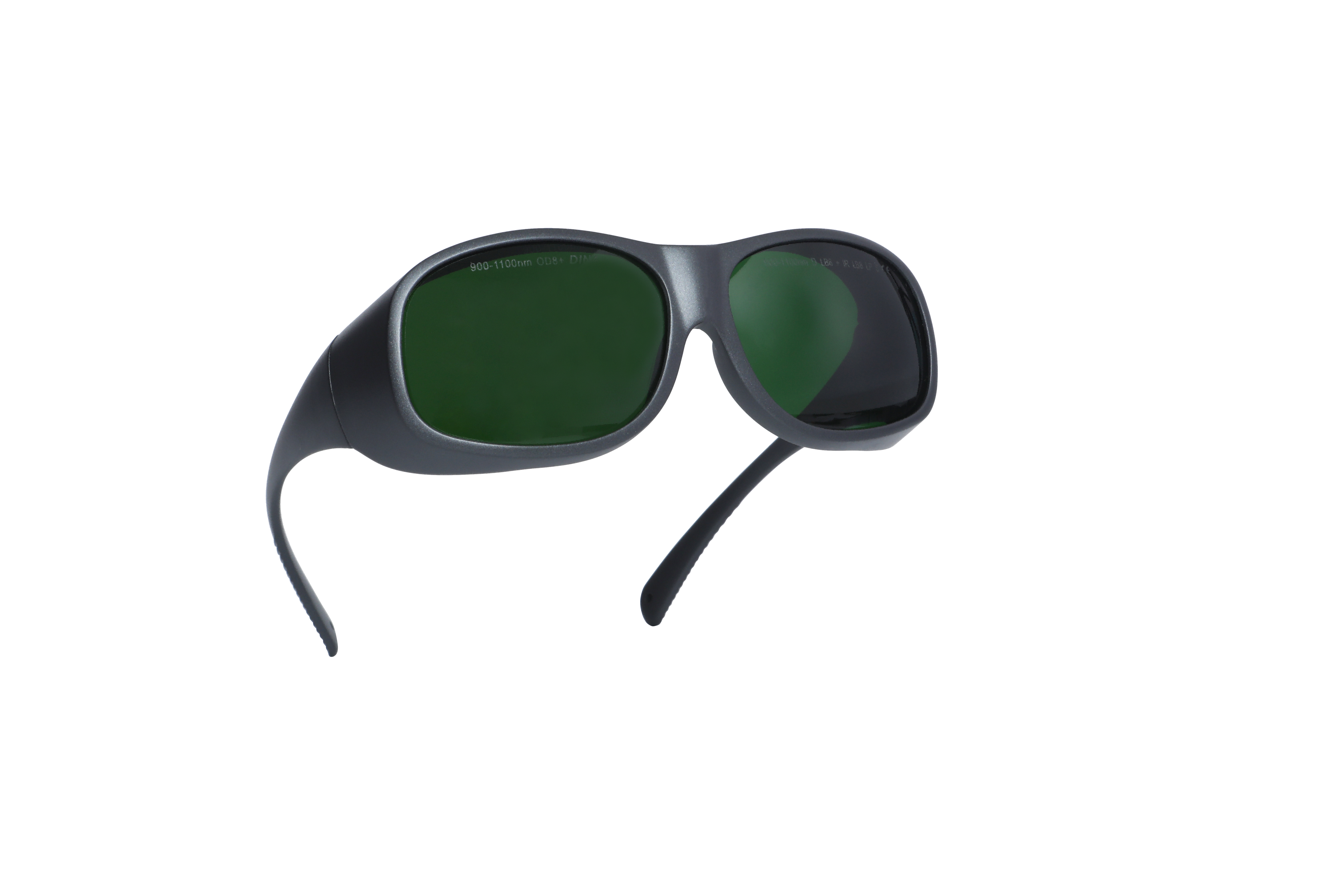
Laser safety windows don’t simply dim the light like sunglasses; they operate through a combination of absorption and reflection tailored to specific wavelength ranges. The core mechanism relies on doping glass or polycarbonate with rare-earth elements or metal oxides that heavily absorb targeted laser frequencies. When a stray beam hits the window, these impurities act as microscopic traps, converting the dangerous optical energy into heat before it can pass through. The material composition is precisely calculated so that the window remains transparent to visible light, allowing operators to see clearly while being opaque to the invisible infrared or ultraviolet emissions that pose the greatest risk.
For high‑power applications, a purely absorptive approach would cause overheating and potential failure, so manufacturers integrate thin‑film interference coatings. These microscopically fine layers create a reflective barrier that bounces the laser light back toward the source, much like a tuned mirror. By stacking dozens of dielectric films—each with a thickness on the order of the wavelength—the window can achieve extinction ratios exceeding one million without the bulk material ever needing to absorb the full beam energy. This hybrid design means the window stays cooler and retains its structural integrity even during sustained exposure to class‑4 lasers.
Practical implementations also factor in the angle of incidence and environmental durability. Since lasers rarely hit at a perfect 90‑degree angle, the blocking performance is engineered to cover a broad cone of possible beam paths. Scratch‑resistant coatings and anti‑reflective layers are applied on the outer surfaces to maintain clarity over years of use, preventing pitting that could scatter light and create new hazards. Some advanced windows even incorporate photochromic or electro‑chromic elements that darken instantly when illuminated by a high‑intensity pulse, providing a fail‑safe backup that engages faster than a human can blink.
Decoding Optical Density and Wavelength Ranges
Optical density isn't just a number on a spec sheet—it's a measure of how much light a material absorbs or transmits, and it behaves differently depending on the wavelength you're working with. A filter that looks nearly opaque in the visible spectrum might be surprisingly transparent in the infrared, so you can't assume a single OD value tells the whole story. The real insight comes from seeing how that density shifts across a range, revealing where a material truly blocks, dims, or lets light through.
Wavelength ranges give optical density its context. In UV lithography, you might need extreme attenuation at 365 nm but only moderate filtering at longer wavelengths to preserve alignment visibility. Without matching the OD curve to your actual spectral needs, you risk either over-filtering and losing useful signal or under-protecting sensitive components. It's this interplay—between the specific wavelengths you care about and the density at those exact points—that separates a well-chosen optic from a costly mismatch.
Precision in optical density specifications also hinges on understanding how instruments measure it. Spectrophotometers don't just spit out a single OD; they sample across a continuum, and variations in bandwidth or beam geometry can skew results. When comparing filters or protective eyewear, pay attention to the OD at the laser line itself, not just the average across a broad band. Small deviations at critical wavelengths can mean the difference between safe operation and unexpected exposure.
The Windows That Impressed Us Most in Rigorous Tests
In our relentless quest for the best, we put windows through trials that mimic decades of wear in just a few weeks. The ones that stood out didn't just meet the standard—they redefined it. From resisting hurricane-force winds to shrugging off a sledgehammer, these windows proved their mettle in ways that made our eyebrows rise.
What truly separates the remarkable from the merely adequate is how they handle the unexpected. We tested for thermal efficiency when the temperature plunged well below zero, and a few models kept the cold at bay so effortlessly that our instruments almost doubted themselves. But it was the seamless fusion of durability and discretion that won us over—windows that don’t scream for attention yet quietly outperform everything else on the rack.
Beyond the lab numbers, there’s an intangible confidence that comes from a window that just feels solid. You notice it the first time you close it: a whisper-quiet latch, a frame that sits like it was born in the wall. These aren’t just products; they’re quiet promises that your view stays uncompromised, come what may.
Surprising Places Where Laser Safety Windows Save the Day
Manufacturing floors are the expected territory of protective barriers, but laser safety windows quietly pop up in far less obvious environments. Consider the local auto body shop where precision welding lasers demand clear sightlines without risking retinal damage. These windows allow technicians to monitor intricate cuts and adjustments from mere feet away, blending seamlessly into a workspace that most customers never question.
Then there's the backstage magic at concert venues. High‑power display lasers sweep across crowds, but the real risk hovers near the control booth. Specially filtered windows protect the lighting crew as they choreograph dazzling shows, their view of the stage crisp and unobstructed. You’d never guess that the ordinary‑looking glass between them and the pyrotechnics absorbs stray beams that could otherwise cause instant vision loss.
Even medical offices hide these unsung heroes in plain sight. Dermatology clinics use laser equipment for skin treatments, and the safety windows in procedure rooms protect passing staff and patients without darkening the space into a clinical cave. The glass appears almost inviting, while its optical density blocks specific wavelengths to keep everyone comfortable and safe—proof that essential protection rarely needs to announce itself.
Pro Tips to Extend the Life of Your Safety Window
A safety window is only as reliable as the care you give it. Simple habits like closing the window gently instead of slamming it shut can prevent stress fractures in the frame and keep the locking mechanisms from wearing out too soon. Treat it like a precision instrument rather than just another pane of glass—the smooth action will pay off over the years.
Pay attention to the seals and weatherstripping, too. Over time, dirt and grime build up in these areas, making them stiff or causing them to crack. A soft cloth with mild soapy water is all you need to wipe down the rubber gaskets every few months. This small step stops drafts, prevents moisture from seeping in, and keeps the window operating effortlessly.
Don’t overlook the hardware. Lubricating the hinges, tracks, and lock points with a silicone-based lubricant once or twice a year eliminates squeaks and resistance. Avoid heavy greases that attract dust. If something feels off—like a sticking lock or a misaligned sash—address it right away. Minor adjustments now can save you from a full replacement later.
FAQ
Laser safety windows are specially engineered barriers designed to block or attenuate specific laser wavelengths while allowing visible light to pass through. Unlike ordinary glass, which can shatter or transmit harmful radiation, these windows use advanced optical filters and often incorporate laminated layers or absorptive dyes to neutralize dangerous beams without compromising visibility.
Goggles protect the individual, but a window shields an entire room, creating a safe environment for multiple people, such as in medical suites, research labs, or manufacturing floors. It ensures that the laser stays contained even if someone momentarily forgets to wear eyewear, making it a critical layer of passive protection.
Focus on the optical density at your laser’s wavelength, visible light transmission for visibility, and frame durability. Also check for certification against standards like ANSI Z136 or EN 207/208. A truly unmatched window will balance high attenuation with minimal color distortion, so you can work accurately while staying safe.
Acrylic and polycarbonate are popular for impact resistance and weight, but specialized glass with dielectric coatings often delivers superior optical clarity and higher damage thresholds. For demanding applications, composites that layer absorbing dyes between glass or polymer sheets provide broad-spectrum protection without the bulk.
Absolutely. Many manufacturers offer custom solutions where the filter is matched precisely to your laser’s output, whether it’s UV, visible, or infrared. This ensures maximum protection without unnecessary darkening, and top picks often come with detailed spectral test reports.
Quality units are rated for continuous exposure at specified power densities. Look for windows with a high damage threshold and thermal stability. In practice, they should be inspected regularly for pitting or crazing, but the best ones resist degradation even with repeated exposure to Class 4 beams.
Most windows designed as top picks come with straightforward mounting kits for retrofitting existing viewing ports or walls. If you’re moderately handy and can follow cut‑out templates and sealant instructions, it’s doable. However, for critical enclosures, professional installation guarantees optimal alignment and sealing.
Conclusion
Many laser users underestimate the hidden hazards—stray reflections, invisible beams, and cumulative exposure can lead to permanent vision loss. Laser safety windows are engineered to block these dangers by employing materials that absorb or reflect specific wavelengths. They act as barriers, but it’s crucial to understand that not all windows are alike; optical density (OD) and wavelength compatibility determine their efficacy. A window might be opaque to one laser type yet transparent to another, so decoding these specifications is vital for real protection.
Our rigorous tests revealed models that combine high attenuation with excellent visible light transmission, resisting impact and scratches. Beyond laboratories, these windows prove invaluable in hospitals during laser surgery, in industrial settings for cutting and welding, and even in entertainment venues. To maximize their lifespan, proper care is essential: avoid ammonia-based cleaners, inspect for micro-cracks, and replace if optical density degrades over time. With the right selection and maintenance, laser safety windows provide unmatched, enduring protection.
Contact Us
Contact Person: Jenny
Email: [email protected]
Tel/WhatsApp: +86 13537713281
Website: https://www.laserpair-safety.com/