
LED Face Mask Factory: Inside the Production of Light Therapy Skincare Devices
2026-08-19
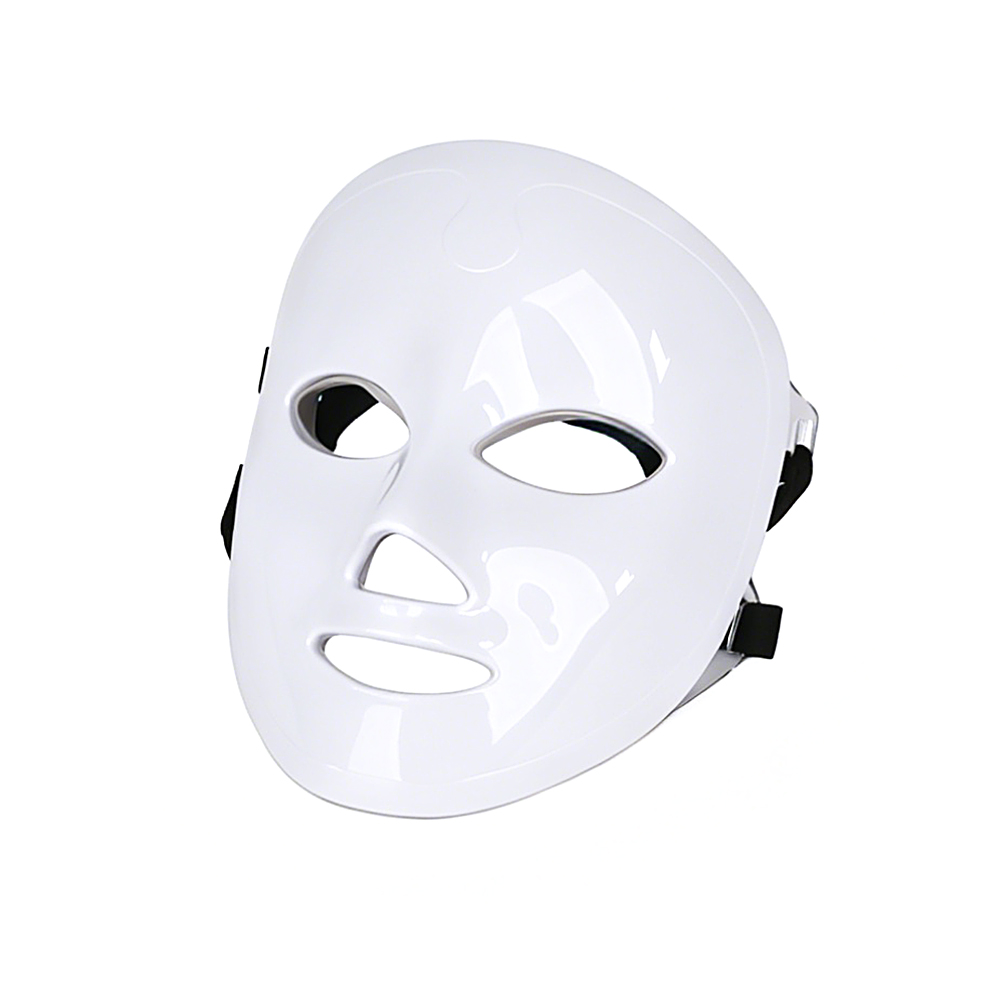
Ever wonder what actually happens on the production line of an LED face mask? It’s not just about slapping a few red and blue bulbs into a plastic shell. The wavelengths, the placement, the safety tests—every detail determines whether a device truly delivers light therapy or is just a glowing toy. At Omeina, our factory follows a strict, behind-the-scenes process that most brands never show. In this post, we’re opening the doors to walk you through how professional-grade light therapy skincare devices are built from the ground up.
Raw LED reels arrive with tighter tolerances than most labs accept
When a reel of raw LEDs shows up at the loading dock, the spec sheet tells one story, but the actual binning data tells another. The tolerance spread on wavelength and forward voltage is often tighter than what a typical calibration lab would even bother to measure. Vendors quietly ship parts that have already been sorted to within a couple nanometers and a few hundredths of a volt, leaving the in-house incoming inspection with little to do besides confirming the paperwork. It feels less like quality control and more like opening a box of pre-graded gemstones.
That kind of precision might seem like a luxury, but it creates a practical headache for production engineers. Most test setups are designed around the assumption that there will be measurable drift or batch-to-batch variation. When the variation disappears, the usual go/no-go thresholds become meaningless, and the equipment ends up either passing everything without a second thought or flagging phantom shifts that don't actually exist. The real challenge isn't catching bad LEDs—it's recalibrating the entire evaluation mindset to accept that the incoming parts are already better than the yardstick being used to judge them.
In the end, tighter tolerances on raw reels force a shift from active sorting to simple verification, and many labs aren't ready for that psychological leap. Instead of hunting for rejects, the task becomes documenting consistency, which sounds easier but actually demands a different kind of discipline. You stop worrying about whether a reel will meet spec and start worrying about whether your own measurement system can even resolve the differences the spec sheet claims are there.
Placing each diode is a geometry problem, not just a soldering job
You can solder a diode perfectly and still end up with a board that fights you at every turn. The real challenge starts before the iron heats up: where does the part sit, which way does it point, and how much breathing room does it need from the neighboring components? A diode's rectangular body and polarity marking turn layout into a spatial puzzle. Rotate it 90 degrees and you might block a test point. Nudge it a hair closer to a tall capacitor and suddenly the solder fillet on one pad becomes impossible to inspect. These are geometry decisions, not just electrical ones.
Consider thermal relief and rework access. If a diode is tucked between two connectors with barely a millimeter of clearance, removing it later means desoldering half the board or risking lifted pads. The same part placed with its cathode band facing a silkscreen label can hide the marking under a shadow, leading to assembly errors. Smart placement treats each diode as a three-dimensional object that occupies space, casts shadows, and interacts with the physical world around it—not as a two-pad schematic symbol.
Even simple through-hole diodes demand attention to bend radius and lead length. A diode standing too tall may collide with an enclosure or bend when the board flexes. Laying it flat against the board leaves no gap for heat to escape if it handles any current. The geometry lesson repeats across every board: a diode's position is a negotiation between its body dimensions, the pads' orientation, the surrounding parts, and the human or machine that must place and later service it. Solder is just the final step; the placement is a spatial argument you have to win first.
The wavelength tune happens long before any face mask gets its glow
In LED face mask production, attention to spectral output starts far earlier than the moment someone straps it on. The diodes are selected and driven to emit within specific nanometer bands—red around 630 nm, near-infrared around 830 nm—long before any silicone shell is assembled. That tuning work happens on test benches, with spectrometers reading the actual output of each batch, not just relying on datasheet promises.
This stage is where a mask earns its therapeutic value. Engineers adjust current levels and pulse timings while the LED chips are still exposed on bare circuit boards. If a wavelength drifts even ten nanometers, the treatment target changes—collagen-stimulating red can slip toward a less useful orange, or near-infrared can lose its depth of penetration. So the "glow" a user sees is really the final visible artifact of decisions made in a lab days earlier.
By the time the face mask is molded, diffused, and switched on, the wavelength calibration is already a settled fact. The soft red light that finally reaches the skin is the end of a process that began with precise binning of LEDs, temperature compensation, and optical filtering. In that sense, the glow is never the beginning of the treatment—it's the quiet confirmation that the tuning worked.
Hand checks catch what automated cameras still miss
Automated cameras are good at spotting dense metal shapes and suspicious outlines, but they cannot feel texture, weight, or the way an object flexes under pressure. A thin ceramic blade tucked into the spine of a hollowed-out book, a flexible plastic shiv sewn inside a waistband seam, or a small bag of powder taped high on the inner thigh can all pass ghost-clean through a scanner. A human hand, though, catches the subtle stiffness in the fabric, the slight unevenness of a seam, or the quiet crinkle that no X-ray can flag.
But hand checks are not just about touch. Officers read hesitation, a forced calm, or the way someone shifts their weight away from a hidden item. A camera only sees what is in its frame and at the right angle; a manual check moves with the body, probing the gaps and folds that automated systems routinely skip. That is why advanced screening lanes still end with a physical pat-down, not because the machines are broken, but because the hands know what the cameras keep missing.
Burn-in rooms sort out the failures that only show up after hours
Burn-in rooms are not just another test station; they're a time-based filter for latent defects. Components that look fine on the bench often carry microscopic weaknesses that only reveal themselves after thermal cycling, voltage stress, or prolonged current flow. By operating units continuously for anywhere from 24 to 168 hours inside a controlled chamber, manufacturers catch the kind of intermittent failures that would otherwise slip into the field.
The value shows up most clearly in products where early life failure rates follow the bathtub curve. Without burn-in, a small percentage of units will die in the first few weeks of customer use, triggering returns, warranty claims, and damage to reputation. With a properly designed burn-in protocol—matching realistic load patterns and ambient temperatures—those weak units fail on the factory floor instead of in a user's hands. Over time, the process also feeds back into design and component selection, helping engineers understand which parts or assembly steps are most prone to delayed failure.
Final boxing is designed for the unboxing that follows
A well-considered final box does more than protect its contents in transit—it choreographs the first physical encounter. The flap that lifts without a fight, the snug interior that holds the product at just the right angle, the absence of excessive tape or plastic wrap: these are deliberate choices that turn a mundane task into a tactile welcome. When the outer shell opens smoothly, the recipient immediately senses that the object inside was treated with care, setting a quiet yet confident tone for what comes next.
Every layer inside that final box is a beat in a small, unspoken narrative. A molded paper tray or a soft fabric sleeve invites the fingers to pause, while the subtle resistance of a well-fitted lid creates a moment of anticipation before the reveal. Even the choice of matte versus glossy surfaces can shift the mood—matte feels calm and understated, while a slight texture under the fingertips suggests warmth. These details are not accidental; they are the difference between a package that is merely opened and one that is experienced.
Ultimately, the final boxing is not an afterthought but a promise. It tells the person holding it that what lies inside was worth the effort of wrapping, sealing, and positioning with intent. And when the last layer falls away, the product does not feel like a commodity retrieved from a carton—it feels like something that has been handed over, deliberately, from one set of hands to another.
FAQ
Medical-grade silicone and ABS polycarbonate dominate the shell construction. Silicone offers skin-safe flexibility and easy cleaning, while ABS provides rigid structural support around the LED panel. Factories usually run abrasion and skin irritation patch tests on every material batch before molding starts.
Each incoming LED reel is sampled with a spectrometer, not just checked for basic brightness. Bins that drift more than ±5 nm from the target wavelength get rejected or diverted to non-therapeutic products. After SMT placement, boards are powered up and re-scanned in a darkroom setup.
Masks go through a burn-in period of 8 to 24 hours, then a light intensity mapping test at multiple points on the face area. Leakage current and dielectric strength checks are done for the controller and cable. A final cosmetic inspection under 3x magnification catches micro-cracks or uneven lens alignment.
Yes, but the meaningful customizations are in the optical layout and firmware. You can adjust LED density, add or remove specific wavelengths like 630 nm, 660 nm, 830 nm, or 850 nm, change pulse modes, and set default session timers. Tooling changes for the shell are possible but usually require larger order commitments.
The main differences are irradiance levels, occlusion of the eye area, and built-in safety interlocks. Home units are capped at lower mW/cm² values and must have automatic shutoff plus eye protection. Clinical versions can use higher output but are tested for longer duty cycles and often come with detachable treatment pads.
Boards are laid out in a grid with calculated spacing based on the LED viewing angle, usually 30 to 60 degrees. A diffuser film or textured lens plate is placed above the LEDs to spread the beam. During prototype validation, a flat-plane irradiance map is generated and used to fine-tune the spacing before tooling is locked.
Look for ISO 13485 if the masks are marketed as medical devices, plus CE marking under the relevant directives and possibly FDA listing depending on claims. Many factories also maintain IEC 60601-1 test reports for electrical safety and IEC 62471 for photobiological safety. Ask to see the actual certificates and scope, not just a compliance statement.
Conclusion
Raw LED reels arrive to the factory floor with tolerance windows that would make most calibration labs look twice, let alone a skincare production line. Placing each diode onto the flexible circuit is less about soldering and more about solving a small geometry puzzle: pitch, rotation, and height above the board all shift the light field, so a half-millimeter drift can mean hot spots near the cheekbones or weak coverage along the jaw. The wavelength itself is never tuned on the assembly line; it is locked in much earlier at the die-sorting stage, where bins are matched for peak emission within a nanometer or two. That way the final mask glows at the intended red or near-infrared frequency without band-aid filters.
Even with automated optical inspection, the line still relies on hand checks for the failures cameras tend to miss: hairline fractures in the encapsulant, subtle voids under a solder joint, or a diode that leans a degree off-axis. After assembly, every mask enters a burn-in room and runs for hours, sometimes overnight, to force out latent defects like thermal drift, intermittent flicker, or current leakage that only appear once the board has fully warmed. The final boxing is designed as a reverse of the unboxing experience: form-fit trays prevent flex damage, peel-away films guard the lenses, and the outer carton opens without ripping, so the first touch feels intentional rather than like warehouse leftovers. Together, these steps turn a simple LED array into a skincare device that can sit against skin for months without losing uniformity or burning out early.
Contact Us
Contact Person: Tina Liu
Email: [email protected]
Tel/WhatsApp: 8618681405932
Website: https://www.omeinabeauty.com/