
Liquid Crystal Display in China: Key Trends and Market Insights
2026-05-08
China's liquid crystal display industry is evolving at a breakneck pace, fueled by relentless innovation and shifting global demand. As the market navigates fierce competition and technological leaps, understanding the forces shaping this sector has never been more critical. From emerging applications to supply chain dynamics, the landscape offers both opportunities and pitfalls. At the heart of this transformation stands Jingda-Display, a key player driving advancements in LCD solutions. In this blog, we'll cut through the noise to explore the trends and insights defining China's LCD market—and why they matter for your business.
China's LCD Ecosystem: From Follower to Global Leader
The ascent of China's LCD industry is a story of strategic persistence and industrial metamorphosis. In the early 2000s, the country had virtually no domestic panel production, relying heavily on imports while foreign giants dominated the technology. The turning point came with aggressive government backing and the audacious moves by companies like BOE, which acquired Hyundai's LCD business in 2003. This acquisition wasn't just a transfer of machinery; it brought in precious know-how and kicked off an era of learning-by-doing. Through relentless iteration and massive capital investment, Chinese manufacturers gradually mastered the intricate processes of array photolithography and cell assembly, reducing defect rates and boosting yields to world-class levels. The ecosystem expanded rapidly as a cluster of material suppliers, equipment makers, and R&D institutes formed around these anchor fabs, transforming the Yangtze River Delta and other regions into dense LCD powerhouses.
What truly cemented China’s leadership was its capacity to scale production to unprecedented levels while relentlessly driving down costs. As domestic ventures erected Gen 8.5 and later Gen 10.5 fabs, they shattered the economic barriers that had long protected Korean and Taiwanese rivals. This capacity boom triggered a sharp decline in panel prices globally, squeezing out competitors who couldn't match the combination of scale and lean operations. By 2020, China had overtaken South Korea in total LCD capacity, and its share continued to climb as older fabs abroad were shuttered or converted. The ecosystem had now become a self-reinforcing loop: massive volumes attracted more upstream suppliers to localize, which lowered logistics and input costs further, while downstream TV and monitor makers anchored their supply chains in China. This vertical integration, from glass substrates to finished modules, gave Chinese firms an unmatched advantage in responsiveness and cost control.
Beyond brute scale, the ecosystem's evolution hinged on nuanced specialization and a shift toward value-added segments. Instead of simply churning out commoditized panels, Chinese manufacturers began tailoring products for emerging niches—high-refresh gaming monitors, ultra-low-power notebook screens, and automotive displays with curved form factors. Co-development with domestic smartphone titans like Huawei and Xiaomi honed the ability to rapidly iterate from concept to mass production, shrinking development cycles that foreign rivals struggled to match. At the same time, the talent pool expanded dramatically; thousands of engineers trained in the early fabs graduated into the wider ecosystem, spreading expertise across a growing web of suppliers and startups. Today, the ecosystem has grown beyond its LCD origins, with technologies like mini-LED backlights and oxide transistor architectures blurring the lines into next-generation displays. Yet at its core, the LCD dominance was built on a simple, powerful formula: patient capital, unyielding focus on operational excellence, and an entire ecosystem pulling in the same direction.
Next-Gen Backplane Technologies Accelerating Performance
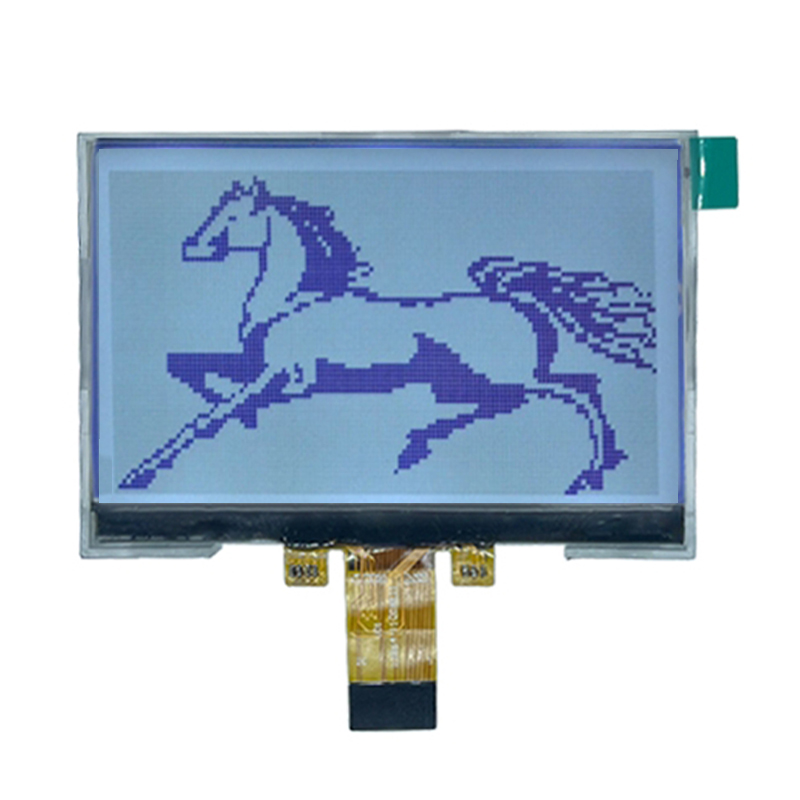
The relentless demand for faster data throughput has pushed traditional backplane architectures to their limits. Next-generation designs are abandoning legacy parallel bus structures in favor of high-speed serial links, leveraging advanced materials and signal conditioning to slash latency and boost bandwidth per channel. By integrating adaptive equalization and clock data recovery directly onto the backplane, systems can now maintain signal integrity across longer traces at blistering speeds, effectively removing a key bottleneck in data center and telecom equipment.
At the heart of this acceleration is the shift to PAM4 modulation and aggressive scaling of lane counts, enabling terabit-class aggregate throughput without an exponential increase in physical footprint. Novel connector geometries and engineered substrate dielectrics minimize crosstalk and insertion loss, while embedded intelligence allows real-time tuning of parameters per lane. These innovations ensure that the backplane no longer sits as a passive conduit but dynamically contributes to system-level performance, adapting to workload demands on the fly.
Looking ahead, co-packaged optics and silicon photonics are poised to redefine backplane functionality by moving optical interconnects deeper into the chassis. This transition promises to decouple bandwidth scaling from thermal and electrical constraints, enabling seamless upgrades and disaggregated architectures. As the line between backplane and fabric blurs, the focus shifts to manageable, power-efficient designs that can keep pace with the unrelenting growth of networked data, making the backplane a cornerstone of future high-performance systems rather than a mere interconnect.
The Automotive Display Boom: LCD's New Battleground
Once a straightforward instrument cluster, the car cockpit is rapidly transforming into a digital canvas. This shift has ignited fierce competition among LCD panel makers, who now see automotive interiors as the next high-stakes arena. Unlike the saturated smartphone and TV markets, vehicle displays offer a fresh frontier where size, durability, and integration challenge contenders to rethink what a screen can do inside a moving machine.
Legacy suppliers and new entrants are pouring resources into wide, curved, and pillar-to-pillar panels that merge infotainment with essential driving data. The technical demands are brutal: displays must survive extreme temperatures, direct sunlight, and constant vibration while delivering the pixel-perfect clarity drivers expect from their personal devices. This battlefield isn’t just about resolution—it’s about crafting a seamless, driver-centric experience that blends safety with luxury.
Automakers are leveraging these expansive screens as a key differentiator, turning the dashboard into a signature element of brand identity. As a result, LCD technology is being pushed to its limits, with thinner profiles, reduced glare, and advanced backlighting that adjusts to ambient light. The competition has moved from cost-per-inch to innovation-per-square-foot, marking a pivotal chapter for the display industry.
Supply Chain Resilience: How China Mitigates Component Shortages
China's approach to cushioning the blow of component shortages leans heavily on vertical integration and state-backed stockpiling. Key electronics and automotive firms have built in-house semiconductor design units, reducing reliance on overseas suppliers. For instance, several EV manufacturers now co-develop power management chips with local foundries, ensuring a steadier flow of critical parts even when global allocation gets tight. This hands-on involvement from design to packaging trims lead times and gives factories more control over inventory buffers.
Beyond corporate moves, regional industrial clusters provide a collective shield. In the Yangtze River Delta, networks of smaller suppliers share real-time demand signals through industry platforms, allowing them to reroute idle capacity quickly. When one node faces a bottleneck, neighboring workshops step in to handle overflow for connectors, passives, or PCB assemblies. Meanwhile, government programs offer low-interest loans for holding extra safety stock of long-lead-time items, making the system less brittle without pushing costs entirely onto private players.
Policy-Driven Growth: Subsidies, Tariffs, and Self-Sufficiency
Governments often turn to strategic subsidies and targeted tariffs as levers for reshaping domestic industry, acting on the belief that short-term protection can incubate long-term strength. By channeling funds into key sectors—think renewable energy components or advanced semiconductors—they aim to lower production costs at home, making local firms more competitive both internally and abroad. Tariffs, meanwhile, serve as a blunt but effective barrier, giving nascent industries breathing room from established international rivals. The logic is straightforward: shield your own manufacturers while they build capacity, refine processes, and climb the learning curve. Yet this approach carries a tension; too much shelter can breed complacency, and subsidies risk becoming permanent crutches rather than temporary scaffolds.
The interplay between these tools can be seen in the pursuit of greater self-sufficiency, a goal sharpened by recent supply chain disruptions and geopolitical shifts. Nations that once embraced unfettered free trade now weigh the vulnerabilities of relying on distant suppliers for essential goods—medical equipment, rare earth minerals, and food staples. A carefully managed mix of incentives and trade barriers is being deployed to shorten supply lines and bring critical production back within sovereign borders. It is not a return to autarky, but a recalibration: favoring regional hubs and trusted partners over a single lowest-cost source. The challenge lies in doing this without igniting retaliatory spirals that sap growth everywhere.
Critics argue that such policy-driven strategies distort markets and burden consumers with higher prices, while proponents see them as necessary investments in resilience and national capability. The real-world outcomes depend heavily on execution—how governments target support, monitor performance, and phase out protections. When done adroitly, the result can be a more diversified industrial base capable of weathering global storms. Done poorly, it creates entrenched interests and a drag on innovation. The current era is testing whether states can strike that balance, using subsidies and tariffs not as ends in themselves, but as stepping stones toward a more self-reliant and competitive economic posture.
Beyond LCD: Is China Ready for OLED and MicroLED Transitions?
China’s display industry has long dominated the LCD market, but the shift toward OLED and MicroLED technologies presents both a challenge and an opportunity. While Chinese manufacturers have rapidly scaled up OLED production for smartphones and TVs, they still trail behind Korean rivals in yield rates and advanced flexible displays. The transition requires not just massive capital investment but also a deeper mastery of materials and manufacturing processes that have historically been controlled by overseas suppliers. Yet, with strong government support and a colossal domestic market, China is aggressively closing the gap.
MicroLED, often hailed as the ultimate display technology, promises superior brightness, efficiency, and longevity. For China, betting on MicroLED could be a strategic leapfrog, bypassing some of the OLED learning curve. Companies like BOE and TCL are already pouring resources into R&D, aiming to commercialize MicroLED for wearables, large screens, and augmented reality. However, the road is rocky: mass transfer technology, defect management, and exorbitant costs remain formidable barriers. China’s strength lies in its vertical integration capabilities—from LED chip manufacturing to panel assembly—which could eventually drive down costs and accelerate adoption.
The readiness of China for these transitions ultimately depends on a combination of technical breakthroughs, supply chain resilience, and market dynamics. While OLED is already in high-volume production and will likely achieve cost parity with LCD in the coming years, MicroLED is still a long game that requires patience and ecosystem collaboration. If China can replicate its LCD success story by offering competitive pricing and manufacturing scale, it may well overtake incumbents in the next decade. The next few years will reveal whether this is a well-grounded ambition or a speculative bubble.
FAQ
The expansion is largely fueled by massive investments in domestic panel production, rising demand for consumer electronics like TVs and smartphones, and government policies that encourage local manufacturing and technology self-sufficiency.
China has rapidly become the world's largest producer of LCD panels, surpassing traditional leaders such as South Korea and Taiwan. This shift is driven by continuous capacity expansion, with new Gen 10.5 fabs enabling economies of scale and cost advantages.
Televisions account for the largest share, followed by monitors, notebooks, and automotive displays. The increasing trend toward larger screen sizes and higher resolutions in these segments continues to boost overall demand.
While OLED and MicroLED are gaining attention for premium devices, LCD remains dominant due to its maturity, lower cost, and continuous improvements in areas like quantum dot and mini-LED backlighting. These enhancements help LCD stay competitive against newer display technologies.
Key players like BOE, TCL CSOT, and China Star Optoelectronics are consolidating their positions through aggressive capacity expansion and vertical integration. Smaller firms are either being absorbed or focusing on niche markets, leading to an increasingly concentrated industry structure.
Dependence on imported core components, such as driver ICs and polarizers, remains a vulnerability. Additionally, fluctuations in raw material costs and global trade tensions can disrupt production schedules and affect profitability.
Stricter environmental standards are pushing manufacturers to adopt greener processes, such as reducing chemical waste and improving energy efficiency. While this increases short-term costs, it also drives innovation in sustainable manufacturing practices.
Despite headwinds like trade disputes and shifting demand, Chinese LCD exports are expected to remain robust due to the country's cost competitiveness and comprehensive supply chain. However, manufacturers are increasingly diversifying their customer bases and exploring higher-value products to mitigate risks.
Conclusion
China's liquid crystal display industry has evolved dramatically over the past decade, transforming from a manufacturing base for foreign brands into a self‑reliant ecosystem that leads global production. This shift was not accidental—it rests on aggressive capacity building, mastery of advanced backplane technologies, and a supply chain that can weather component shortages through vertical integration and state‑backed resilience. Domestic players now control every node, from glass substrates to finished panels, and that depth is reshaping how the world sources LCDs. Meanwhile, next‑generation backplane innovations like oxide semiconductors and dual‑gate architectures are pushing panel performance beyond traditional ceilings, enabling slimmer borders, lower power consumption, and higher refresh rates that cater to premium segments such as gaming monitors and automotive displays.
The automotive display arena has become a particularly charged battleground, where LCD continues to dominate despite rising OLED curiosity. China’s panel makers are capitalizing on the EV revolution, supplying massive pillar‑to‑pillar screens that reimagine the cockpit experience, while policies like local‑content subsidies and self‑sufficiency targets further insulate domestic champions from geopolitical trade friction. Yet the industry is not complacent. Even as LCD maturity locks in cash flow, leading players are quietly channeling resources into OLED capacity and early‑stage MicroLED development. The pivot is slow but deliberate, reflecting a pragmatic reading of market windows: LCD remains the near‑term profit engine, while next‑gen displays are the long‑term insurance. This dual‑track mindset, combined with policy support and hard‑earned supply chain control, has placed China’s display sector in a uniquely resilient position as it charts a course beyond traditional liquid crystal technology.
Contact Us
Contact Person: Vincent
Email: [email protected]
Tel/WhatsApp: 86 135 5485 1379
Website: https://www.jda-display.com/