
MCM Interior Wall Covering Original Manufacturer Insights for Modern Interiors
2026-08-31
Most discussions about interior wall coverings stop at paint or wallpaper—but the real shift is happening with MCM (Modified Clay Material) panels. What makes this evolution interesting isn’t just the product; it’s the insight that only an original manufacturer can offer. Magic Stone has spent years refining flexible, durable wall solutions that blend high-end aesthetics with practical installation. In this article, we pull back the curtain on what modern interiors actually need from a wall covering—and why source-level expertise changes everything from texture choices to long-term performance.
What MCM Interior Wall Covering Factories Inspect Before Shipping
Before any pallet leaves the loading dock, quality technicians pull a randomized sample from each production batch and start with dimensional verification. Length, width, and thickness are checked against the approved spec using calibrated digital calipers and a granite surface plate. A batch is held if corner squareness deviates more than 0.3 mm across a 600 mm edge or if thickness variation between any two sample points exceeds 0.2 mm. That might sound strict, but MCM panels are often installed in large continuous runs, so even minor size drift creates visible gaps or lippage on site.
Color and surface finish get even more scrutiny. Panels are compared side by side under a D65 light booth to a signed-off master sample, and a spectrophotometer records L*a*b* values. Factories usually set a pass/fail threshold around ΔE ≤ 1.2 for batch-to-batch consistency. Technicians also run a fingertip inspection across the texture and check for pinholes, micro-cracks, or uneven embossing depth. In some plants, a low-angle raking light is used to reveal subtle waves or press marks that normal overhead lighting hides.
Physical performance checks round out the pre-shipment gate. A sample piece is bent around a 25 mm mandrel to confirm the decorative layer and backing do not crack or delaminate. Adhesion is tested with a cross-hatch tape pull, and moisture content is verified to be below 0.8% so panels do not swell after installation. Flame-spread documentation is matched to the batch number, and then the entire lot is wrapped with edge protectors, strapped at set tension, and marked with a QR code that links to shipment-specific test data.
Why Your Wall Panel Specification Often Misses the Substrate Reality
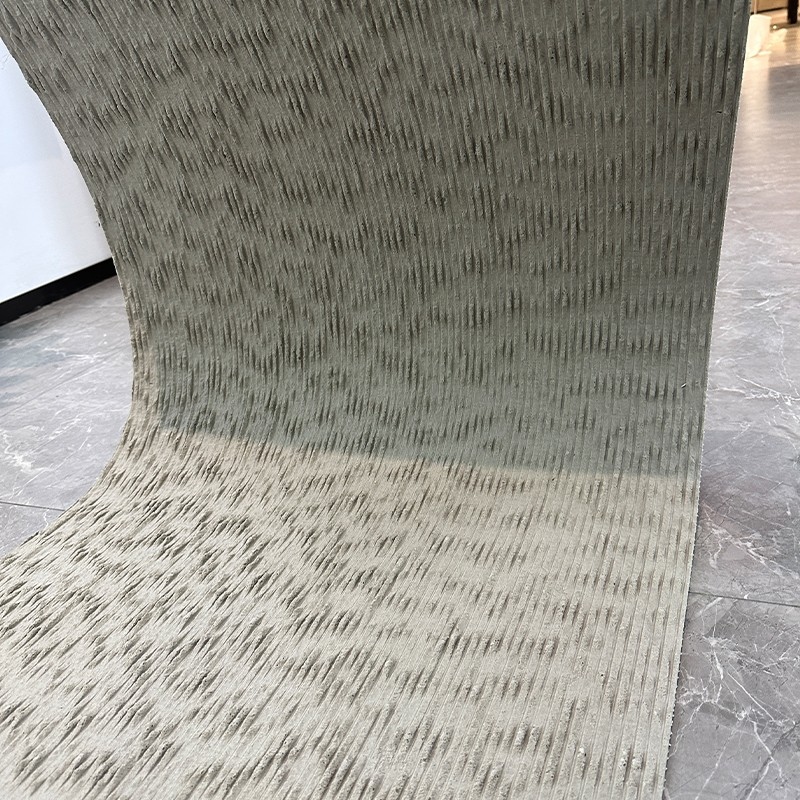
A wall panel specification is often treated as a straightforward material callout, but the substrate it lands on rarely cooperates. What reads as “install over prepared substrate” on paper can translate on site to gypsum that has been patched unevenly, concrete that still carries form-release residue, or plywood with a moisture gradient no one measured. The gap between specified flatness and real-world waviness shows up after the first panel is set, when reveals become inconsistent and lippage appears despite the panel dimensions being correct.
Most specifications assume a substrate that is dry, clean, and dimensionally stable, yet those assumptions are seldom verified before panels arrive. Existing wall assemblies move with seasonal humidity, carry adhesive residue from previous finishes, or hide old fasteners that telegraph through thin veneers. Without a field check against the actual surface—rather than relying on the nominal substrate type—installers end up compensating with thicker adhesive beds or extra mechanical fasteners, which changes the visual flatness and even the acoustic or fire performance the spec intended.
The mismatch is rarely about the panel itself; it is about the spec not accounting for how the substrate behaves under real environmental and construction loads. Including a short substrate reality check—measured flatness, moisture content, surface contamination, and fastener layout—before finalizing the panel type can prevent callbacks and keep the installed wall from drifting away from the design intent.
Three Direct-from-Manufacturer Details That Change Installation Day
When your order comes straight from the factory, the hardware isn’t tossed into a generic bag. Each hinge, bracket, and fastener is matched to the exact unit before it leaves the line. That means the installer doesn’t waste half the morning sorting through mismatched screws or making a last-minute hardware run. Everything arrives labeled by opening, and the only tool needed is the one already in the truck.
The second shift happens with pre-applied finishes. Because the product isn’t sitting in a distributor’s warehouse for weeks, the seals and coatings are still fresh when they hit the job site. There’s no need to touch up scratches from double handling or wait for a second coat to dry. Installers can seal joints immediately, which cuts a full day off the typical timeline.
Finally, direct-from-manufacturer orders often include 3D-precise cut sheets that account for your actual wall dimensions. Instead of measuring, remeasuring, and then trimming on site, the crew can lift pieces into place as soon as they’re unboxed. Those small tolerance details may not look dramatic on paper, but they remove the guesswork that turns a one-day install into a three-day project.
How to Decode Fire Ratings for MCM Without the Jargon
Fire ratings for MCM panels often look like a secret code, but they boil down to two simple questions: how fast flames travel across the surface and how much smoke gets produced. In the U.S., the most common test is ASTM E84, which gives a Class A, B, or C rating. Class A means flame spread is slowest (index 0-25), Class B is moderate (26-75), and Class C is faster (76-200). Smoke developed is also measured, and below 450 is typically acceptable for most building codes.
Beyond the surface test, there's a bigger concern for multi-story buildings: whether the whole wall assembly can stop fire from climbing up the exterior. That's where NFPA 285 comes in. It's not about a single panel's rating but about how the panel, insulation, air gap, and joints behave together under a full-scale fire. If an MCM product says "NFPA 285 compliant," it means that specific assembly passed a vertical flame propagation test — crucial for high-rise facades.
When checking a product's spec sheet, ignore the marketing phrases and look for the actual test reports. Match the exact thickness, core type, and finish you plan to use. A fire rating for one MCM configuration doesn't automatically transfer to another. If you see only a Class A rating without NFPA 285, ask whether the project requires full assembly testing. Decoding these numbers is less about memorizing standards and more about confirming the tests were done on the same setup you're installing.
The Overlooked Role of Edge Profiles in Modern Wall Design
Most conversations about wall design fixate on color, texture, or material, yet the way a wall meets its edges often does more to shape a room than any single surface treatment. Edge profiles—those slim metal or plaster transitions where drywall ends, panels turn, or a niche begins—quietly dictate how light falls, how shadows gather, and how crisp or soft a space feels. A sharp square edge reads as precise and contemporary, while a rounded bullnose can soften a hallway or make a built-in shelf feel more approachable. Because these details sit at the boundaries of our vision, we register their effect without consciously noticing them, which is exactly why they deserve more deliberate attention.
In practice, choosing an edge profile is less about picking a product and more about resolving a series of small tensions: flush versus recessed, metal versus plaster, continuous versus interrupted. A recessed shadow line can create the illusion that a wall floats away from the floor, adding a subtle depth that flat trim never achieves. Meanwhile, a well-chosen aluminum reveal can protect vulnerable corners from chips and dents without shouting for attention. The best edge details don't announce themselves; they simply make the wall look finished, intentional, and a little more alive as daylight moves across it throughout the day.
Rethinking MCM Panels Beyond the Accent Wall for Whole-Room Depth
Most rooms treat MCM panels as a single dramatic moment—one wall done in walnut or ribbed oak while the other three stay painted drywall. That approach works, but it also flattens the spatial story. When the same panel profile wraps a corner or continues across an adjacent wall at a slightly different depth, the room starts to read as carved rather than assembled. The shift can be as quiet as changing the panel width by an inch or running vertical grooves floor-to-ceiling on two planes instead of one.
Depth doesn’t always mean adding more material. A rear wall in a matte, low-sheen finish paired with side walls in the same color but a brushed texture creates a kind of tonal layering that changes as you move through the space. You can also drop the panels behind open shelving or use them to face a soffit, so the eye keeps traveling upward instead of stopping at the first feature surface. That continuity is what makes a room feel composed rather than decorated.
Another overlooked move is treating MCM panels as a neutral backdrop that still has physical presence. Instead of reserving them for the TV wall, run them horizontally at chair-rail height around the entire perimeter, then let artwork and furniture break the grid. The panels become a datum line—something architectural that holds the room together without shouting. Used this way, they add depth through repetition and shadow, not through contrast with plain drywall.
FAQ
MCM stands for modified clay material, an ultra-thin flexible panel that reproduces the look and feel of stone, wood, or textured plaster without the weight or rigidity of the real thing. Unlike tile or wallpaper, it delivers a dimensional, tactile surface that needs no heavy substrate, cuts easily with simple tools, and can wrap around curved walls with far less waste.
Accent walls in living rooms, entryways, bathrooms, and commercial lobbies tend to work best because the material handles moderate moisture well when properly sealed. It also suits ceilings and curved surfaces that would be impractical for large-format tile or solid stone.
Installation is closer to wallcovering than traditional tiling. Panels are applied directly to primed drywall or plaster using a polymer adhesive, often with no grout lines necessary. They can be scored with a utility knife and shaped around outlets or corners, which reduces both mess and labor time.
Yes, many original manufacturers offer custom color matching along with a range of finishes from smooth limestone to rough slate or even wood grain. For commercial projects, bespoke patterns or embossed logos are usually possible when working directly with the factory.
Routine care is simple: wipe with a damp cloth and mild soap when needed. Avoid abrasive scrubbing pads. Unlike porous natural stone, it does not demand yearly sealing, though matte surfaces in high-traffic zones may show scuffs and benefit from occasional touch-up.
Generally yes. It is mineral-based and manufactured through a low-temperature process that consumes less energy than firing ceramic tile or quarrying stone. The panels contain no harmful VOCs, and their lighter weight reduces transport emissions as well.
Check thickness tolerance, UV stability for walls near direct sunlight, interior fire rating, and whether the product ships with matching edge trims or corner profiles. Working directly with an original manufacturer usually means access to technical data sheets and custom options without intermediary markups.
Conclusion
When a shipment of MCM interior wall covering leaves the production floor, the inspection list is rarely what designers imagine. Beyond color consistency and dimensional tolerance, original manufacturers spend time on the backside of the panel—checking adhesive compatibility, surface energy, and moisture content—because a panel that looks perfect face-up can still fail against an unprepared substrate. This is why so many wall panel specifications quietly miss the reality of what is behind the drywall or plywood. A manufacturer will ask about existing paint layers, vapor drive, and even the depth of the wall cavity, because the panel is only as stable as the surface it bonds to. Direct-from-manufacturer details, like the exact notch depth required for a notched trowel or the difference between a 48-hour and 72-hour cure window, get lost in generic installation guides.
Fire ratings are another place where jargon buries practical knowledge. Instead of chasing ASTM numbers alone, ask how the panel behaves at the edge and behind the face—where flame spread often begins. Manufacturers who run full assembly tests can tell you whether your chosen adhesive changes the rating. Edge profiles matter more than most clients realize: a square butt joint reads as a deliberate seam, while a micro-bevel or shadow line can turn a flat plane into something with quiet rhythm. And MCM is not limited to a single accent wall. Using the same panel with different edge treatments and module sizes across a room builds whole-room depth without adding materials. Those small, unglamorous choices—how the panel meets a corner, how it terminates at a baseboard, how it responds to light—are the things an original manufacturer sees as the difference between a sample board and a completed interior.
Contact Us
Contact Person: Vito
Email: [email protected]
Tel/WhatsApp: 86 13088879266
Website: https://www.magicstonemcm.com