Metal Pallet Supplier for Export: Durable and Cost-Effective Solutions
2026-06-22
Are you struggling to find metal pallets that balance strength, longevity, and export compliance? At Lanyuda, we've engineered pallet solutions that stand up to rigorous shipping demands without inflating your logistics budget. In this article, we’ll uncover how durable, cost-effective metal pallets can streamline your supply chain and protect your goods from damage—every step of the way.
Crafting Metal Pallets Built for Global Shipping Demands
Every metal pallet we produce is shaped by the harsh realities of ocean freight, air cargo, and cross-border trucking. Unlike standard wood or plastic options, these units are engineered from reinforced steel or heavy-duty aluminum, chosen for their resistance to saltwater corrosion, extreme temperature swings, and the constant vibration of containerized travel. The welding patterns aren't just functional—they're calculated to distribute load stress across the entire frame, preventing the warping and joint fatigue that cripple lesser pallets after a few round trips.
Dimensional precision sits at the core of our approach. International shipping demands consistency that tolerates no surprises: our pallets fit perfectly into standard ISO containers, automated racking systems, and forklift tines without wasted space or dangerous overhang. The deck surfaces incorporate slip-resistant texturing that requires no adhesives or coatings that might degrade during long-haul moisture exposure. Each unit goes through a multi-point inspection, checking for microscopic inconsistencies in joins that could fail under dynamic loads at sea.
Longevity is the linchpin. A typical metal pallet from our facility handles upwards of a decade of continuous service, reducing repurchase cycles and the landfill burden common with disposable alternatives. The repair protocol is equally purposeful: damaged sections can be cut out and replaced without scrapping the entire platform, keeping operational costs predictable for logistics managers who watch margins closely. It's this blend of brute durability and careful economics that makes them indispensable for global supply chains that can't afford downtime.
Why Our Export Metal Pallets Outlast Wooden Alternatives
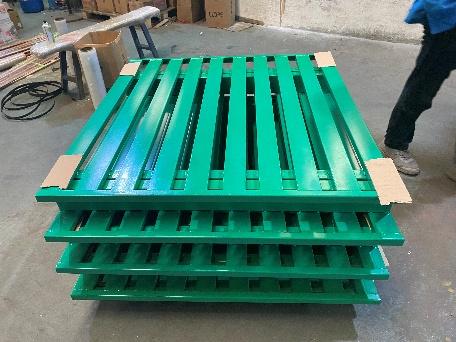
Metal pallets shrug off the kind of damp, pest-ridden conditions that turn wooden ones into liabilities. In international shipping, where cargo might sit in humid ports or face inspection delays, our galvanized steel platforms resist warping, mold, and termite damage completely. There’s no need for costly fumigation or replacement after just a few trips.
Repeated impacts from forklifts and rough handling during transit quickly degrade wood—splinters, cracks, and loose nails create safety risks and damaged goods. Our metal designs distribute weight more evenly and withstand far heavier loads without buckling. The joints stay secure, and the surface remains flat trip after trip, ensuring machinery or sensitive products travel safely.
Over a typical export lifespan, a single metal pallet often replaces dozens of wood ones, slashing disposal fees and hassle. Their consistent dimensions eliminate the unpredictability of warped boards, so loading and unloading stay efficient. For operations crossing borders under tight schedules, that dependability means fewer disruptions and a lower true cost per shipment.
Streamlining Your Supply Chain with Cost-Effective Pallet Solutions
When you take a closer look at your supply chain, the humble pallet often gets overlooked. Yet, switching to a more thoughtful pallet strategy can eliminate bottlenecks without a massive investment. By focusing on consistent sizing and durable materials, you can slash loading times and reduce product damage during transit—putting money back in your pocket where it counts.
A lot of operations fall into the trap of buying the cheapest pallets available, but that short-term savings quickly evaporates with frequent replacements and downtime. Investing in reusable, well-built pallets pays off surprisingly fast. They hold up better to automated systems, stack more securely, and cut the hidden costs of repackaging damaged goods. That reliability means fewer interruptions and a smoother flow from warehouse to customer.
Custom Metal Pallet Designs for Diverse Industry Needs
Every industry moves materials differently, so a one-size-fits-all pallet rarely cuts it. Metal pallets offer the flexibility to tailor dimensions, load capacities, and surface finishes to match specific operational demands. Whether it's a narrower deck to fit automated conveyor systems or reinforced corners for heavy stacking, these designs strip away the limitations of standard off-the-shelf options.
In food processing, smooth, crevice-free stainless steel pallets prevent bacterial buildup and handle frequent washdowns without corroding. Automotive manufacturers lean on raw steel designs with high static loads to store engine blocks and stampings, while pharmaceutical cold chains benefit from lightweight aluminum variants that resist thermal shock. Each sector brings its own set of rules, and custom metal pallets simply slot into them without compromise.
Beyond the core structure, add-ons like drop-down gates, anti-slip rubber inserts, or ESD-safe grounding wires turn a basic frame into a precision tool. Skilled fabricators look at how workers interact with the pallet—forklift entry points, manual lifting edges, racking compatibility—and bake those details into the design from day one. This hands-on approach means the pallet feels like an extension of the workflow rather than an afterthought.
Quality Assurance from Production to International Delivery
Every product begins its journey on the factory floor, where rigorous checks become part of the rhythm of production. Instead of waiting for a final inspection, we embed quality checkpoints directly into each stage—raw materials are verified against supplier certificates, assembly lines pause for random sampling, and functional tests are run before components move forward. This isn't about ticking boxes; it’s about catching subtle deviations early, so the item you receive already carries a history of care.
Once production wraps up, items aren't simply packed and shipped. A dedicated post-production team conducts a detailed audit, pulling products from every batch to simulate real-world use—buttons pressed a thousand times, zippers tugged at odd angles, surfaces exposed to humidity and light. Packaging also gets its own scrutiny, because we’ve learned that damage often happens in transit, not in creation. Only when products hold up to these unscripted stress tests do they earn clearance for the warehouse.
The journey to international destinations brings its own set of hurdles—customs holds, container shifts, climate swings. Our logistics partners are chosen not just for speed, but for their track record in handling delicate cargo. We use smart sensors in select shipments to monitor temperature and tilt, generating a real-time log that gives us a window into the trip. If something goes awry, that data lets us trace the root cause and adjust, so future deliveries arrive with the same quality that left our dock.
Partnering with a Reliable Metal Pallet Supplier for Export Success
Exporting goods requires meticulous attention to every link in the supply chain, and the pallets you choose play a surprisingly critical role. Metal pallets offer unmatched durability and safety during long-haul transit, shielding your products from damage, moisture, and contamination. But not all suppliers deliver the same level of quality. A supplier who truly understands international logistics will provide pallets that meet strict global standards and arrive on time, preventing costly delays at customs or distribution centers.
Vetting a potential partner goes beyond checking a price list. Look for suppliers with verifiable credentials, like ISO certifications or proven compliance with ISPM 15 for wood-free materials, even with metal. Engaging directly with their current clients can reveal how they handle large orders, custom designs, or sudden demand spikes. The right supplier acts as an extension of your team, offering engineering support to optimize pallet dimensions for container space and handling equipment, which directly impacts freight costs and loading efficiency.
Over time, a solid partnership transforms your export operations. Consistent pallet quality reduces product loss and liability claims, while negotiated long-term contracts stabilize your budget against material price swings. Proactive suppliers often introduce innovations—like RFID-tagged pallets or collapsible designs for return logistics—that give you a competitive edge. This reliability builds trust with your overseas buyers, who come to expect flawless deliveries, ultimately fueling repeat business and market expansion without the constant headache of supplier negotiations.
FAQ
Metal pallets don't absorb moisture, resist pests, and meet ISPM 15 regulations automatically—no fumigation certificates needed, which saves time and hassle at customs.
Absolutely. The upfront cost is offset by a much longer service life, lower damage rates during transit, and no recurring treatment fees like heat treating or chemical baths.
Most are made from structural steel or aluminum alloy. Steel pallets handle extreme weights without warping, while aluminum offers a lighter option with excellent corrosion resistance for sea freight.
Yes, we adapt length, width, runner height, and even add tie-down points or special coatings. Just supply your load specs and we’ll engineer a fit that locks into your whole logistics chain.
With hot-dip galvanizing or marine-grade stainless steel, they shrug off salt spray, humidity, and washdowns without rust blooming. Some clients use them on open decks for years.
Yes. Skeleton or lightweight steel designs shave off kilos while keeping structural strength. For air freight, we often recommend aluminum pallets with reinforced critical joints.
We keep detailed production records, offer in-transit damage replacement policies, and ship spare components if a pallet ever needs a weld or a new runner—even years later.
Conclusion
When shipping goods across borders, the pallets you choose can make or break your logistics chain. Metal pallets engineered for export go beyond simple load carriers—they are purpose-built to endure the rigors of intermodal transport, stacking stability, and exposure to moisture or pests that rapidly degrade wooden platforms. With consistent dimensions, reinforced joints, and often significantly higher load ratings, these units keep cargo safe on long-haul journeys, reducing product loss and the headache of pallet failures at customs checkpoints. Their durability translates into fewer replacements over time, while lighter-weight designs in steel or aluminum trim down freight costs without sacrificing strength. In industries from heavy machinery to pharmaceuticals, companies are ditching the short-term savings of wood for the long-run reliability of metal, seeing clear reductions in per-shipment expense and supply chain interruptions.
Beyond the base product, what sets a dependable export metal pallet supplier apart is the ability to tailor solutions and stand behind them at every stage. Custom sizing, racking compatibility, anti-slip surfaces, and even integrated RFID tracks can be incorporated to match exact operational flows, making these pallets an asset rather than a commodity. Rigorous quality checks—from raw material sourcing and weld integrity to corrosion-resistance testing—guarantee that each pallet meets both international shipping standards and client-specific requirements. This level of care continues through secure packing and on-time delivery to any global port. Partnering with a supplier that invests in engineering and after-sales support prevents costly missteps and builds a logistics foundation that scales with your export ambitions. In the end, metal pallets aren’t just a safer, more cost-effective alternative; they’re a strategic move for any business serious about cross-border trade.
Contact Us
Contact Person: Johnny
Email: [email protected]
Tel/WhatsApp: +86 18151010686
Website: https://lydstorage.com