
New Type Skin Beauty Device: A Breakthrough in At-Home Skincare
2026-10-15
Tired of spending hundreds on salon facials that fade within days? The landscape of at-home skincare is shifting, and it’s no longer just about creams and serums. Meet the new type skin beauty device—a true breakthrough that puts professional-grade results right in your hands. At the heart of this innovation is GUANG TAI, a brand redefining what’s possible outside the spa. But what makes this device different from the countless gadgets flooding the market? And why are skincare enthusiasts calling it the missing link between daily routine and dramatic transformation? Keep reading—the answer might just change how you think about your mirror.
Why This Device Isn't Just Another Cleansing Brush
Most cleansing brushes rely on spinning bristles that do as much damage as good—tiny scratches, broken capillaries, and a steady need for replacement heads. This one works differently. The brush surface is a single piece of medical-grade silicone, soft enough for daily use but with enough texture to lift away sunscreen, sweat, and grime. It never harbors bacteria the way nylon bristles do, and you won't find yourself ordering a new brush head every three months. That alone changes the routine from a chore into something you actually look forward to.
Then there's the pulsation pattern. Instead of scrubbing your face, the device sends rapid, gentle vibrations through the silicone—think of it as loosening what's stuck in your pores rather than sanding your skin. A built-in pressure sensor flashes if you push too hard, which sounds minor until you realize you've been over-cleansing for years. The timer pauses every 15 seconds to tell you to move to a different part of your face, so you're not zoning out and overdoing one cheek. It's these small, honest design choices that make it feel less like a gadget and more like a considered part of your skincare.
The Specific Light Wavelengths That Actually Reach the Dermis
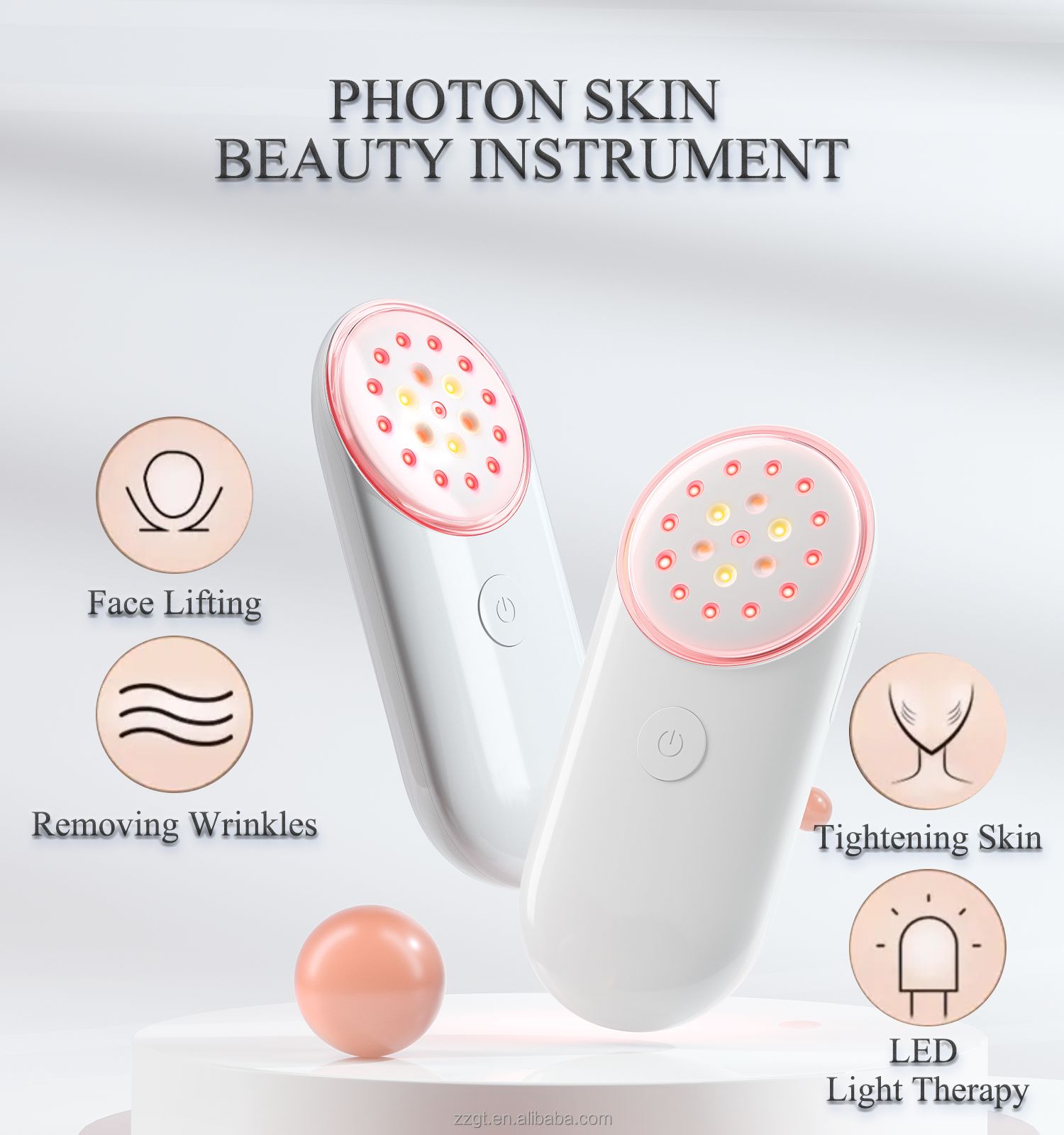
Most of the light that hits your skin never makes it past the epidermis. Blue and green wavelengths, along with UV, are heavily absorbed by melanin and scatter quickly in the upper layers. What actually reaches the dermis sits in a longer-wavelength band often called the optical window—roughly 600 to 1100 nanometers. In this range, scattering drops off significantly, and water absorption hasn't yet become the dominant barrier, so photons can travel deeper before being stopped.
Inside that window, red light around 630 to 670 nanometers penetrates a few millimeters and reliably reaches the upper dermis. Near-infrared wavelengths near 810 to 850 nanometers go even deeper, sometimes reaching the lower dermis or the fat layer below. The balance shifts with skin tone: higher melanin content absorbs more of the red end, so near-infrared often becomes the more dependable choice for deeper dermal targeting in darker skin.
This explains why many light-based therapies and at-home devices cluster around 660 nm and 850 nm. The former works well for surface-level fibroblast stimulation, while the latter is better suited for issues seated deeper in the dermis. A wavelength that looks impressive on a spec sheet won't help if it's mostly scattered before the dermis—so the specific nanometer value is what determines whether the treatment actually reaches the intended layer.
What a Typical 10-Minute Session Feels Like
The first two minutes feel a bit like settling into a favorite chair — you adjust the volume, glance at the timer, and take a slow breath. There's no rush. The voice on the other end eases you in with a few grounding prompts, not commands, so your shoulders drop before you even realize they were tense.
By the midpoint, you're no longer counting the minutes. The exercises build on each other without feeling repetitive, and there's a subtle shift from doing to noticing. Maybe you catch yourself smiling at an unexpected memory, or your mind wanders off and comes back softer. The final stretch brings a quiet wrap-up — no dramatic finish, just a gentle nudge to carry that calm with you for the rest of the day.
Sensitive Skin? Here's What to Check Before Buying
When your skin flushes from a new serum or stings after a basic cleanser, the culprit is rarely just one ingredient—it's usually the combination of fragrance, drying alcohols, and overly aggressive preservatives. Look past the "for sensitive skin" claim and flip to the ingredient list. Shorter decks with water, glycerin, squalane, or oats tend to behave better than long formulations loaded with essential oils and citrus extracts. If you can't pronounce half of it, your skin probably can't either.
Texture and format matter as much as the formula. A rich balm might feel soothing but can trap heat and sweat, while a watery toner full of witch hazel can strip what little barrier you have left. Choose unscented, alcohol-free options that support the skin barrier—ceramides, panthenol, allantoin—and avoid anything that promises a "deep clean" or "tingling" sensation. That tingle is not a sign of efficacy; it's often irritation in disguise.
Before committing to a full-size product, do a patch test on the inner arm or behind the ear for at least 24 hours. Then introduce one new product at a time, spaced a week apart. That way, if a reaction shows up, you know exactly what triggered it. Pay attention to how your skin feels the next morning, not just right after application—delayed reactions are common and often get blamed on the wrong product.
The Serum Pairings That Boost Results (and the Ones to Avoid)
Layering a hydrating base like hyaluronic acid or glycerin under a retinoid or exfoliating acid can take the sting out of stronger actives without diluting their payoff. Damp skin before the humectant, wait a couple of minutes, then press the active on top. Another quiet workhorse is pairing niacinamide with salicylic acid: the niacinamide helps calm the skin while the BHA clears pores, so you get less redness and fewer angry breakouts.
On the flip side, mixing vitamin C with copper peptides often cancels out the brightening effect and can leave skin feeling rough. Skip using retinoids in the same routine as benzoyl peroxide unless your dermatologist says otherwise—the combo tends to cause dryness and peeling that mimics a damaged barrier. If you want both, split them into morning and evening, or alternate nights.
When You'll Notice a Difference: A Week-by-Week Breakdown
The first week is often the quietest. Your skin might feel a touch smoother right after cleansing, but that’s mostly the surface layer responding to extra hydration. Don’t expect visible changes yet — your cells are just getting used to the new routine.
By week two or three, you may notice a slight evening-out of tone, especially in areas that were just dull or rough. Pores might look less pronounced, and makeup could glide on a bit easier. This is when the real work starts happening beneath the surface, but it’s still subtle enough that only you would notice.
Week four through six is where most people see the first real shift. Fine lines may appear softer, and that stubborn patch of dryness or oiliness starts balancing out. If your product targets dark spots or redness, this is often the window where you catch yourself doing a double-take in the mirror — not because it’s dramatic, but because something just looks healthier.
FAQ
This device combines microcurrent stimulation with red and blue LED light therapy, but the key difference is its adaptive intensity control that reads your skin's moisture and adjusts output in real time. Most home gadgets force you to guess the level, which often leads to irritation or weak results.
It uses a dual-ring conductive head that spreads energy more evenly than single-point probes, plus a built-in cooling tip to calm the skin immediately after each pass. The result is similar to a salon facial in about half the time, without the downtime or the bill.
Fine lines, dullness, uneven texture, and mild acne breakouts respond best. The microcurrent lifts and firms, the red light boosts collagen over time, and the blue light targets acne-causing bacteria. It is not a miracle worker for deep scars or severe sagging, but daily maintenance is where it shines.
Yes, the lowest setting is extremely gentle, and the smart skin sensor pauses the device if it detects redness or overheating. Beginners should start with the hydration mode, which uses shorter pulses. It comes with a patch test guide and a 90-day return window if your skin does not agree.
Three times a week for the first month, then twice a week for maintenance. You might notice a temporary glow right after the first session, but real changes in firmness and texture usually appear around week four. Consistency matters more than cranking up the intensity.
A water-based conducting gel is included, but any alcohol-free, fragrance-free serum works as long as it has enough slip. Avoid oil-based products because they block the microcurrent. After the session, apply your regular moisturizer.
Auto shut-off after ten minutes, overheat protection, and a skin-contact sensor that stops the current the moment the device leaves your face. It is also water-resistant for easy cleaning, but never submerge it fully. The battery indicator prevents sudden power loss mid-treatment.
Conclusion
Most at-home beauty tools promise deep cleansing, but this new type of skin beauty device goes further by pairing mechanical exfoliation with targeted light therapy. Unlike a basic cleansing brush that only works on the surface, it uses specific red and near-infrared wavelengths calibrated to reach the dermis—not just the epidermis—so you're not simply scrubbing; you're stimulating collagen and blood flow where real repair happens. In a typical 10-minute session, the device glides easily over damp skin, emitting a gentle warmth that feels more like a spa treatment than a chore. There's no tugging or harsh vibration, just a soft pulsing rhythm that leaves the face looking refreshed rather than red or irritated.
For anyone with reactive skin, check the device's intensity settings and whether the light modes include a lower-energy option before buying—some models let you start with shorter intervals to build tolerance. Pairing the right serum matters too: hyaluronic acid or peptide-based formulas seem to amplify the light's benefits, while heavy occlusives or retinoids right before a session can block penetration or increase sensitivity. Results don't appear overnight, but a week-by-week breakdown shows subtle changes: by week one, skin feels smoother; weeks two to three bring less visible redness and a softer texture; by week four to six, fine lines look slightly softened and the overall tone appears more even—provided you stick to the routine rather than chasing instant miracles.
Contact Us
Contact Person: Manager Mei
Email: [email protected]
Tel/WhatsApp: +8618627866609
Website: https://zzgt.en.alibaba.com/