OEM Cryogenic Ball Valve Factory Insights for Optimal Valve Sourcing
2026-11-03
Sourcing cryogenic ball valves isn't just about picking a supplier—it's about finding a factory that understands what happens when metal meets -196°C. Most buyers get lost in spec sheets and price lists, missing the real factors that determine long-term reliability. That's where ZMV comes in. In this post, we share the OEM factory insights you need to make sourcing decisions that don't crack under pressure.
What a Walk Through the Factory Floor Reveals About OEM Muscle
Stepping onto the factory floor, the first thing that hits you is not the noise or the heat, but the rhythm. Every station moves with a purpose that no presentation deck can capture. You see how raw components become finished products, and in that flow, you spot the difference between a facility that simply assembles and one that truly engineers. The muscle of an OEM is not in its brand logo or its marketing reach—it is in the way a line worker adjusts a fixture without breaking stride, or how a shift supervisor catches a tolerance drift before the quality gate does.
Walking further, you notice the small details: tool cribs stocked with custom jigs, racks labeled with color-coded kanban cards, and maintenance logs filled in by hand. These are signs of a production culture that values autonomy and precision. A strong OEM floor does not rely on heroic fixes or constant firefighting; instead, it builds redundancy into its layout and trusts its operators to make micro-decisions. When you ask a technician about a problem, they show you the root-cause board, not just the workaround. That is where the real strength lives—in the systems and the people who refine them daily.
By the time you reach the end of the line, the message is clear: a walk through the factory floor reveals more than capacity numbers or cycle times. It exposes whether an OEM can scale without losing quality, adapt without chaos, and innovate without abandoning the basics. Those who have walked the floor know that muscle is built one station at a time, through grit, consistency, and a quiet obsession with making things right.
Cryogenic Seat Leakage: A Design Failure, Not an Assembly Afterthought
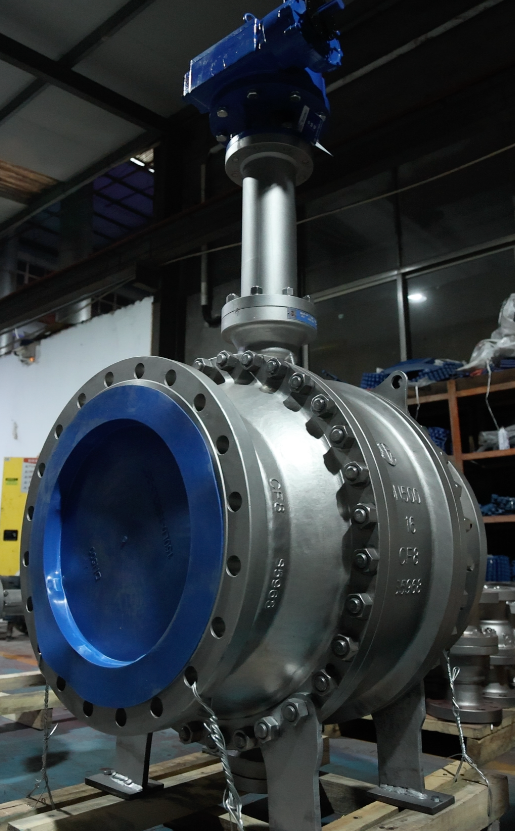
At cryogenic temperatures, the seat in a valve shrinks far more than the surrounding metal body. This isn't an installer's mistake; it's a mismatch in thermal contraction rates that was baked into the design long before the first bolt was torqued. When the seat pulls away from its sealing shoulder, the leak path is already there, waiting for the chill.
Treating this as an assembly afterthought usually means adding more preload or swapping in a softer gasket, but those fixes fight the physics. A proper cryogenic seat design locks the sealing element into a geometry that can flex and follow the contraction, or uses a material pairing whose net dimensional change keeps the contact stress where it belongs. If that isn't in the drawing from day one, no wrench will rescue it.
The difference shows up in service. Valves designed for cold operation maintain a stable seat contact band as the temperature drops, while retrofitted seats tend to relax unevenly and open a crescent-shaped leak. That leak is not a sign of poor workmanship; it is the signature of a design that treated cryogenic behavior as an aftermarket concern.
Material Substitutions That Show Up Only at -196°C
A material swap that looks harmless on a room-temperature drawing can turn into a brittle failure at -196°C. Carbon steels and many martensitic stainless steels lose so much fracture toughness near liquid-nitrogen temperature that a part which bends at 20°C may snap like a dry twig when chilled. Austenitic stainless steels, certain aluminum alloys, and copper-nickel grades hold on to their ductility, which is why cryogenic valve bodies and piping rarely tolerate a "temporary" substitution.
Seals and gaskets show the same trait. A soft, resilient PTFE or PCTFE seat that conforms nicely at ambient conditions can shrink more than the metal flange around it, opening a leak path only after the assembly has been cold-soaked. Filled PTFE compounds sometimes behave worse than virgin grades because the filler particles contract at a different rate, creating microcracks that were never visible on the bench.
Even fastener substitutions can hide until cooldown. Swapping one stainless bolt grade for another might pass every room-temperature torque test, yet at -196°C the difference in thermal contraction between the bolt and the flange can reduce preload enough to unseat a gasket. In cryogenic service, the substitution that "shouldn't matter" often matters precisely because the temperature changes the failure mode, not just the margin of safety.
How to Distinguish a True OEM Plant from a Trading Company Front
Start by asking for a live video walkthrough of the production floor. A genuine OEM plant will show you machines running, workers handling materials, and work-in-progress on the lines. A trading company front usually guides the camera toward a tidy showroom or a small corner with sample products, but avoids the actual assembly or injection molding areas. If they claim confidentiality, offer to sign an NDA—real factories let you see enough to verify capability, even if some proprietary processes stay hidden.
Check the factory's business license scope and audit trail. True OEM manufacturers list "manufacturing" or "production" in their registration, and they can produce recent utility bills, equipment purchase invoices, or mold maintenance logs. Trading companies often only have "trading" or "import & export" on paper. You can also ask for the names of the machines they own—specific brand models like Haitian injection molding machines or Trumpf laser cutters—and then cross-check by requesting a photo of the nameplate with a handwritten date. Brokers rarely have quick access to that.
Push into technical details during calls or emails. Ask about draft angles, material shrinkage rates, tolerance ranges, cycle times, and the maximum mold size they can run. A real OEM plant will answer with numbers from experience, sometimes correcting your assumptions. A trading company will stall, give vague ranges, or promise to "check with the factory" and get back to you later. You can also request a small pilot run with random sampling—factories can arrange it in days, while middlemen struggle to coordinate.
Custom Stem and Trunnion Details That Prevent Cold-Service Failures
Low-temperature valve stems often crack at the packing interface when standard materials lose ductility. One effective countermeasure involves machining the stem from a single billet of austenitic stainless steel, then applying a deep cryogenic treatment before final grinding. This process stabilizes the microstructure so that the stem retains its toughness even when surface temperatures drop below -100°F. A slightly oversized packing chamber with a graduated bore profile further distributes radial stress, preventing localized fatigue that leads to brittle fracture.
Trunnion designs for cold service frequently fail because the trunnion plate and stem extension are welded as separate pieces, creating a heat-affected zone with reduced impact strength. Instead, a forged one-piece trunnion with an integral thrust collar eliminates this weak point. For high-pressure cryogenic valves, adding a self-relieving cavity in the trunnion nose allows trapped pressure to vent gradually, which keeps the ball from sticking and reduces torque spikes during thermal cycling. The trunnion bearing surface is then coated with a thin tungsten-carbide layer, not for hardness alone but to prevent galling when the valve operates dry at sub-zero temperatures.
Beyond geometry, the key is matching stem and trunnion clearances to the actual contraction rates of the body and ball. A custom stem guide with a slotted anti-rotation key, machined with an extra 0.002-inch lateral clearance, accommodates differential shrinkage without jamming. Similarly, the trunnion journal is ground to a slight elliptical profile that becomes circular at operating temperature, maintaining a consistent bearing load. These subtle deviations from standard dimensional tolerances are rarely found in generic valve catalogs, but they make the difference between a valve that survives its first winter and one that splits open at the stem seal.
Test Bay Observations That Predict Long-Term Sourcing Risk
Early signals from the test bay often reveal more about a supplier's future performance than any quarterly scorecard. A batch of power modules might show intermittent voltage dips under thermal cycling—nothing that fails the spec outright, but enough to make a technician pause and rerun the sequence. When these borderline anomalies keep clustering around the same component family, they tend to resurface later as field failures or line-down events. Paying attention to what gets quietly re-tested, rather than what gets formally rejected, gives sourcing teams a head start on risk that no audit checklist can match.
Handwritten notes left on test carts can be just as telling as the automated logs. One engineer may jot down that a connector needed an extra push to seat properly, while another flags a slight upward drift in capacitance after burn-in. Individually these remarks look trivial, but when several of them point back to the same supplier over a few months, the pattern suggests a process control issue hiding beneath acceptable yield numbers. Long-term sourcing risk rarely announces itself with a dramatic failure; it accumulates through small, repeatable deviations that only surface in the day-to-day rhythm of a working test bay.
The most dangerous suppliers are not the ones who ship obviously defective parts—they are the ones whose parts always pass, but only just. A batch that hovers near the upper tolerance limit on leakage current, or a batch that needs a slightly longer soak time to stabilize, may be accepted today and cost you a recall next year. Watching how parts behave when no one is formally evaluating them, such as during setup checks or informal bring-up tests, provides a more honest read on long-term sourcing risk than any supplier self-assessment or polished compliance report.
FAQ
A reliable partner will show documented cryogenic testing on every valve, not just sample batches. Look for in-house deep cryogenic treatment, helium leak testing under cold conditions, and traceability of materials. They typically have dedicated cryogenic assembly areas and a history of supplying LNG, air separation, or aerospace projects.
Beyond ISO 9001, check for ISO 15848 fugitive emission certification and compliance with BS 6364 for cryogenic service. Pressure equipment directives like PED 2014/68/EU or ASME B16.34 are expected. If valves will be used in explosive atmospheres, ATEX or IECEx certification matters. Ask for certificates that cover the exact size and pressure class you need.
The body and trim are usually austenitic stainless steels like CF8M or CF3M because they retain toughness at low temperatures. Extended bonnets are necessary to keep the stem packing above freezing. Soft seats often use PCTFE or modified PTFE, but metal seats are preferred for high-cycle or abrasive service. Verify that all materials have undergone impact testing at the minimum design temperature.
Each valve should undergo cryogenic testing with liquid nitrogen, including shell and seat leakage checks at the rated cold temperature. Helium mass spectrometer testing is common for detecting micro-leaks. Cycle testing under cryogenic conditions ensures the stem and seats hold up. Factory acceptance tests should include torque measurements at low temperature, not just ambient.
The extended bonnet moves the stem packing away from the cold fluid so it remains at a temperature where it can still seal. Without sufficient extension, ice formation around the stem can cause leakage and make the valve hard to operate. A properly designed bonnet also prevents the actuator or gear operator from freezing up.
Material grade, pressure class, and the complexity of the cryogenic testing protocol drive most of the cost. Special seat materials like PCTFE, fire-safe design, and low-emission certification add premium. Smaller sizes in high pressure ratings often cost more per unit than larger standard sizes. Direct sourcing from a factory that does its own cryogenic machining and assembly usually removes middleman markups.
Ask for their engineering change history and examples of past custom designs. A capable factory will have a dedicated cryogenic test cell and can provide thermal simulation or calculation reports. Check if they handle internal components like the ball and seats with in-house cryogenic treatment. Request references from LNG or industrial gas clients and ask about their experience with non-standard connections or actuation packages.
Expect complete dimensional and material certificates, cryogenic test reports for each serial number, and spare parts availability for at least ten years. Many factories provide installation and maintenance training, plus field service for commissioning. A strong partner will offer to re-certify or refurbish valves after years of service, rather than forcing you to buy new replacements.
Conclusion
A walk through a real OEM cryogenic ball valve plant tells you more than any spec sheet. You see machining centers dedicated to deep cryo stems, not just generic CNCs reshuffled for a batch job. The floor itself gives away whether you're dealing with a manufacturer or a trader wearing a hard hat: true plants keep dedicated cryo assembly bays with controlled humidity, marked torque stations, and serialized body-bonnet match lines. If you spot unpacked commercial valves being repainted or a testing corner that's just a pressure gauge on a garden hose, walk away. The test bay is where long-term risk shows up early—watch for liquid nitrogen boil-off curves, seat closure counts after thermal cycling, and whether the operator logs leak rates at both ambient and cold soak. A factory that can't show you repeated cryo cycling data is hiding something.
Cryogenic seat leakage is never a last-minute assembly fix—it's a design geometry problem baked into the seat pocket angle, lip thickness, and how the ball is lapped against the seat under simulated shrinkage. At -196°C, materials lie. A316 body that passed ambient tests might reveal hidden ferrite or wrong filler metal only after cold soak, causing micro-fissures. True OEMs run Charpy tests on actual castings from each heat lot, not just mill certs. Custom stem and trunnion details separate plants that survive cold service from those that stumble: extended bonnets with proper thermal gradient breaks, anti-blowout stems with secondary metal seals, trunnion springs tuned to handle contraction without jamming. These are not off-the-shelf tweaks—they require in-house engineering drawings, frozen stress analysis, and a willingness to reject batches that look fine at room temperature. That's the difference between sourcing a valve and gambling on one.
Contact Us
Contact Person: Lucas Lin
Email: [email protected]
Tel/WhatsApp: +8613968913000 / +8613868610141
Website: https://www.zhengmaogroup.com