
OEM Walk-In Cooler Solutions for Reliable Cold Storage and Energy Efficiency
2026-11-16
Cold storage failures don't just interrupt operations—they quietly drain energy, shorten product shelf life, and turn routine maintenance into a recurring headache. OEM walk-in coolers often look alike on paper, but their long-term performance depends on how carefully they are engineered for the load, the climate, and the way a kitchen or facility actually runs. That's where ART changes the equation: by treating every walk-in cooler as a system, not just a box, with energy efficiency and reliable cold storage built into the design from the start.
Walk-In Cooler Shells That Follow Your Build Spec
Walk-in cooler shells are sized and framed around the actual space you’re working with, not the other way around. If the ceiling steps down near the back corner or a floor drain has to land in an awkward spot, the panel layout and floor design shift to match. We take the site dimensions, door swing, and how carts or racks move through the room before anything gets cut.
The build spec drives choices like panel thickness, door placement, and whether the floor needs reinforcement for rolling loads or hanging product. You’re not stuck picking from a short list of stock footprints. Openings for evaporator lines, pressure relief ports, and strip curtains can be placed where they actually fit your workflow.
Because each shell is cut and labeled before it leaves the shop, installation goes faster and field trimming stays rare. That matters most in tight mechanical rooms or older buildings where every inch is already spoken for.
Panel and Door Details That Prevent Thermal Drift
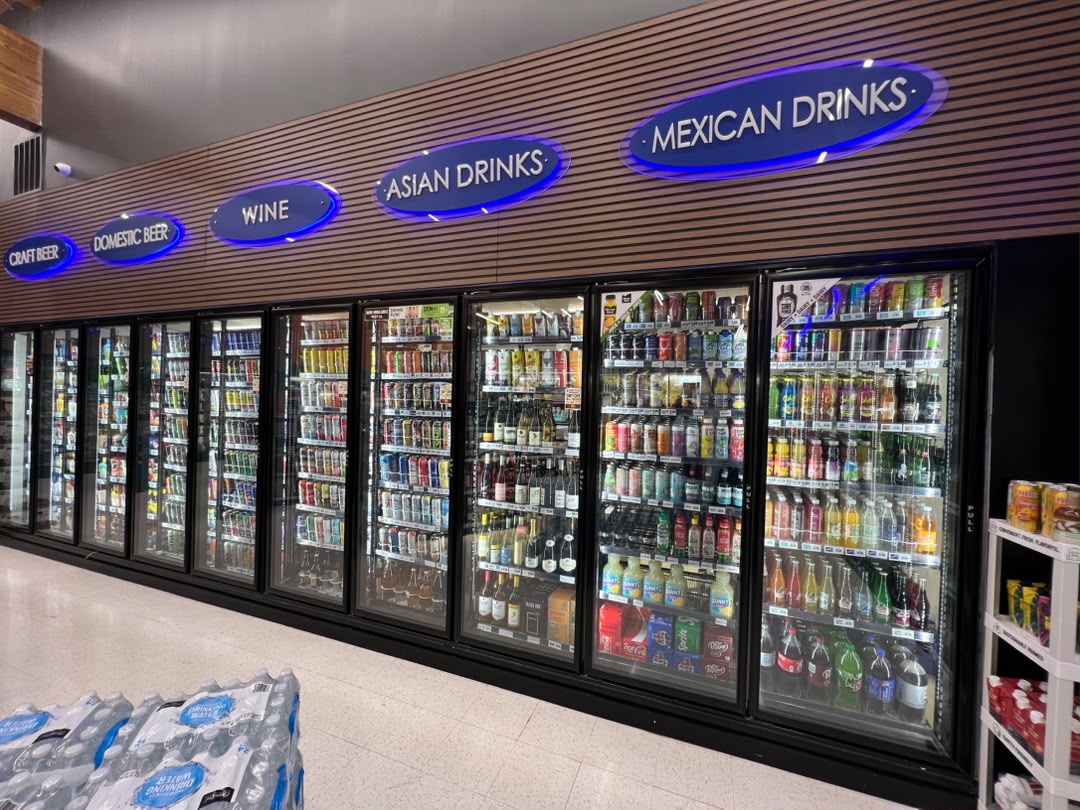
Most thermal drift in panel and door assemblies starts at the seams, not in the middle of the field. A continuous compression gasket along the perimeter does more than seal air; it keeps the leaf from bowing under uneven temperatures. On wider doors, adjustable keepers at three heights hold the closing pressure uniform even after the building settles a few millimetres.
The panel cores also matter. Specifying a low-conductivity insert at the stile edges breaks the direct metal path that pulls heat from one face to the other. Where hinges attach, a thermal break pad prevents the hardware from acting as a heat pipe. It is a small detail, but it shows up clearly on infrared scans near the lock stile.
For doors that face direct sun or repeated freeze-thaw cycles, a floating panel retainer allows the skin to expand without stressing the joints. Silicone-beaded stops, rather than rigid metal clips, keep the panel aligned while letting it move just enough. That allowance is what stops the door from developing a permanent lean or a gap at the header after the first hard season.
Refrigeration Packages Tuned for Lower Peak Draw
Walk-in coolers and display cases rarely pull their worst current at the same moment unless the controls let them. A package tuned for lower peak draw staggers compressor starts after door openings or defrost recovery, so the second and third units don't slam on while the first is still ramping. That small sequencing change often cuts the morning and post-defrost spikes more than adding another circuit would.
The same thinking applies to continuous components. Variable-speed compressors and electronic expansion valves hold part-load conditions instead of cycling hard against a fixed setpoint, which keeps suction pressure steadier and avoids the repeated inrush that comes with short cycling. Condenser fans are tied to ambient and discharge pressure rather than running full speed on cool nights, trimming background draw without losing capacity during hot afternoons.
Defrost and auxiliary loads are brought into the picture as well. Demand-based defrost only runs when frost actually builds, and where possible it is shifted outside the site's highest demand window. A controller watching total current can briefly shed anti-sweat heaters or door frame heaters before they push the service over a target threshold, holding temperatures where they need to be while keeping the peak from climbing.
Modular Floor Plans for Tight Back-of-House Layouts
Tight back-of-house spaces punish every misplaced inch, yet most layouts still treat them as an afterthought. A modular plan helps because it forces you to assign each function—prep, dry storage, warewashing, staff entry—to a defined block. Those blocks then become interchangeable without tearing out walls or re-running utilities every time the menu shifts. You are not so much buying equipment as reserving space for change.
The real advantage shows up in circulation. When the receiving path, cold storage, and cook line are arranged as separate modules, you can keep clear aisles even in a narrow footprint. Set the width of the main route early, drop the modules in around it, and leave enough slack for a cart to pass during a rush. That matters more than squeezing in one extra shelf.
Service Access That Cuts On-Site Labor Hours
Most equipment layouts force your crew to work around them, not with them. We changed that by moving critical access points to where hands naturally reach, letting one technician handle what used to require a lift or a second person. The result is less time fetching tools, repositioning ladders, or waiting for help on a routine check.
When panels, filters, and drain valves sit within arm's reach at ground level, the daily maintenance route gets shorter without cutting corners. One facility team trimmed their weekly service stops by nearly a third, not because the machines changed, but because the path to each component finally made sense. That kind of quiet efficiency shows up in the labor budget long before anyone notices it on the floor.
We also looked at the moments between tasks—the crouching, the blind reaching, the panel that needs two wrenches and a prayer. By simplifying those interfaces, we let experienced staff finish faster and newer staff work confidently without constant supervision. Fewer steps per job, fewer callbacks per shift, and a service routine that feels less like a chore and more like a walkthrough.
Humidity and Defrost Control That Extends Equipment Life
Moisture is one of the most overlooked causes of early equipment failure in refrigeration and HVAC systems. When humidity is left unchecked, condensation collects on evaporator coils, housing seams, and electrical terminals. Over time, that moisture leads to rust, insulation breakdown, and intermittent short circuits. Keeping internal humidity within a controlled range removes a major source of corrosion and electrical fault before it can take hold.
Defrost strategy matters just as much as moisture levels. Fixed timer defrost often runs too long or too short for actual conditions. Excessive defrost cycles force the compressor to recover temperature repeatedly, while insufficient defrost allows ice to build up and restrict airflow. Sensor-driven defrost reacts to real frost accumulation, cycling only when necessary. That reduces thermal shock, lowers compressor strain, and prevents fan motors from working against a frozen coil.
The combined result is a more stable operating environment. Less condensation means seals, wiring, and metal surfaces stay intact longer. Smarter defrost means fewer hard starts and less mechanical wear on critical components. In humid facilities, equipment with coordinated humidity and defrost control frequently outlasts comparable units running on basic timed cycles, with fewer service calls and a longer useful life.
FAQ
Pay attention to the insulation thickness, door sealing, and how the refrigeration components are matched to the room size. A reputable manufacturer will also ask about the products being stored, the expected traffic pattern, and the ambient conditions before recommending a configuration. Those details matter more than a one-size-fits-all specification sheet.
Custom sizing and door placement can reduce the distance staff need to walk, speed up loading and retrieval, and limit how often warm air enters the space. When the layout follows the workflow rather than forcing the workflow to adapt, temperature swings become less frequent and the cooler becomes easier to keep organized.
Most of the savings come from reducing heat gain and avoiding an oversized refrigeration system. Good insulation, tight gaskets, efficient fan motors, and defrost controls all contribute. If the system is sized correctly for the actual load, it runs fewer cycles and still holds the target temperature.
Yes. The construction can be adapted with heavier-duty flooring, corrosion-resistant interior panels, reinforced door frames, and specialized temperature ranges. A capable OEM will modify the design around the specific use rather than forcing the facility to accept a standard package.
Panel fit, thermal breaks, door alignment, and floor insulation are usually the most important. Even a high-quality refrigeration unit will struggle if the room leaks air or has gaps in the thermal envelope. Continuous gaskets, cam-lock panel connections, and proper sealing at corners and penetrations make a noticeable difference.
They typically start with a site survey or detailed measurements, then adjust panel widths, ceiling height, door swing, and ramp or floor requirements. Obstructions like columns, low ceilings, and narrow access paths can be accommodated. The final drawing is often reviewed with the client before production begins.
Keeping door gaskets clean and flexible, checking that the door closes fully, and clearing debris from condenser coils are the most effective habits. It also helps to monitor temperature logs for small shifts instead of waiting for a noticeable failure. Addressing minor seal or sensor issues early prevents the system from working harder than necessary.
Conclusion
Cold storage projects rarely fail because one big system breaks; they fail when small mismatches add up across the envelope, the refrigeration package, and the daily workload. Our OEM walk-in cooler approach starts with shells built to your actual build spec, not a generic stock size, so the unit drops into a tight back-of-house layout without forcing changes to door swings, utility rough-ins, or adjacent equipment. Panel and door details are treated as part of the thermal system rather than an afterthought: gaskets, cam-lift hinges, pressure relief ports, and floor transitions are selected to limit air exchange and prevent the slow thermal drift that pushes compressors into longer run cycles. On the refrigeration side, capacity is matched to real pull-down loads and door traffic, which lowers peak electrical draw without sacrificing recovery after a delivery or a rush period. Modular floor plans then give operators the freedom to shift from reach-in style service to half-height doors, corner entries, or pass-through sections as the kitchen or production line evolves.
Long-term operating cost is mostly set by service labor and moisture control, not just rated efficiency. Units are arranged so compressors, electrical panels, and drain lines can be reached without pulling product racks or removing wall panels, cutting the hours a technician has to spend on routine checks and repairs. That layout also supports better humidity and defrost management, because accessible evaporator fins and clear drain paths keep frost from accumulating into thick ice that shortens coil life and forces harder compressor operation. The result is a walk-in cooler that holds temperature more steadily, uses less energy during peak periods, and stays easier to work on year after year—reliable cold storage without the usual hidden compromises.
Contact Us
Contact Person: Ellen
Email: [email protected]
Tel/WhatsApp: +86-535-2229725
Website: https://www.artrefrigeration.com/