
Oil Immersed Transformer Factory: How Modern Manufacturing Powers Reliable Energy Grids
2026-11-16
Behind every flick of a light switch lies an unsung hero: the oil immersed transformer. These devices spend decades bathed in insulating oil, quietly managing voltages so our cities stay powered. But what transforms a factory into a birthplace of grid reliability? At XIAOPAI, precision engineering meets modern manufacturing to craft transformers that don’t just meet standards—they anticipate the grid’s future demands. Step inside the world where molten metal, vacuum drying, and rigorous testing shape the backbone of dependable energy.
Where Metal Meets Megawatts: Inside the Transformer Factory Floor
The floor hums with a low, constant vibration long before you register the individual sounds—the whine of overhead cranes, the bite of carbide teeth into copper busbar, the shuffling footsteps of engineers in hard hats navigating a landscape built from steel plate and cellulose insulation. Here, metal doesn’t just meet megawatts; it swallows them whole, shaped into cores that weigh more than a house and windings that will one day channel enough power to keep a small city lit. The air smells faintly of warm transformer oil, that sweet, slightly acrid scent of mineral hydrocarbons, mixing with the cooler tang of bare iron. Everything is oversized, from the barrel-sized coils stacked like spools of thread to the vertical winding machines that look less like factory tools and more like the offspring of a lathe and a small observatory dome.
Each unit begins its life as a skeleton of grain-oriented silicon steel, hundreds of razor-thin laminations being stacked by hands remarkably steady for the scale of the work. Workers with grease-stained gloves fit insulating cylinders around laminated legs, their movements a quiet dance learned over decades. The winding operation is where the quiet precision transforms into brute scale—copper strip or cable, roughly the width of a breakfast plate, is guided onto the coils with the help of custom jigs and immense patience. In a separate bay, active part assemblies are lowered into their tanks with the solemnity of a burial, every millimeter clearance checked against the tank walls. There’s no frantic pace here, just a deliberate rhythm that acknowledges one misaligned lead or untrimmed gasket could mean a flashover under 400,000 volts.
Testing is when the factory floor truly lives up to its promise of metal meeting megawatts. The impulse generator, a towering stack of capacitors and spark gaps, suddenly spits out a man-made lightning bolt that tears the air with a crack you feel in your breastbone. The transformer doesn’t flinch. Heat runs push the oil temperature toward 100 degrees Celsius while engineers monitor dissolved gas levels for any whisper of internal arcing. And then there’s the moment of full-load testing: a deep, resonant hum builds as the unit finally gets to do what it was born for, stepping power through its copper veins. The sound is not a noise so much as a physical presence—a bass note sustained for hours, vibrating the concrete floor and letting everyone on the factory floor know that this quiet room of metal has just been handed a river of electricity and told to turn it into light a hundred miles away.
Why Oil Immersion Still Wins: The Hidden Science of Cool, Quiet, and Durable Power
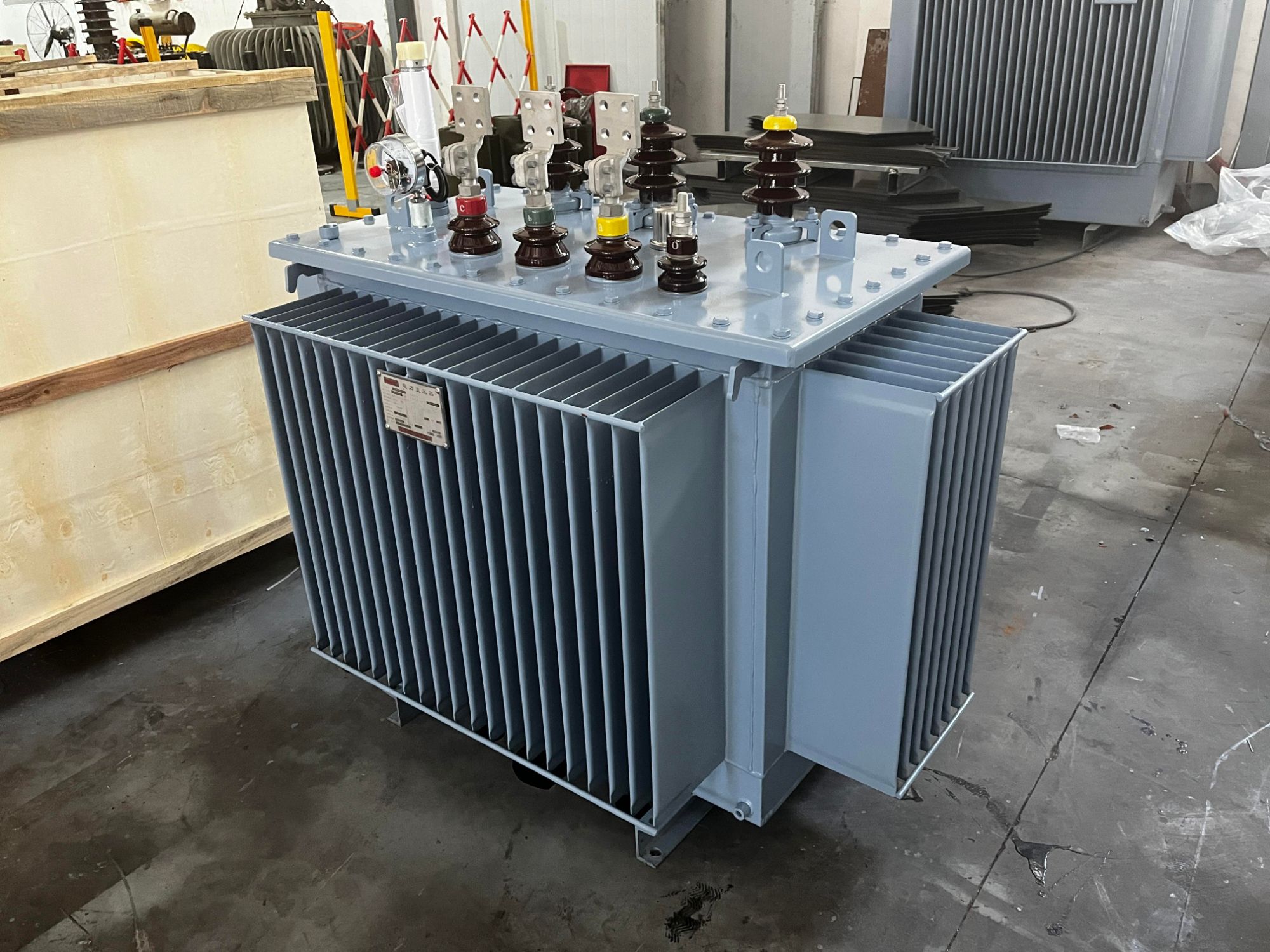
Drop a submerged pump into a tank of dielectric oil and the first thing you notice isn't the whine of a fan—it's how little sound reaches your ears. Mineral oil acts as a dense acoustic dampener, swallowing high-frequency coil squeal and magnetic harmonics before they can vibrate the enclosure walls. That's why industrial transformers humming in basements and offshore wind converters tucked inside nacelles lean on this century-old trick. The fluid doesn't just carry heat away; it physically muffles the very sources of noise, letting engineers tune for vibrations in the metalwork instead of fighting airborne racket.
Cooling gets the spotlight, but the way oil does it still outsmarts forced-air in any densely packed power stage. Liquid contact transfers heat roughly twenty times faster than a breeze over a finned heatsink, so hot spots near IGBT junctions and wound magnetics flatten out before they can spike. Even better, the oil's high specific heat capacity lets it absorb sudden overloads—think a traction drive lunging up a grade—without the temperature overshoot that would trip a thermal protection loop. No ducting, no filter changes, no derating curves that crumble when ambient air hits forty degrees. Just a steady, silent convection loop that treats joules like a sponge treats spills.
Durability is where the hidden science really pays back. Submerged power electronics don't battle moisture, salt spray, or conductive dust because the oil itself becomes a permanent barrier, flooding every crevice that corrosion would normally claim. Oxidation slows to a crawl, partial discharge risks drop, and those tiny tin whiskers that can bridge PCB traces find no dry path to grow. Field data from submersible motor drives in wastewater plants and high-voltage pulsed power units in physics labs keeps pointing to the same conclusion: a properly sealed oil tank often outlives three air-cooled replacements, simply because the enemy wasn't just heat—it was the environment itself.
From Raw Steel to Grid Hero: The Winding, Stacking, and Sealing Journey
Each giant transformer begins its life quietly, as massive rolls of grain-oriented silicon steel arrive at the factory floor. This isn't the kind of steel you'd find in a building frame; its crystals have been carefully aligned during rolling to provide an almost effortless path for magnetic flux. The first real step of transformation is slitting and cutting these wide coils into precise widths and lengths, creating the thin laminations that will stack together to form the core. It’s a meticulous, almost surgical stage, where razor-sharp blades shape the steel into pieces that look deceptively simple but must fit together with minimal gaps, because every micron of wasted space translates directly into hum, heat, and lost efficiency.
From these flat puzzle pieces, what emerges through winding and stacking is the heart of the machine. In wound core designs, the lamination strip spirals around a mandrel like a tightly coiled clock spring, building up layers of steel that encircle the future windings. In stacked cores, technicians—often guided by both jigs and a trained eye—lay the laminations in an alternating brickwork pattern, building a formidable square frame limb by limb. This isn't merely assembly; it’s a deliberate dance to avoid gaps, maintain uniform pressure, and ensure that the magnetic loop remains whole. The slightest burr or misalignment here can become a persistent source of vibration, so every touch is deliberate, every layer checked before the next one falls into place.
Sealing is where the journey wraps up, but it’s far more than just closing a lid. Once the core and coils are mated and heavy leads are brought out, the active part enters a sturdy tank. Gaskets are positioned at every flange, and the atmosphere inside is carefully stripped of moisture under vacuum before being filled with oil that doubles as both coolant and dielectric shield. Once sealed, the transformer finally earns its silent readiness—standing in a substation, invisible labor already proven, waiting to step into the grid’s daily drama without a tick of hesitation.
Tested Under Fire: How Every Transformer Earns Its Place on the Grid
Before a transformer ever hums to life on the grid, it endures a gauntlet of trials designed to push it past ordinary limits. Lightning impulse tests strike with precision, mimicking the brutal surge of a storm in microseconds. Thermal runs bake the windings until they glow through infrared lenses, proving insulation can hold when the load won't let up. These aren't checkbox exercises—they're the moments where design meets reality, and weakness has nowhere to hide.
Short-circuit testing is where things get visceral. Engineers brace for the violent thump as fault currents surge through the core, exerting mechanical forces that try to tear the coils apart. A transformer that walks away from this still humming, with its structure intact and impedance unchanged, hasn't just survived—it's announced its readiness. The grid doesn't reward good intentions; it respects only those units that have already faced the worst in a controlled cage and stood firm.
The final rites include sound-level measurements that rule out loose laminations, and partial discharge monitoring that sniffs out the faintest whisper of insulation distress. When a transformer finally ships, its test dossier is thicker than its user manual. That paperwork isn't bureaucracy—it's the unspoken contract between the factory floor and every substation that will demand reliable silence for decades.
Smart Hands, Smarter Machines: The Human-Automation Blend Shaping Reliability
Reliability isn't born in a vacuum. It's sculpted in those unscripted moments when a technician's intuition catches a subtle vibration that no sensor flagged, and in the seamless handoff where automated diagnostics feed precise data straight to a skilled operator who already suspects the root cause. This blending of smart hands and smarter machines turns routine checks into proactive safeguards, ensuring that uptime isn't just a metric but a lived outcome of collaborative instinct.
What often gets missed in the race toward full automation is the quiet resilience that human adaptability brings. A machine can process terabytes of performance data, but it takes a person to feel the grit in a bearing or hear the off-rhythm hum of a compressor before logic systems raise an alert. When that tacit knowledge meets algorithmic precision, the result is a feedback loop where each sharpens the other, preventing failures that neither could anticipate alone.
The real shift is cultural. Teams that stop seeing automation as a replacement and instead treat it as a co-pilot unlock a distinct kind of reliability—one that thrives on shared accountability. A field engineer who trains an AI model with real-world edge cases isn’t surrendering expertise; they're amplifying it. In turn, those tools give them back the time to focus on judgment-intensive tasks, creating a cycle where human skill and machine consistency reinforce each other every single shift.
Beyond the Build: Custom Engineering for Tomorrow’s Unpredictable Loads
Every structure tells a story long before the first bolt is tightened, and lately that story has shifted from solving for static requirements to anticipating the unknown. Custom engineering no longer just means sizing beams for maximum expected weight; it means designing systems that flex, redistribute, and endure when real-world forces far exceed what any textbook table predicted. We’re moving past the era where “safety factor” was a single number plugged into a spreadsheet—tomorrow’s unpredictable loads demand an approach where the building thinks alongside the engineer.
Think about a logistics hub that one week handles pallets of paper towels and the next houses heavy electric vehicle batteries stacked in concentrated zones. Traditional design might treat this as a uniform warehouse load, but reality hits differently when point stresses wander and vibration patterns change overnight. That’s where embedded adaptability comes in: connection nodes that dampen resonance at variable frequencies, composite floor systems that stiffen locally under overload without adding weight globally, and digital twins that learn, iterating on actual sensor feedback instead of assumptions. It’s engineering that acknowledges the gap between design-stage serenity and operational chaos.
The most resilient solutions often come from looking sideways at other industries—dynamic rigging principles from stage rigging, fatigue-resistant joints from offshore marine design, even morphing wing concepts from aerospace. When we stop treating a structure as a frozen monument to a construction contract and start treating it as a living system that must react, reconfigure, and survive shocks we can’t yet name, we’re truly going beyond the build. The goal isn’t just to hold up; it’s to keep holding steady when the rulebook has been left far behind.
FAQ
Oil immersed transformers remain central because the oil provides exceptional cooling and electrical insulation even under heavy, fluctuating loads. This proven design handles thermal stress better than many dry-type units in high-voltage applications, and decades of manufacturing refinement have made them remarkably reliable for utilities that can’t afford unexpected downtime.
It’s a shift from manual craftsmanship to precision automation. Core cutting and winding are now computer-controlled, which virtually eliminates minor asymmetries that used to cause hot spots. Inline vacuum drying and oil filling under strict cleanroom conditions reduce moisture and particle contamination to levels that simply weren’t achievable before. The result is a transformer that can run decades without internal flashovers.
Testing is where the real proving happens. Beyond standard turns ratio and insulation resistance checks, top factories now run induced voltage tests with partial discharge monitoring down to picocoulomb sensitivity. They also simulate thermal performance under overload scenarios and analyze dissolved gas in oil from heat-run tests. This catches latent defects that could cause a failure years into service, effectively shifting the break-in risk from the utility to the factory floor.
Because moisture is the silent killer inside a transformer. The final assembly of the core and windings and the subsequent vapor-phase drying under extreme vacuum determine the cellulose insulation’s remaining life. Plants that master this achieve single-digit residual moisture percentages, letting the transformer resist ageing even when occasionally overloaded. It’s less about secrecy and more about the hard-earned process discipline that separates a 40-year asset from one that starts degrading in ten.
The supply chain determines the integrity of the core steel and copper. Top-tier manufacturers invest in grain-oriented silicon steel with specific domain refinement techniques and reject batches with even minor lamination inconsistencies. They also maintain tight control over insulating paper and pressboard quality. When every unit leaving the factory meets a narrow performance band, grid planners can count on predictable impedance and voltage regulation across entire substation fleets, which keeps the network stable under stress.
The best factories now integrate complete oil handling systems that treat the oil as carefully as the active part. By filling the tank under vacuum and using nitrogen-blanketed storage, they prevent initial oxidation and moisture ingress. Some even install online dissolved gas sensors at the factory that remain with the unit, giving operators health data from day one. This means the transformer goes into service with oil condition that normally takes months of field conditioning to achieve.
It’s the difference between building to spec and owning the duty cycle. A resilient-enabling factory co-engineers the unit with the utility, using real load profiles and fault current studies to customize winding arrangements and cooling stages. They also maintain a full-service test lab that can replicate grid transients, and their design team actively feeds lessons from field failures back into production. The output isn’t just a piece of hardware, it’s a tailored node in a nervous system that has to perform for decades without warning.
Conclusion
Stepping into an oil immersed transformer factory is witnessing a deliberate collision of raw metal and megawatt ambition. It’s not a sterile assembly line but a charged floor where massive steel sheets become the silent backbone of the grid. The choice to submerge active parts in mineral oil endures for profound reasons—it’s an organic cooling system that wicks heat away from windings, naturally muffles the hum of alternating current, and preserves insulation for decades longer than clean air could manage alone. The build itself is a layered ritual: precision-cut grain-oriented silicon steel gets stacked into a magnetic core, then heavy copper or aluminum windings are coiled, pressed, and set into the tank. That final welding and sealing stage carries the weight of a thirty-year warranty; a single hidden cavity could seed partial discharge and eventual failure. It’s heavy industrial poetry where every bolt and barrier plays a durability role.
Before earning a spot on the grid, each unit faces a gauntlet that feels almost punitive—lightning impulse voltages and sustained overload temperatures that mimic the worst a storm or heatwave can deliver. These aren’t ceremonial checks; they expose latent material flaws and workmanship glitches that specs alone can hide. What cements long-term reliability, however, is the deliberate blur between smart hands and smarter machines. Automated winding arms and robotic tank handlers handle the brute force, but seasoned technicians still listen for core vibrations and interpret partial discharge patterns with an instinct no algorithm fully captures. This human-automation pact becomes critical when the factory tailors designs for tomorrow’s unpredictable loads: custom impedance values for renewable parks, reinforced clamping for erratic charging depots, hybrid cooling for congested urban substations. The floor doesn’t just turn out hardware—it forges the adaptive, resilient arteries that keep modern life humming under strain.
Contact Us
Contact Person: Kellen Chen
Email: [email protected]
Tel/WhatsApp: 8613806536768
Website: https://www.cnxiaopai.com