
Paper Packaging Solutions: Smarter Designs for a Greener Supply Chain
2026-11-16
In a world where every shipment leaves a footprint, the way we package speaks volumes—about our brand, our values, and our commitment to the planet. As supply chains inch toward real sustainability, smarter paper packaging isn't just an option; it's the next competitive edge. At Imagine Craft Packaging, we've seen how a single thoughtful design can slash waste, lighten loads, and elevate the unboxing moment into something memorable. This isn't about swapping plastic for cardboard and calling it done. It's about rethinking structure, materials, and purpose so that every box works harder and wastes less. If you're curious how paper can carry more weight than ever—literally and environmentally—you're in the right place.
Rethinking Materials for a Lower-Impact Supply Chain
The familiar playbook of swapping one material for another rarely delivers the transformation supply chains actually need. A lower-impact future demands more than incremental substitutions—it requires questioning the entire lifecycle of what we source, how we combine it, and why certain materials became defaults in the first place. Designers and procurement teams who step back to assess function before form increasingly find that high-performance, regenerative alternatives already exist; they were simply hidden behind decades of supply chain inertia. Breaking that inertia means valuing durability, modularity, and end-of-life reclamation not as afterthoughts but as the core selection criteria that reshape supplier relationships from the ground up.
Too often, the burden of change falls on material producers while brands merely tweak specifications. Genuine progress happens when manufacturers collaborate directly with farmers, chemists, and recovery facilities to redesign inputs around regional realities. A polymer that biodegrades safely in one watershed might persist in another, and a bio-based feedstock grown without thoughtful land management can carry a heavier carbon debt than the petrochemical it replaces. The most promising efforts pair local material innovation with logistics that shrink transport emissions, creating supply chains where geography and chemistry align rather than fight each other.
The quiet shift gaining traction is not about finding a single miracle material—it is about building portfolios of options that fit distinct contexts and performance demands. Some product lines will thrive with reclaimed ocean plastics while others need precision-engineered mycelium composites or mineral-based films that re-enter industrial cycles indefinitely. What separates leadership from greenwashing is an honest willingness to publish the assumptions behind every lifecycle calculation, admit where data is still weak, and invest in the reverse logistics infrastructure that turns ambitious material choices into measurable, lasting reductions.
How Shape and Structure Cut Waste Before It Starts
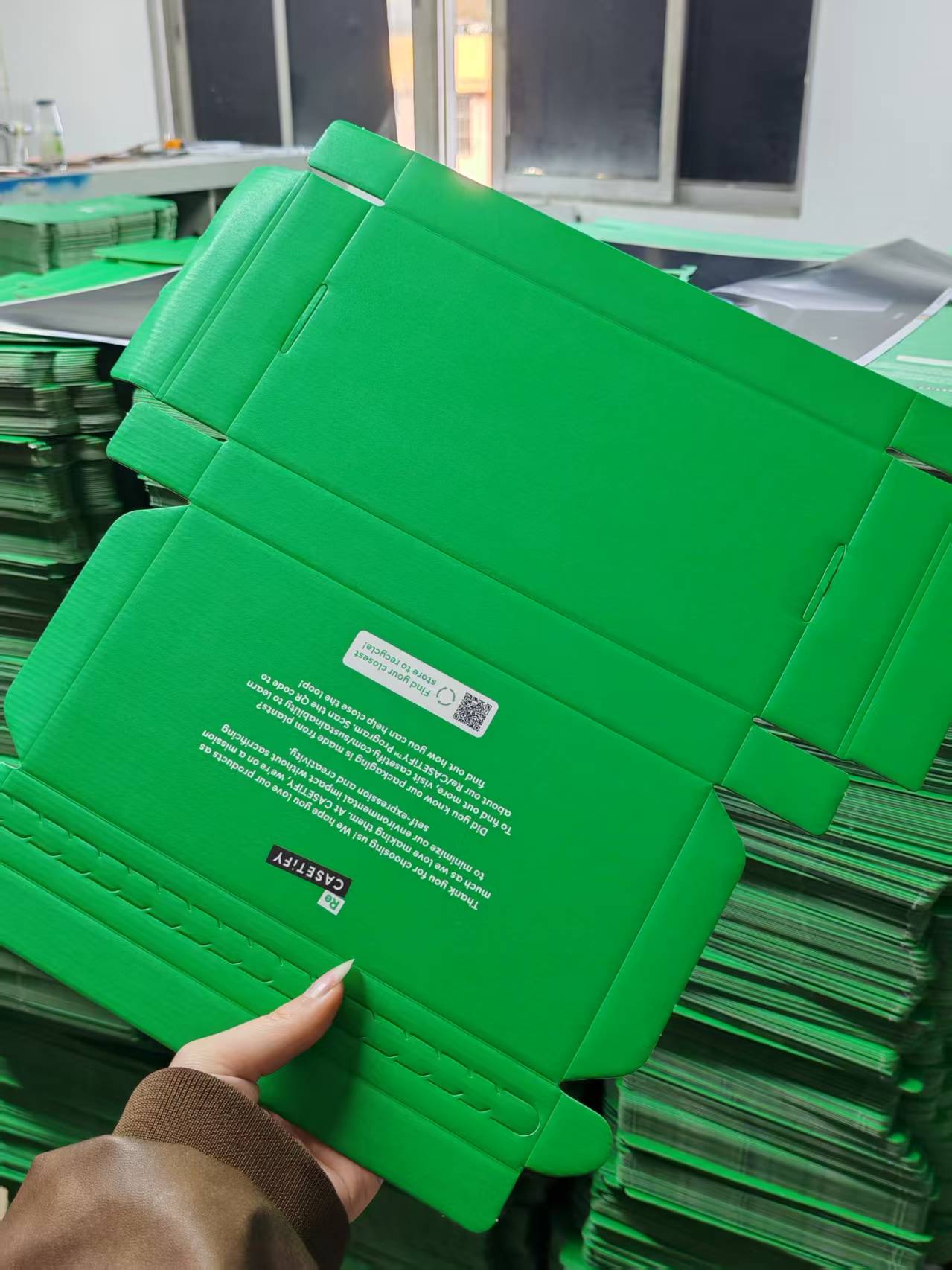
Most waste isn't born on the factory floor—it’s designed in. When a part’s geometry demands excessive material removal or forces awkward nesting patterns, offcuts become inevitable. A subtle taper or a rethought cross-section can keep raw stock closer to the final form, so less ends up in the recycling bin before a single tool touches metal.
Structural decisions ripple outward in unexpected ways. A hollowed core doesn’t just lighten a component; it can eliminate the support material that thin overhangs would otherwise require. By aligning load paths with fabrication logic, you bypass the scrap that comes from overcompensating with solid blocks and support scaffolds that get discarded after printing or machining.
The shape of a product also dictates how many operations are needed. Fewer fixtures and setups mean fewer opportunities for alignment scrap and trial runs. When one clever contour replaces three separate brackets, you cut not only material but the hidden waste of energy, tool wear, and the inevitable prototypes that don’t meet tolerance.
Designing for Reuse Without Sacrificing Brand Identity
Reusable assets thrive when they feel effortlessly adaptable, yet still unmistakably yours. Instead of locking every element to rigid brand rules, focus on building flexible foundations—color systems that stretch across contexts, typography that carries tone without shouting logos, and layouts that breathe with the content they hold. The trick isn’t to dilute your identity, but to distill it into core principles that surface naturally, no matter how many hands reshape the final piece.
Brand presence doesn’t vanish when you hand over a template; it fades when the template fails to capture the subtle textures that make a brand human. Lean into motion patterns, micro-interactions, or even copy cadence as part of the reusable package. These quiet signatures do more heavy lifting than a logo plastered in the corner, and they scale without feeling forced. When every reused element remembers where it came from, consistency stops being a checklist and starts feeling like instinct.
Striking the balance often means curating a living library, not a mausoleum of locked components. Treat your reusable system as something that evolves—inviting fresh interpretations while gently steering them back to the visual logic you’ve built. That way, partners and teams don’t just replicate your work; they feel ownership of it, and the brand stays vibrant rather than turning into a stale echo.
Lightweighting That Doesn’t Compromise Protection
We’ve all been there—dreading the bulk of a heavy-duty case that turns a sleek device into a brick. The real challenge isn’t just shaving off grams, but rethinking materials from the inside out. By leaning on advanced polymers and structurally optimized geometries, we’re able to absorb and disperse impact energy at a fraction of the typical weight. This isn’t about hollow promises; it’s about replacing density with intelligent design, so you barely notice it’s there until you need it.
Traditional protection often relies on mass to buffer shocks, but that approach feels increasingly outdated. We’ve moved toward layered architectures that work together—a resilient outer shell paired with a finely tuned inner damping system. Think of it like suspension for your gear: the forces are redirected and dissipated before they ever reach what matters. The result is a protective shell that doesn’t scream for attention, yet quietly handles drops, bumps, and scrapes with the same confidence as its heavier counterparts.
What makes this possible is a refusal to choose between minimalism and durability. Every curve, rib, and junction is there for a reason, honed through iterative testing rather than guesswork. You get a piece of engineering that respects both the aesthetics of your device and the unpredictable nature of daily life. It’s protection that puts the burden on the design, not on your pocket or your bag.
Closing the Loop with Smarter End-of-Life Thinking
Designing a product without a clear exit strategy is like writing a story with no final chapter. The early choices around materials, fasteners, and adhesives ripple through the entire lifecycle, determining whether a device ends up in a shredder or gets a second life. Instead of treating disassembly as an afterthought, smarter end-of-life thinking bakes it directly into the initial concept. By opting for snap-fits over permanent glues, standardizing screw types, and labeling high-value components for easy identification, manufacturers can transform a confusing tear-down into a graceful, 15-minute process. This isn't just about recycling rates; it's about preserving the embodied energy and complexity already invested in each assembly.
The real opportunity, however, lies in shifting from a linear waste model to a value-recovery pipeline. When a product's end-of-life is planned with genuine sophistication, metals remain in their original alloys, rare-earth elements stay in functioning sub-assemblies, and entire modules can be re-certified for use in refurbished equipment. This approach often requires a sales-to-service mindset, where companies maintain a digital thread tying a physical unit to its maintenance history and material passport. The payoff is profound: supply chains become less vulnerable to raw material shortages, and the business model moves away from chasing virgin extraction toward curating what has already been pulled from the earth.
Ultimately, closing the loop demands a culture of curiosity that questions every bond and joint. It asks, "If we can assemble this in 90 seconds with robotics, why can't we reverse it with similar precision?" That challenge pushes engineering teams to invent reversible adhesives, modular circuit boards with edge connectors, and smart materials that signal their own degradation. The most forward-thinking brands are already using augmented reality tools to guide disassembly workers, turning what was once manual guesswork into a documented, repeatable science. By integrating these practices, the end of one product's life quietly becomes the clean, pre-processed starting point for another—no landfill required.
When Less Ink and Adhesive Mean More Recyclability
The race to make packaging more recyclable often focuses on the material itself—swapping plastic for paper, or rigid containers for flexible pouches. But a quieter, equally impactful shift is happening on the surface of these materials. Inks, coatings, and adhesives have long been the hidden saboteurs of recycling streams. A pizza box that seems perfectly recyclable can be rejected by a facility simply because grease-resistant chemicals are too embedded in the fibers, or because the bold, full-coverage print makes it difficult to separate during pulping. Stripping things back isn't just about using less; it's about rethinking how decoration and assembly interact with the entire lifecycle of a product.
Minimizing ink coverage and choosing low-bleed, water-based alternatives transforms a printed piece from a potential contaminant into a valuable secondary material. When brands opt for delicate line art instead of heavy floods of color, paper mills can pulp it cleanly without the gray sludge that typically results from mixed pigments. Similarly, eliminating adhesives where possible—or switching to repulpable, starch-based glues that dissolve during processing—prevents entire batches from being downgraded or landfilled. Even postage labels and tape on corrugated boxes have become reinvented: pressure-sensitive adhesives that detach cleanly or wash off completely are now making curbside recycling far less brittle.
These choices rarely make the front of the package, yet they decide whether that package gets a second life. Designers who once prized maximalist shelf impact are now exploring negative space not as an aesthetic retreat but as a functional advantage—less ink means less chemistry to separate, fewer bonding agents mean faster fiber recovery. The result is packaging that moves through sorting centers without triggering contamination alarms, eventually becoming pulp for the next generation of boxes, mailers, and cartons. It turns out that a lighter touch creates a much heavier environmental benefit.
FAQ
It starts with how paper fits into circular systems more easily than most materials. Smarter designs use less raw fiber, incorporate recycled content, and are engineered to be lightweight yet sturdy. This directly cuts transport emissions and material costs without sacrificing product protection, making the whole chain leaner and less wasteful.
They tackle multiple pain points at once. For instance, a box that eliminates void fill by using interlocking flaps reduces both material and shipping volume. Coatings derived from plants instead of plastics mean the package can go into the recycling stream without contamination. It's about seeing the entire lifecycle—from forest to doorstep and back again—and designing out the problems early.
Absolutely, and it's not just a feel-good measure. Right-sizing a corrugated mailer to the product avoids shipping air and slashes dimensional weight charges. Optimized pallet stacking from foldable, flat-packed designs means more units per load, fewer trucks on the road. Savings in fuel, storage, and damage claims add up fast, proving that sustainability and profitability can run on the same track.
Take e-commerce cushioning. Molded pulp inserts, made from recycled newsprint and water, now replace polystyrene foam for electronics and breakables. In food service, thin barrier coatings made from seaweed or sugar cane allow paper cups and bowls to hold liquids and grease without a plastic liner, making them compostable. Even heavy-duty shipments use paper-based pallet wraps that stretch and cling like plastic film.
Performance comes from engineering the fiber matrix, not just mimicking plastic's look. By aligning wood fibers in specific orientations during forming, you get rigidity where needed and crush resistance in corners. Moisture barriers are applied as micro-thin layers that don't hinder recyclability. With the right structural folds, a sheet of paper can absorb shock like a spring, outperforming bubble wrap in some drop tests.
First, map out your actual needs: product fragility, transit hazards, humidity exposure. Not all paper is equal—a flimsy design causes more waste. Partner with suppliers who provide life-cycle analysis data and test prototypes under real conditions. Train your fulfillment team on new packing methods; a great design fails if packed incorrectly. And communicate the ‘why’ to customers, because a package that tells a sustainability story adds value far beyond protection.
Conclusion
The shift toward smarter paper packaging begins long before a box leaves the factory, with designers and engineers rethinking materials to lighten the environmental load without sacrificing performance. Rather than relying on virgin fiber or complex laminates, more brands are turning to high-recycled-content papers and mono-material structures that simplify the entire supply chain. Structural tweaks—like precision-cut inserts that eliminate the need for plastic cushioning or collapsible designs that ship flat—prove that waste reduction can start at the drawing board. The best examples marry form and function: a cleverly scored mailer that hugs a product snugly enough to drop cushioning altogether, or a modular system that a customer can repurpose for storage, building brand loyalty through reuse. These moves feel less like eco-gestures and more like commonsense engineering.
Equally critical is what happens when that package has done its job. Designers are now treating end-of-life as a feature, not an afterthought, stripping away unnecessary inks, coatings, and adhesives that trap paper in landfill instead of the recycling stream. A minimalist approach to graphics—relying on embossing, single-color prints, or water-based inks—keeps the recyclability high and the look distinctive, often achieving a quiet confidence that stands out amid flashy competitors. Lightweighting plays a role too: by recalibrating flute profiles and board grades, packaging can become thinner yet still tough enough for real-world transit, trimming both material use and transport emissions. In the best cases, these strategies overlap, creating paper solutions that loop cleanly back into production, embodying a supply chain that thinks ahead instead of just chasing after the mess.
Contact Us
Contact Person: Sunnie
Email: [email protected]
Tel/WhatsApp: +8615818596517
Website: https://www.imagine-craft.com/