
Reliable Bidirectional Power Modules: Unlocking Efficient Energy Transfer in Modern Electronics
2026-05-17
Imagine a world where energy flows effortlessly between devices, adapting in real time to demand. This isn’t science fiction—it's the reality enabled by reliable bidirectional power modules. At the forefront of this innovation is TPS, delivering cutting-edge solutions that unlock unprecedented efficiency in modern electronics. As industries push for smarter, greener technology, the ability to transfer power in both directions is transforming how we design and power everything from portable gadgets to industrial systems. But what does it take to make these modules truly dependable? Let’s dive into the core of bidirectional energy transfer and discover why TPS sets the standard for reliability and performance.
Why Bidirectional Power Modules Are Redefining Energy Transfer
Energy systems are undergoing a quiet but profound transformation, and at the heart of this shift lies a component that few outside engineering circles have fully appreciated: the bidirectional power module. Unlike traditional converters that force electricity to travel in a single direction—like water down a one-way chute—these modules allow power to flow both ways with seamless grace. This isn't just a technical novelty; it's a complete rethinking of how we design and interact with energy infrastructure. Suddenly, a battery isn’t just a storage bank—it’s an active participant that can absorb surplus solar during the day and feed it back to the grid at night, all managed by the same compact, intelligent block of electronics.
The real magic, however, unfolds in the layers of efficiency and resilience that bidirectional modules introduce. In electric vehicles, for example, the same module that charges the battery from the wall can later power your home during an outage, turning the car into a mobile microgrid. This dual-purpose nature eliminates redundant hardware, shrinking footprints and cutting costs in ways that ripple across entire supply chains. Designers are no longer forced to choose between input and output; they simply create systems that adapt on the fly, responding to real-time demands without missing a beat. The result is a leaner, more responsive energy fabric—one where the old boundaries between generation, storage, and consumption finally begin to blur.
What truly sets bidirectional modules apart is the way they invite fresh thinking in sectors that have long been locked into rigid architectures. From renewable microgrids in remote communities to regenerative braking systems in industrial machinery, the ability to reverse energy flow on demand opens doors that were simply bolted shut before. Engineers are now using these modules to craft energy systems that mimic natural ecosystems—circular, self-balancing, and astonishingly adaptable. It's not about making existing designs slightly better; it's about questioning why energy ever needed to move in only one direction in the first place. And once you've done that, the old rules no longer seem so unbreakable.
Breaking Down Efficiency: How Modern Modules Minimize Loss
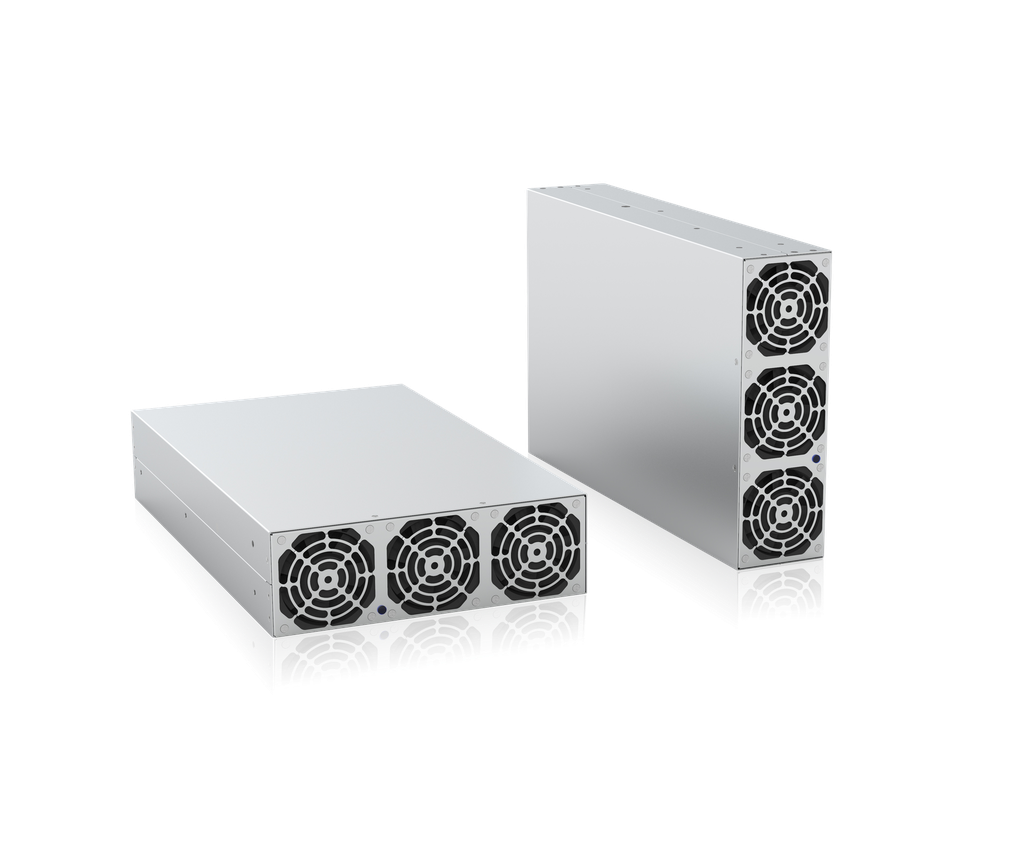
Modern modules have shifted away from traditional layouts, embracing cell architectures that cut down on resistive and optical waste. By shrinking or eliminating the gaps between cells and using multi-busbar designs, current flow is distributed more evenly, reducing internal resistance. The glass and encapsulation layers are also re-engineered with anti-reflective coatings and textured surfaces that trap more light instead of bouncing it away. The result is a notable jump in panel-level output without adding bulk or cost.
Precision manufacturing now plays an outsized role in minimizing mismatch and micro-cracks that quietly erode performance. Automated stringing, electroluminescence testing, and tighter binning mean each module leaves the line operating closer to its theoretical peak. On the electronics side, integrated power optimizers and half-cut cell configurations help isolate shaded or damaged areas, so a single leaf or dust streak doesn't drag down the whole array. These design choices keep real-world yields remarkably close to lab figures.
Long-term loss mechanisms like light-induced degradation and potential-induced degradation are tackled at the material level—doping profiles, passivation layers, and frameless designs all contribute to stability over decades. Field data shows that modern modules hold onto a higher percentage of their initial rating well into their service life. For installers and owners, that translates into a simpler financial case without needing to bake in steep annual derates.
Built to Last: Reliability in Demanding Applications
When every second counts and failure simply isn’t an option, equipment needs to perform beyond the ordinary. That’s the mindset behind our approach: design components that thrive where others falter, in the heat of a desert pipeline, the vibration of a heavy hauler, or the constant cycle of a packaging line. Long-term durability isn’t just a goal—it’s woven into material selection, heat treatment, and geometry long before the first prototype hits the test bench.
We’ve seen too many systems crippled by parts that look good on a spec sheet but crack under real-world rhythm. So we obsess over the unglamorous details—the radius that stops a stress riser, the coating that survives thousands of thermal swings, the seal that never quits. It’s why our clients in mining, energy, and heavy manufacturing trust us to keep their operations moving, shift after dusty, demanding shift.
True reliability isn’t claimed; it’s proven in the field where data and dirt come together. We track every part back to its production lot, gather performance stories from the operators themselves, and feed those lessons straight back into engineering. That loop tightens every season, making year-ten just as predictable as day-one. In the harsh corners of industry, that’s the only kind of lasting that counts.
From Grid to Load: Seamless Power Flow Management
Managing the journey of electricity from the grid to the final load involves a delicate interplay of generation, transmission, and distribution systems. It’s not simply about moving electrons; it’s about maintaining constant equilibrium between supply and demand while navigating the inherent variability of renewable sources. Advanced monitoring devices and real-time analytics now allow operators to detect and correct imbalances in milliseconds, preventing minor disturbances from cascading into outages. This continuous balancing act keeps industrial machinery humming, data centers running, and homes lit without interruption.
Behind the scenes, smart inverters and automated switchgear redirect power around faults or congested lines, often before consumers notice a flicker. Grid-edge intelligence is shifting some decision-making to the load side, where distributed energy resources like solar panels and battery storage actively participate in voltage and frequency regulation. Instead of treating loads as passive endpoints, modern architectures treat them as flexible partners—adjusting consumption patterns or injecting stored energy back during peak stress. This bidirectional flow transforms the traditional one-way street into a dynamic, self-healing network.
Achieving truly seamless power flow means overcoming physical and regulatory boundaries that segment the grid into isolated pockets. Interconnection standards are evolving to support faster, more coordinated responses across regions, while digital twin simulations stress-test the system against extreme weather or sudden equipment failures. When every kilowatt-hour moves from source to socket with minimal loss and maximum reliability, it reflects less a technical upgrade and more a philosophical shift—from brittle, centralized control toward a resilient, adaptive ecosystem where power finds its path like water carving through a watershed.
Innovations Driving the Next Wave of Power Electronics
Wide-bandgap materials like silicon carbide and gallium nitride are reshaping what’s possible in power conversion. Their ability to switch at higher frequencies with less loss means converters can operate cooler, handle more voltage, and shrink dramatically in size. This isn’t just an incremental gain—it’s a leap that lets engineers push power density into territories once deemed impractical, all while trimming energy waste in everything from data centers to electric vehicles.
Packaging and integration are quietly rewriting the rules on thermal management and reliability. Advanced 3D stacking and embedded die technologies place components closer together, slashing parasitic inductance and enabling faster switching without the usual heat buildup. At the same time, novel substrate materials and improved molding compounds pull heat away more effectively, so power modules can survive harsh environments and last longer with fewer points of failure.
Digital control and smarter sensing are turning power systems into adaptive networks. Instead of fixed switching patterns, microcontrollers and dedicated logic now adjust in real time to load changes, line disturbances, or aging components. Distributed intelligence across power stages brings self-tuning and predictive upkeep within reach, cutting downtime and squeezing out extra efficiency without human intervention. The result is a quiet shift toward autonomy in energy management, where the hardware learns and refines its own operation continuously.
The Future of Energy: Bidirectional Modules in a Connected World
The shift from centralized, one-way power grids to dynamic, two-way energy flows is redefining how we think about electricity. Bidirectional modules—whether in electric vehicles, home batteries, or industrial systems—allow energy to move not just from utility to consumer, but also back again. This turns every endpoint into a potential source, smoothing out demand peaks and making renewable integration far more practical than it was a decade ago.
In a deeply connected world, these modules don’t operate in isolation. They communicate constantly with grid operators, adjusting charge and discharge cycles based on real-time pricing, weather forecasts, and local demand. A neighborhood might collectively decide to share stored solar energy during a heatwave, avoiding strain on the main grid. It’s a level of coordination that requires robust digital infrastructure, but the payoff is a leaner, more adaptive network that can handle the intermittency of renewables with ease.
Looking ahead, bidirectional energy systems could turn communities into self-sufficient nodes that only lean on central plants as a last resort. Instead of massive, vulnerable power stations, we’ll see resilience built from the bottom up—garages, streetlights, and office parks all playing their part. It’s a radical departure from the old model, but the technology is already here; the real challenge is regulatory frameworks and market structures catching up with the possibilities.
FAQ
A bidirectional power module can transfer energy in both directions—either from a source to a load or back from the load to the source. Unlike standard unidirectional converters that only allow one-way flow, these modules can reverse the current path seamlessly, enabling energy recovery and more flexible system architectures.
Reliability ensures consistent performance over time, especially in mission-critical applications like electric vehicles, medical devices, or renewable energy systems. A failure could lead to data loss, safety hazards, or costly downtime, so these modules must endure thermal stress, voltage spikes, and frequent direction switching without degradation.
They use advanced semiconductor materials like gallium nitride (GaN) or silicon carbide (SiC) that have lower switching and conduction losses. Combined with intelligent control algorithms that synchronize switching times and minimize waste, the modules can reach 95% or higher efficiency in both forward and reverse modes.
You’ll find them in battery charging and discharging circuits for electric vehicles and portable electronics, energy storage systems that smooth out solar and wind fluctuations, and even in power supplies for telecom equipment. They also enable regenerative braking in trains and elevators, where kinetic energy is converted back into stored electricity.
Balancing thermal management with size is tough, because bidirectional operation can double the heat generated. Designers must optimize component placement, use high‑temperature substrates, and implement active cooling without making the module bulky. Another hurdle is minimizing electromagnetic interference since the high‑frequency switching can disrupt nearby circuits.
By permitting energy to flow back to the grid or a shared battery, devices can harvest wasted power from braking or lowering a drone, for instance. This cuts overall electricity consumption and extends battery life, paving the way for self‑sustaining wearables or eco‑friendly smart home gadgets that reuse every joule.
Conclusion
Bidirectional power modules are reshaping the landscape of modern electronics by enabling energy to flow seamlessly in both directions, a stark departure from conventional one-way converters. This fundamental shift unlocks new possibilities in applications ranging from electric vehicles and renewable energy storage to industrial drives. By intelligently managing the interplay between grid and load, these modules ensure that surplus energy can be harvested, stored, and redeployed with minimal waste. The relentless pursuit of higher efficiency has led to advanced topologies and wide-bandgap semiconductors that dramatically cut switching losses and thermal stress. As a result, modern designs routinely achieve conversion efficiencies above 98%, even under partial loads, translating into smaller heat sinks, reduced cooling requirements, and more compact system footprints. Moreover, the innate reliability of these modules is no afterthought; it stems from rigorous design practices that address voltage spikes, electromagnetic interference, and harsh environmental conditions. Built-in protection features like overcurrent shutdown, thermal throttling, and fault reporting work in concert to safeguard both the module and the broader system, making them indispensable for mission-critical scenarios where downtime is not an option.
The innovations driving this field forward go well beyond incremental gains, with novel digital control algorithms and adaptive modulation schemes that dynamically optimize performance in real time. Such intelligence allows a single bidirectional module to serve multiple roles—rectifier, inverter, and DC-DC converter—without the bulk and cost of additional hardware. This versatility accelerates the adoption of distributed energy architectures, where local generation, storage, and consumption coexist fluidly. Looking ahead, the true potential of bidirectional power modules lies in their ability to weave into a connected energy ecosystem, where devices autonomously negotiate power flows to balance demand and supply. Whether smoothing out the intermittency of solar panels, enabling vehicle-to-grid services, or sustaining critical loads during outages, these modules are quietly becoming the backbone of a resilient and efficient electrical infrastructure. Far from being a mere component upgrade, they represent a paradigm shift toward energy systems that adapt, heal, and optimize without human intervention—ushering in a future where power electronics truly recede into the background, letting sustainable energy flow unhindered.
Contact Us
Contact Person: Lily
Email: [email protected]
Tel/WhatsApp: +49 (0) 2161 49526-0
Website: https://tps-elektronik.com/en/