
Sliding Head Lathe Factory: Precision Manufacturing for High-Volume Production
2026-07-24
When every second counts and micron-level precision is non-negotiable, the choice of a sliding head lathe factory can make or break your high-volume production. At WINNRUI CNC, we don’t just build machines—we engineer agile manufacturing solutions that turn complexity into competitive edge. Discover how our Swiss-type expertise redefines speed, accuracy, and scalability in ways you haven’t imagined yet.
Precision That Scales with Your Production
True precision isn’t just about hitting tight tolerances on a single unit—it’s about maintaining that exactness as output grows from dozens to millions. Many systems falter when pushed beyond prototype volumes, allowing drift, wear, or process variation to erode quality. Our approach locks in repeatability across every part, every shift, and every production line, ensuring the thousandth piece is indistinguishable from the first.
We embed intelligence directly into the manufacturing flow, with closed-loop feedback that self-corrects in real time. Rather than relying on post-process inspection to catch defects after they occur, our algorithms preempt deviations by continuously analyzing sensor data and adjusting tool paths, temperatures, or feed rates on the fly. This proactive precision keeps scrap rates near zero even during aggressive ramp-ups, making high-volume consistency a natural byproduct of the system, not a constant firefight.
Scaling production shouldn’t mean compromising on the fine details that define your product’s performance. By architecting flexibility into every stage—from modular hardware that reconfigures for new SKUs in minutes to software that learns and refines its control strategies over time—we eliminate the traditional trade-off between speed and exactitude. The result is a production line that not only keeps pace with demand but actually sharpens its precision as volumes climb, turning what was once a bottleneck into a competitive advantage.
When Lathes Run 24/7, Tolerances Stay Tight
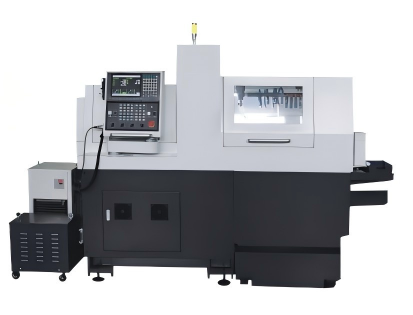
Thermal stability is the hidden backbone of precision machining. When a lathe starts cold in the morning, it drifts through a range of temperatures as bearings, motors, and cutting friction warm it up. This thermal growth shifts dimensions just enough to ruin tight tolerances. Running around the clock keeps the entire machine in a steady state—once it reaches equilibrium, expansion stops. The result is a consistent environment where every part sees the same machine geometry.
Continuous operation also avoids the repetitive stress of startup and shutdown cycles. Heat-up and cool-down cause materials to expand and contract unevenly, slightly altering alignment over time. By keeping spindles turning and coolant flowing, you lock in a dynamic balance that static calibrations can’t replicate. It’s not just about avoiding warm-up scrap; it’s about maintaining a stable footprint for weeks or months at a time.
Beyond temperature, round-the-clock production stabilizes lubrication, cutting forces, and tool wear patterns. In a stop-start shop, each morning reset introduces variables—fresh coolant temperatures, cold way oil viscosity, slight bar stock variations. A lathe that never pauses absorbs these factors into a predictable rhythm. The payoff is measurable: tolerance bands shrink to half of what intermittent runs allow, and the parts speak for themselves with mirror-like finishes and spot-on dimensions.
Machining the Impossible, by the Thousands
Every day, our production floors witness the transformation of raw stock into components that defy conventional wisdom. We routinely machine alloys so tough they chew through standard tooling, hold tolerances measured in microns while moving thousands of units per week, and turn whimsical sketches into hardened reality. It’s not just about removing metal—it’s about reshaping what’s considered achievable, scaling the unscalable without sacrificing a single critical dimension.
The secret lies in a relentless marriage of adaptive toolpath strategies and in-house fixturing that evolves with each part number. Where others see chatter, we see an opportunity to dampen harmonics through custom workholding. Where specs demand impossible blends of surface finish and cycle time, our programmers craft tool engagement algorithms that keep cutters in the sweet spot, batch after batch. This approach lets us run hard metals and delicate geometries overnight, lights-out, with the confidence that the dawn shift will find every part within spec.
But volume never trumps vigilance. Automated inspection nests inside production cells, correlating in-process probing data with final CMM reports so that shifts remain predictable and scrap stays a concept, not a cost. When a design pushes physical limits, we don’t flinch; we iterate cutter profiles, coolant delivery, and workholding until the impossible becomes just another line item on a thousands-strong order. That’s how we machine what others prototype—and then do it by the thousands.
No Room for Error, at Any Speed
Precision isn't a luxury—it’s the baseline when you’re pushing limits. Whether threading through a tight corner at 30 mph or holding steady at triple-digit velocities, the smallest miscalculation can cascade into catastrophe. This mindset doesn’t allow for “close enough.” Every input, every adjustment, every split-second decision must be deliberate and exact.
What separates the exceptional from the merely competent is a culture that treats every speed as a test. It’s not about adrenaline; it’s about maintaining a relentless focus where complacency has no foothold. In environments like these, procedures are not suggestions—they are the thin line between triumph and disaster.
This philosophy extends beyond machinery and into the human element. It’s a shared understanding that the margin for error is permanently set to zero. There is no coasting, no autopilot. From the initial check to the final motion, the demand is the same: get it right, every time, without exception.
The Quiet Heroes of Your Supply Chain
Every package that lands on a doorstep has a hidden history—one written by the hands of warehouse pickers racing the clock, forklift operators navigating tight aisles, and dispatchers who reroute shipments mid-thunderstorm. They don’t appear in earnings calls, and their names never grace a press release. Yet without their daily, often invisible, decisions, the entire flow of goods would stutter and stop.
These people are the connective tissue between a click and a delivery. A truck driver who mentors a rookie on safe winter driving. A maintenance tech who fixes a conveyor belt at 3 a.m. so morning orders don’t pile up. Unlike sleek dashboards or automated sorting systems, they bring judgment, ingenuity, and the kind of quiet dedication that no algorithm can replicate. When a label smears, a scanner fails, or a pallet tips, it’s their quick thinking that preserves the chain.
Too often, supply chain talk orbits software upgrades and predictive analytics. But the real resilience lies in the people who anticipate a bottleneck before it forms, who know a supplier’s quirks by heart, and who treat every box as if it were their own. Acknowledging them isn’t just good humanity—it’s the smartest logistics strategy you’ve probably overlooked.
From Raw Bar to Finished Part in Seconds
What used to take hours of manual setup and machining can now happen in the blink of an eye. With advanced multi-axis turning centers and live tooling, a solid metal bar enters the machine and emerges as a complex, ready-to-use component without any intermediate handling. The entire process—facing, drilling, tapping, grooving, and parting off—happens in a single cycle, slashing cycle times and eliminating the risk of human error.
This leap in efficiency isn't just about speed; it's about redefining what's possible in low- to mid-volume production. By combining operations that traditionally required multiple machines, these systems deliver finished parts with tight tolerances and superior surface finishes straight from the bar. There's no need for secondary operations, deburring, or manual inspections—the part comes off complete, consistent, and ready for assembly.
For manufacturers, the implications are huge: reduced work-in-process, lower tooling costs, and the ability to respond to demand in near real-time. Whether it's aerospace fittings or medical device components, the bar-fed turning center has become the ultimate lean manufacturing cell, turning raw stock into precise, functional hardware in seconds flat.
FAQ
A sliding head lathe uses a moving headstock to feed the bar stock through a guide bushing, allowing for extremely precise machining of long, slender parts. Unlike conventional lathes, the tool remains stationary near the bushing while the material moves, minimizing deflection and enabling tight tolerances even on complex geometries.
They excel at producing small, intricate components with minimal cycle times. The ability to perform multiple operations simultaneously—like turning, milling, and drilling—without repositioning the workpiece drastically reduces handling and boosts throughput, making them a natural fit for large-scale production runs.
You’ll typically see long, slender components such as medical screws, bone pins, aerospace fasteners, electronic connectors, and automotive valve stems. These lathes shine when the length-to-diameter ratio is high and the design demands complex features like cross-holes, threads, and tight surface finishes.
It’s a combination of rigid machine construction, high-quality guide bushings, and real-time process monitoring. We also use statistical process control to catch deviations early, and tool wear is tracked automatically so replacements happen before they affect dimensions. Climate-controlled environments further stabilize measurements.
A wide range—stainless steel, titanium, brass, aluminum, and even engineering plastics like PEEK. The guide bushing system supports the material very close to the cutting zone, which is crucial when working with tough alloys that are prone to chatter or deformation.
Absolutely. Bar feeders handle raw stock continuously, and many machines integrate robotic arms for part collection or secondary operations. This lights-out manufacturing capability means the machines can run unattended for hours, especially important for meeting large order volumes with short lead times.
Finished parts go through a dedicated inspection department equipped with laser micrometers, optical comparators, and coordinate measuring machines. For critical applications, we also offer material certification and full traceability reports so every batch can be traced back to the exact machine and operator shift.
Yes, our engineering team works directly with clients to develop custom tooling and optimize programs for unusual geometries. Whether it’s a modified thread form or an exotic alloy requirement, we prototype and validate the process before committing to full production.
Conclusion
A sliding head lathe factory redefines what's possible in precision manufacturing at scale. Here, accuracy isn't sacrificed when production volumes soar—it's engineered directly into the process. These machines operate around the clock, maintaining critical tolerances that would stress conventional equipment, and they do it without hesitation. Complex geometries that once demanded secondary operations are now produced in a single pass, turning intricate designs into repeatable realities by the thousands. It’s a seamless fusion of speed and exactitude, where every micron is accounted for from the very first cycle.
Such consistency at any velocity means every component emerges flawless, eliminating waste and costly rework. These factories become the backbone of demanding supply chains, delivering flawlessly machined parts that arrive exactly when needed. In mere seconds, raw bar stock is transformed into ready-to-install components, fully deburred and finished. It’s a quiet revolution—no grandstanding, just relentless throughput and unwavering precision that keeps assembly lines humming worldwide.
Contact Us
Contact Person: Tim
Email: [email protected]
Tel/WhatsApp: +86 15522553731
Website: https://www.winnrui-cnc.com/