
Top 10 Gantry Machining Center Solutions for High-Precision Manufacturing Needs
2026-05-12
Precision isn’t just a goal in modern manufacturing—it’s the foundation of every successful project. When tolerances tighten and complexity grows, ordinary machining centers fall short. That’s where advanced gantry machining centers step in, delivering the rigidity, accuracy, and speed that high-stakes industries demand. But with so many options flooding the market, how do you identify the solutions truly engineered for excellence? At WINNRUI CNC, we’ve seen firsthand how the right gantry system can transform production floors. That’s why we’ve curated this list of the top 10 gantry machining center solutions—each designed to meet the most demanding precision manufacturing needs. Whether you’re milling large-scale components or intricate parts, these machines set new standards. Read on to discover the innovations driving the future of high-precision manufacturing.
Redefining Precision: What Separates Elite Gantry Machining Centers from Standard Options?
At the core of elite gantry machining centers lies a fundamentally different approach to structural rigidity and thermal stability. While standard options often rely on conventional cast iron frames that may flex under heavy loads, top-tier systems integrate advanced polymer composite bases or optimized ribbed structures to absorb vibration and maintain alignment over decades of continuous use. This isn't just about using heavier materials—it's about engineering resonance-free performance that keeps tolerances tight even when tackling large, complex workpieces.
Control systems also mark a clear dividing line. Mass-market machines tend to ship with generic CNC interfaces that demand workarounds for sophisticated multi-axis contouring. By contrast, elite centers employ proprietary algorithms that fine-tune servo response in real time, compensating for dynamic errors without operator intervention. The result is a noticeable absence of the micro-pauses and overshoot corrections that plague lesser equipment, translating to surface finishes that often require no secondary polishing.
Then there's the quietly critical role of the tool interface and spindle design. Standard gantry mills might settle for off-the-shelf HSK or ISO tapers that degrade under extreme duty cycles. Elite builders, however, frequently develop their own thermally stabilized spindle cartridges with hybrid ceramic bearings and internal cooling channels routed right to the tool tip. This isn't just incremental improvement—it's the difference between holding a ±5 µm tolerance and pushing into sub-micron territory day after day without adjustment.
Material Versatility Demystified: How Top-Tier Gantry Systems Handle Exotic Alloys and Composites
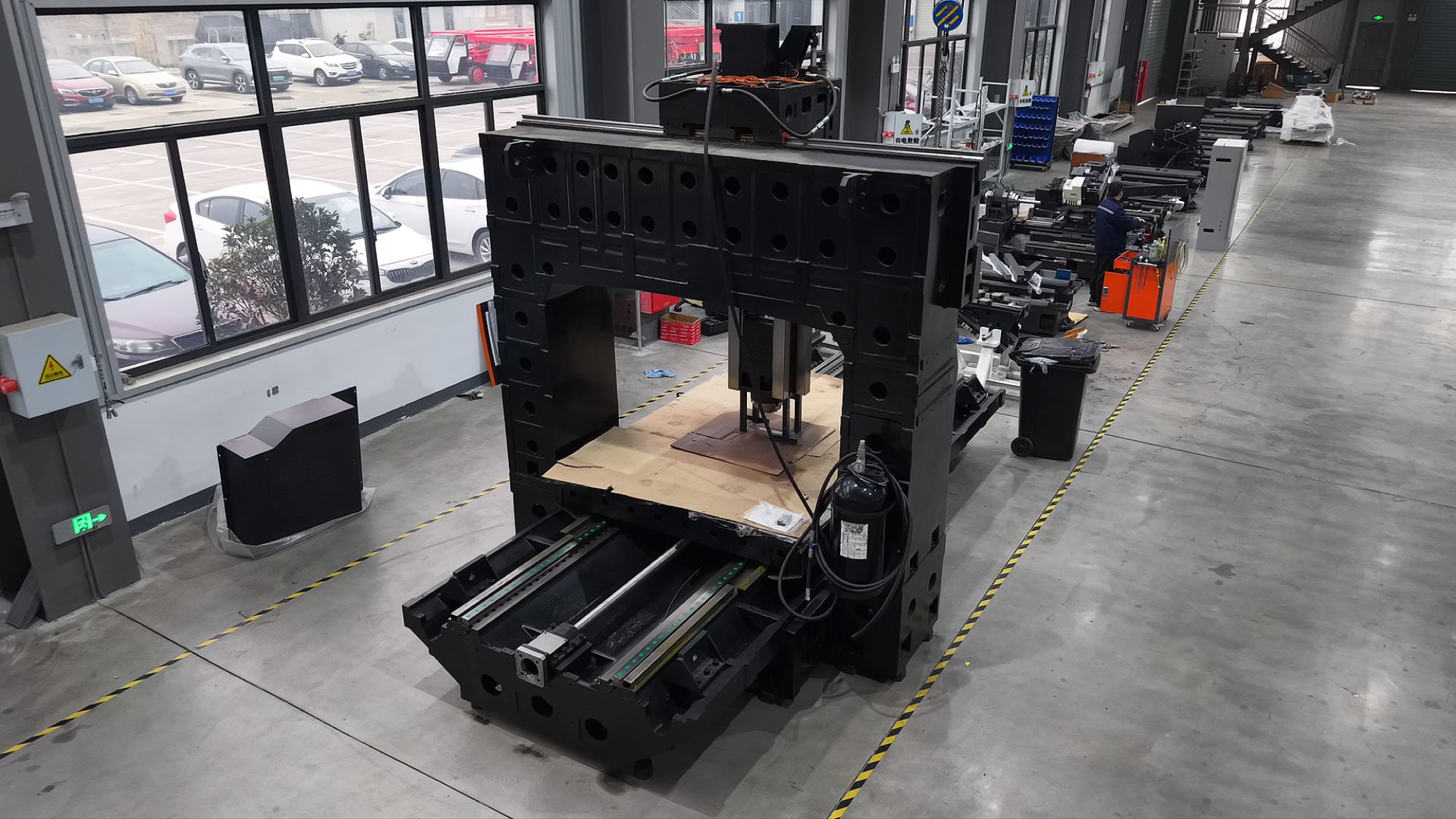
Modern gantry systems integrate adaptive tooling and real-time sensor feedback to manage the unpredictable behavior of exotic alloys. When working with materials like titanium aluminides or nickel-based superalloys, heat buildup can cause warping or micro-cracking. To counter this, high-end gantries adjust spindle speeds and coolant flow dynamically, matching the material’s thermal conductivity and hardness. This on‑the‑fly calibration prevents the common pitfalls of manual setups, where fixed parameters often lead to scrap parts.
Composite materials add another layer of complexity, especially with carbon fiber or glass-reinforced polymers. Delamination is a constant threat if cutting forces aren’t precisely controlled. Top-tier gantry systems utilize multi-axis heads and pressure‑sensitive tool holders that sense layer boundaries and alter cut paths mid-operation. Some even employ ultrasonic or waterjet modules that shear through stacked composites without generating the stresses that mechanical cutters induce.
The real breakthrough lies in the combined handling of hybrid stacks—where metallic and composite layers are bonded together. Ordinary machines struggle with the transition zone, often leaving burrs or tearing the composite. Leading gantries map the material stack beforehand using eddy current or laser‑based sensors, then seamlessly switch between tool sets and cutting strategies within a single programme. This eliminates secondary finishing steps and ensures consistent edge quality, even when the workpiece shifts from a titanium skin to a honeycomb core mid‑profile.
Hidden Costs in High-Precision Machining: Where Gantry Design Impacts Long-Term ROI
When evaluating machinery for high-precision tasks, the spotlight often falls on upfront price tags and baseline accuracy specs. Yet the real financial drain emerges from factors that rarely make the purchase checklist. A gantry system's structural rigidity, for instance, directly governs how often recalibration is needed—every unplanned adjustment means idle spindles and scrapped parts. Thermal stability is another ghost expense: designs lacking symmetric heat dissipation can warp ever so slightly during long runs, turning a ±2µm promise into a costly drifting tolerance that eats into yield.
Downtime is where gantry architecture silently punishes poor choices. Heavier, over-engineered frames might seem robust, but they strain drive components and amplify energy consumption, leading to premature motor and bearing failures. Conversely, a well-balanced gantry with optimized stiffness-to-mass ratio reduces inertia, slashing cycle times and maintenance intervals. The hidden labor cost of frequent belt replacements or guideway tune-ups can dwarf the initial savings from a cheaper system, eroding the projected ROI months before anyone notices.
Long-term ROI also withers when a gantry design locks you into proprietary consumables or complex service routines. Open, modular structures not only simplify part swaps but also allow incremental upgrades instead of full machine replacement. The ability to adapt to new materials or tighter tolerances without a complete rebuild is where smart engineering repays its premium many times over. In essence, the true cost of a high-precision gantry isn't on the invoice—it's amortized across every skipped shift, every unscheduled service call, and every workpiece that leaves the factory outside spec.
Beyond Spindle Speed: The Overlooked Role of Structural Rigidity in Micron-Level Accuracy
In the pursuit of micron‑level accuracy, the conversation too often revolves around spindle speed and tooling precision, while the machine’s foundational stiffness is quietly taken for granted. Yet it is the frame, the joints, and the way vibration travels through cast iron and steel that ultimately determines whether a cutting path deviates by a handful of microns or stays true. Without a rigid structure, even the finest spindle is simply forcing a flexible system into unpredictable deflection.
Structural rigidity does more than resist bending; it shapes the entire dynamic behavior of the machine. When a machine lacks stiffness, resonance modes creep closer to normal operating frequencies, turning a routine finishing pass into a battle against chatter. In contrast, machines designed with heavily ribbed castings, symmetrical column architectures, and thick, well‑anchored bases naturally dampen these vibrations, allowing the axes to maintain a steady tool‑to‑work relationship even under fluctuating loads.
What’s often missed is how structural rigidity directly feeds thermal stability. A stiff structure expands and contracts far more predictably, reducing the thermal drift that casually pushes dimensions out of tolerance. While spindle speed can be dialed in with a controller, true micron‑level repeatability is built into every weldment, every bolt torque, and every hand‑scraped mating surface—the quiet, enduring attributes that define a precision machine long after the specs sheet has been read.
Smart Machine, Smarter Output: Integrating Industry 4.0 Without Disrupting Your Workflow
Bringing Industry 4.0 into your operations doesn’t have to feel like a heart transplant. The newest wave of smart machinery is designed to slide into your existing setup without forcing a complete overhaul. They talk the language of your current systems, picking up data from legacy sensors and modern IoT devices alike, so you can start benefiting from real-time analytics without tearing up your factory floor.
What makes this possible is a shift from rigid, monolithic automation to modular, plug-and-play components. A smart machine today arrives with open APIs and preconfigured integration layers that adapt to your workflow—not the other way around. It’s like adding a new, highly capable team member who already knows the playbook, rather than rewriting the entire game plan.
The outcome is a production line that gains intelligence incrementally, learning patterns and predicting maintenance needs while your day-to-day operations hum along undisturbed. Your team stays in their rhythm, but suddenly they’re armed with insights that were once buried in spreadsheets or lost in shift handovers. Smarter output becomes the natural byproduct of smarter machines that fit right into the cracks of your process, filling gaps you didn’t even know existed.
Real-World Precision: Case-Driven Insights into Gantry Solutions That Deliver Under Pressure
When a major aerospace manufacturer faced a critical production bottleneck, their existing motion system couldn't maintain the sub-micron accuracy required for composite wing spar drilling under high-speed, continuous operation. They turned to a customized gantry solution engineered with direct-drive linear motors and active thermal compensation. The result was not just a marginal improvement—it was a complete turnaround. Over a six-month period, scrap rates dropped by 62% and throughput increased by 40%, all while holding positional repeatability within ±2 microns even during extended shifts when shop floor temperatures fluctuated by more than 10°C.
In the automotive sector, a tier-one supplier needed to laser-cut complex 3D profiles in hydroformed chassis components at a pace of one part every 14 seconds. Off-the-shelf gantry robots couldn't handle the combined demands of velocity and path precision on curved surfaces. By deploying a dual-drive gantry with advanced look-ahead trajectory planning and robust vibration damping, the system consistently delivered cut edge quality within 50 µm deviation at full speed. The real insight? The integration team used real-time structural analysis during installation to pre-compensate for deflection at extreme travel points, ensuring the first article off the line was within spec.
Not all pressure comes from speed. A medical device producer required a gantry system for microscale fluid dispensing on diagnostic chips, where even a fleeting pressure fluctuation in the lab's air supply could ruin batches worth thousands of dollars. The answer was an actively isolated granite-based gantry with piezo-driven fine positioning. The case study revealed that by decoupling the coarse travel from the precision dispensing head and adding a closed-loop environmental compensation algorithm, the system eliminated positional drift entirely. The customer reported zero field failures attributable to dispensing inaccuracies in the first year of production—a testament to how real-world constraints can be designed out rather than merely tolerated.
FAQ
A combination of rigid structural design, advanced CNC controls, minimal thermal deflection, and sub-micron positional accuracy defines a high-precision gantry machine. These systems often incorporate linear motors, hydrostatic guideways, and active vibration damping.
Aerospace components like structural fuselage sections and complex engine parts require extreme precision, as do mold and die manufacturing, energy sector turbines, and large optical equipment housings.
Thermal expansion can shift tool positions by microns. Top solutions integrate cooling systems for spindles and ball screws, use thermally symmetric machine structures, and employ temperature sensors with real-time compensation algorithms.
A massive, isolated foundation prevents ground-borne vibrations from affecting the machining process. Many installations require a dedicated concrete pad separated from surrounding floors, sometimes with active isolation systems.
Look for spindles with ceramic bearings, low runout (often under 2 microns), and high stiffness. Integrated spindle chillers and automatic tool balancing ensure consistent performance during long cycles.
Advanced CAM software paired with digital twin simulations models tool paths, material removal, and machine dynamics. This predicts errors, optimizes feeds and speeds, and corrects tool deflection virtually, drastically reducing scrap.
Regular calibration using laser interferometry and ballbar tests, daily thermal warm-up cycles, meticulous way lubricant filtration, and periodic check of geometric alignments are essential. Neglecting these can degrade accuracy measurably.
Conclusion
The search for gantry machining centers that truly deliver on high-precision manufacturing often narrows to a select group of solutions engineered from the ground up for micron-level accuracy. What sets these elite systems apart from standard options is not just spindle speed but a holistic approach to structural rigidity and damping, which directly suppresses chatter and thermal drift during heavy cuts on exotic alloys and composites. This same design philosophy extends to material versatility, where advanced workholding, adaptive coolant delivery, and multi-axis heads allow a single platform to shift seamlessly from titanium to carbon-fiber layups without sacrificing surface finish or tolerances. While the upfront investment may appear steep, the hidden costs of vibration-induced scrap, unplanned downtime, and limited material agility quickly erode the value of lesser machines, making long-term ROI a defining factor in the selection process.
Beyond the spec sheet, today’s top gantry solutions integrate Industry 4.0 capabilities in ways that augment rather than disrupt established workflows—think real-time process monitoring, predictive tool-wear analytics, and automated in-process gauging that feeds back to the control without operator intervention. Field data from demanding sectors like aerospace and mold-making confirms that these smart features, when paired with robust machine geometry, yield consistent results under continuous production pressure. The case-driven insights show that the difference between hitting a tight tolerance once and holding it across thousands of cycles comes down to the interplay of mass, guidance stiffness, and thermal compensation strategies. For manufacturers serious about high-mix, high-complexity work, the top gantry machining centers are less about a single standout spec and more about a coherent system that turns precision from an aspiration into a repeatable, profitable reality.
Contact Us
Contact Person: Tim
Email: [email protected]
Tel/WhatsApp: +86 15522553731
Website: https://www.winnrui-cnc.com/