
Top Solar Panel Clamp Factories in China: Industry Leaders You Should Know
2026-07-21
China's solar industry is booming, and behind every reliable panel installation lies a critical yet often overlooked component: the solar panel clamp. When quality matters, knowing the trusted manufacturers is essential. Among the industry's frontrunners is Egret Solar, a brand that consistently delivers precision-engineered mounting solutions. In this article, we spotlight the factories setting the benchmark for durability and innovation—because cutting corners here could cost you more than just lost efficiency.
The Unsung Heroes of Solar Arrays: Why Clamp Quality Can Make or Break Your Installation
Most installers obsess over panel efficiency and inverter specs, but it's the humble clamp that quietly holds everything together—literally. A cheap, poorly engineered clamp won't just loosen over time; it can warp under thermal cycling, invite galvanic corrosion, or even snap during a storm, turning an otherwise robust array into a liability. The difference between a decade of trouble-free operation and a cascade of failures often comes down to the metallurgy and grip design you never see in the glossy brochures.
Beyond durability, clamp selection dictates how stress flows through the entire mounting system. An ideal clamp distributes load evenly across the module frame, preventing micro-cracks in the glass that slowly degrade output without triggering immediate alarms. Inferior clamps concentrate pressure at tiny contact points, creating silent performance killers that erode ROI year after year. The right clamp also simplifies grounding—a well-designed integrated bonding pin can slash installation time while maintaining reliable electrical continuity, something separate grounding lugs rarely achieve without corrosion headaches.
Field experience shows that clamp-related failures are among the most expensive to diagnose and repair because the symptoms mimic other issues. A string that underperforms on clear days might be blamed on a faulty optimizer, when the real culprit is a loosened clamp creating intermittent contact. Builders who treat clamps as a commodity end up paying for it in truck rolls and tarnished reputations. The highest-performing residential arrays aren't just the ones with premium panels; they're the ones where every fastener, every clamp, and every rail connection was chosen to outlast the warranty period by a wide margin.
Precision Craftsmanship: Inside the Engineering That Keeps Panels Secure
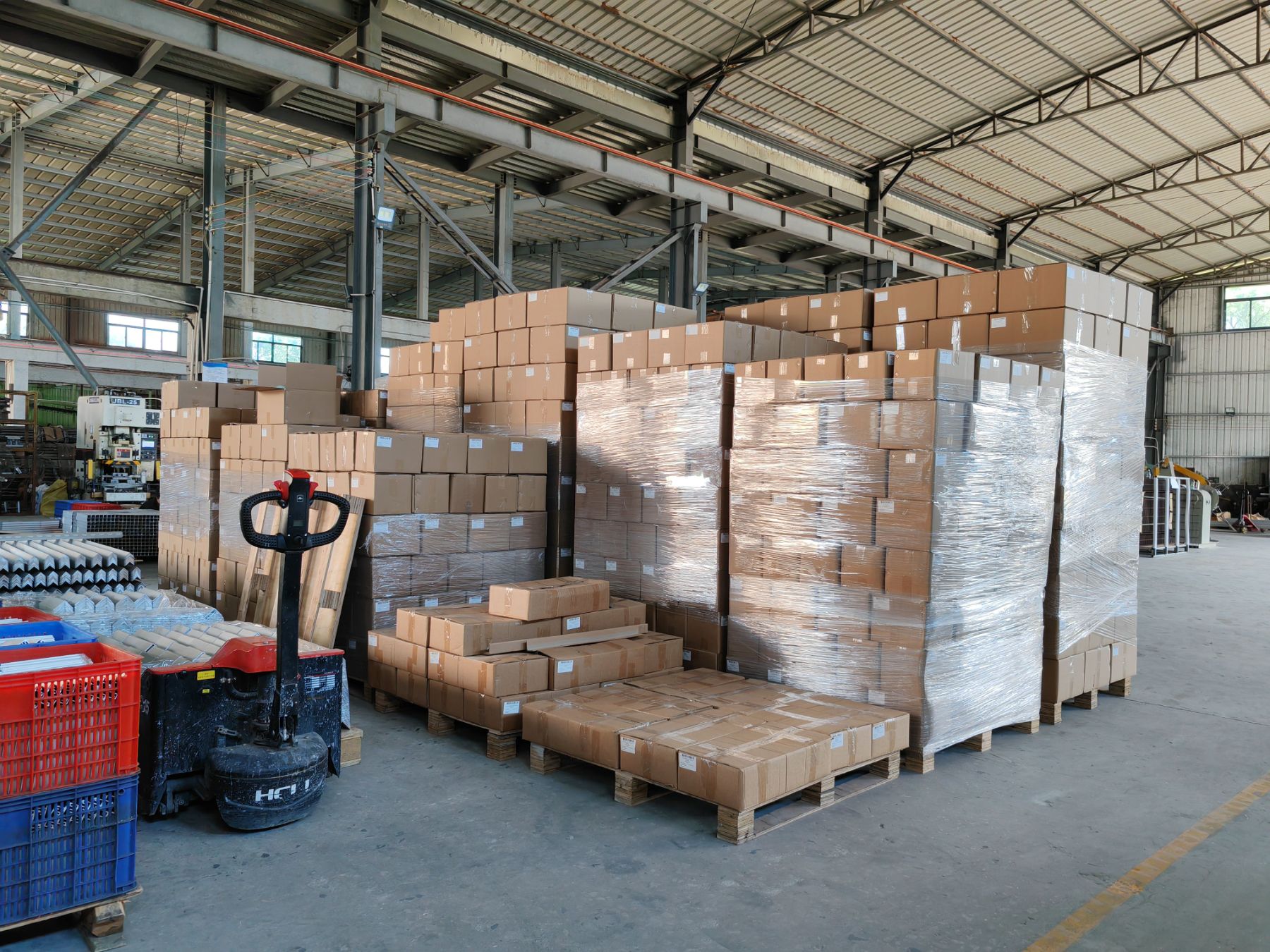
At the heart of every secure panel installation lies a meticulous attention to detail that often goes unnoticed. The engineers behind these systems obsess over micron-level tolerances, ensuring that each mounting point aligns perfectly with its counterpart. This isn't just about drilling holes and tightening bolts—it involves advanced finite element analysis to predict stress distribution, along with rigorous testing against vibration, thermal expansion, and sheer force. When a panel snaps into place, it does so because countless prototypes were pushed to failure, revealing exactly where reinforcement was needed.
Material selection becomes a quiet art form in this context. Fasteners are chosen not just for strength, but for their electrochemical compatibility with the panel’s substrate, preventing galvanic corrosion over decades of service. Thread-locking compounds and nylon inserts are specified with a chemist’s precision, calibrated to the exact torque values that maintain tension without introducing stress fractures. It’s a symphony of small choices—from the angle of a countersink to the thread pitch of a self-tapping screw—that collectively keep panels secure even under the harshest conditions.
Beyond the physical components, the assembly process itself becomes a structured choreography. Torque wrenches are paired with digital angle sensors to ensure consistent preload across every fastener. Some designs incorporate visual lock indicators or tactile feedback in snap-fit joints, removing ambiguity during installation. This engineering philosophy extends to serviceability too; a secure panel should be demountable without damage, allowing for maintenance while retaining its original structural integrity. The result is a system that feels solid and trustworthy, not by accident, but through a deliberate marriage of material science and mechanical design.
Materials That Last: The Shift to High-Grade Aluminum and Stainless Steel
For decades, product design leaned heavily on plastics and coated metals that looked promising on day one but quickly showed their limits. Scratches turned into rust spots, lightweight frames bent under pressure, and that sleek finish faded long before the item itself stopped working. This experience pushed manufacturers and buyers alike toward a quiet but decisive pivot—choosing materials that don’t just perform, but endure. The move to high-grade aluminum and stainless steel isn’t about luxury for its own sake; it’s a practical rebellion against a throwaway culture.
High-grade aluminum earned its place by shedding the weight without sacrificing integrity. Aircraft and automotive industries banked on it first, drawn by a corrosion resistance that doesn’t rely on fragile outer coatings. A well-crafted aluminum piece weathers salt air and daily knocks while keeping a clean, almost architectural profile. It’s the metal you reach for when something needs to feel substantial yet remain portable—a laptop shell that stays cool and rigid, or a water bottle that won’t impart a metallic tang after months of use.
Stainless steel answers a different call. Its density and cool polish signal durability before you even touch it. Where aluminum prioritizes lightness, stainless steel leans into its reputation for brute strength and hygienic surfaces. Restaurant kitchens embraced it decades ago, and that logic trickled into home design: a sink that resists staining, a refrigerator panel that shrugs off fingerprints, a watch casing that outlasts trends. The shift isn’t just functional. Both metals bring an honest, tactile quality that coated materials can’t replicate—they age visibly but rarely degrade, developing a patina that tells a story rather than hiding damage.
Custom Clamp Designs: Solving Unique Project Challenges
Off-the-shelf clamps often fall short when a project demands something out of the ordinary. Whether it's an irregular workpiece shape, space constraints, or the need to handle delicate materials without marring, standard solutions can slow you down. Custom clamp designs step in to fill these gaps, turning a potential bottleneck into a streamlined process. By tailoring every aspect—from jaw geometry and clamping force to the actuation method—you get a tool that fits your workflow like a glove, not a compromise you have to work around.
Each unique project brings its own set of challenges, and a well-crafted custom clamp addresses them head-on. For instance, in composite manufacturing, magnetic clamps might be swapped for vacuum-based systems to avoid contamination. In tight assembly cells, low-profile or articulated clamps can reach spots where standard toggle clamps can't. The design process dives into specifics: material compatibility, force distribution, and integration with existing fixtures. The result is a clamp that not only holds securely but also speeds up setup, reduces operator fatigue, and maintains part integrity cycle after cycle.
Collaboration between machinists, engineers, and fabricators is the spark that ignites these custom designs. It starts with a plain-spoken discussion of the problem—maybe chatter during a delicate milling operation or distortion in a welded frame. From there, simple sketches or CAD models evolve into a clamping solution that's rigorously tested in the real environment. This hands-on approach sidesteps the trial-and-error of adapting generic hardware and often leads to innovations that improve processes across the board. In the end, a custom clamp isn't just a piece of hardware; it's a tailored answer to a question no one else thought to ask.
Smart Factories, Smarter Production: How Automation Drives Consistency
In a truly smart factory, variability isn’t just minimized—it’s engineered out. Automated systems don’t get tired or distracted, and they don’t interpret instructions differently from one shift to the next. By embedding quality checks directly into production workflows and relying on real-time data rather than periodic sampling, these facilities create an environment where every component, every assembly step, and every finished product meets the same exacting standard. The result isn’t simply fewer defects; it’s a level of predictability that transforms how manufacturers plan, schedule, and deliver.
What often gets overlooked is how automation tightens the relationship between process parameters and output. When machines self-adjust for temperature, pressure, or speed within tolerances too fine for manual control, the product that emerges at the end of the line is remarkably uniform—batch after batch, month after month. This consistency feeds back into the supply chain, reducing buffer stock and making just-in-time manufacturing genuinely feasible without the usual safety nets. It also shifts the workforce’s focus from error correction to continuous improvement, since operators spend less time firefighting inconsistencies and more time analyzing trends and fine-tuning the system.
Perhaps the most telling sign of success is what doesn’t happen: fewer customer complaints, fewer line stoppages, fewer last-minute rushes to rework an order. Automation-driven consistency isn’t a flashy innovation, but it quietly reshapes a factory’s reputation. When a buyer knows that every delivery will meet specs without inspection, trust becomes a competitive advantage. In this light, smart factories don’t just produce smarter—they build the kind of reliability that no marketing campaign can manufacture.
Global Trust, Local Roots: Stories of Export Success and Client Partnerships
Our journey began in a small workshop, where each product carried the dedication of local artisans. What started as a modest operation soon caught the attention of buyers abroad, not through aggressive marketing but through the quiet consistency of quality and reliability. This organic growth laid the foundation for trust that would later span continents.
As we expanded into international markets, we realized that trust across borders is built differently. It requires understanding local cultures, adapting to regional expectations, and proving our commitment time and again. A breakthrough came when a European partner, after a face-to-face meeting at our production site, remarked that they felt they were partnering with neighbors, not a distant supplier. That comment captured the essence of our approach: global reach, powered by local authenticity.
Today, our client partnerships are more than transactions—they are enduring relationships. From a family-owned distributor in Southeast Asia to a major retailer in North America, each success story is rooted in mutual respect and shared goals. By staying true to our local roots while delivering on a global stage, we’ve created a network that thrives on genuine connection, proving that the strongest business alliances often grow from the simplest human trust.
FAQ
Solar panel clamps are fastening devices used to secure photovoltaic modules onto mounting rails or directly onto roofs. They ensure panels remain firmly in place despite wind, snow, or thermal expansion, playing a crucial role in the stability and longevity of solar installations.
China has a mature supply chain for solar components, abundant raw materials, advanced manufacturing technology, and competitive labor costs. This combination enables Chinese factories to produce high-quality clamps at scale, serving both domestic and international markets.
Look for industry certifications like ISO 9001, TÜV, or SGS. Check their track record, client testimonials, and whether they conduct rigorous testing such as salt spray corrosion tests or mechanical load tests. Factory audits, either in-person or via third-party, are also highly recommended.
Chinese factories typically offer a wide range, including mid clamps, end clamps, universal clamps, and tile roof clamps. Many also produce clamps for specific roof profiles like trapezoidal or standing seam, and for ground-mount systems.
Absolutely. Many manufacturers have in-house R&D teams that can develop custom clamps based on your technical drawings or samples. They can adjust dimensions, materials, and finishes to meet unique project requirements.
The most common material is aluminum alloy (usually 6005-T5 or 6063-T5) due to its light weight and corrosion resistance. Stainless steel is also used for high-strength applications. Many factories offer anodizing or other surface treatments for added durability.
Reputable factories follow strict quality control processes and obtain relevant certifications. They often conduct third-party testing for mechanical strength, corrosion resistance, and material composition, ensuring compliance with standards like AS/NZS 1170 or UL 2703.
Most factories are experienced in export and can arrange sea or air freight. It is important to clarify Incoterms, packaging (which is often customized for efficient container loading), and lead times. Working with a forwarder is common to handle customs clearance.
Conclusion
In the vast landscape of solar energy installations, the clamps holding panels in place rarely get the spotlight, yet their quality determines the long-term success of any project. China’s top clamp factories have honed precision engineering to a fine art, combining deep metallurgical knowledge with rigorous testing to ensure every unit can withstand decades of wind, rain, and thermal stress. These manufacturers have shifted decisively toward high-grade aluminum and stainless steel, materials that resist corrosion without adding unnecessary weight. At the same time, their ability to deliver custom clamp designs—tailored to unusual roof profiles or extreme load requirements—has made them indispensable partners for integrators worldwide.
Behind this reliability lies a wave of smart factory automation, where laser cutting and robotic assembly guarantee unmatched consistency across thousands of units daily. Many of these factories have built enduring export success not through one-time deals, but by embedding themselves in client supply chains as trusted collaborators. Their engineering teams work directly with developers to solve on-site challenges, often developing prototypes within days. From utility-scale deserts to coastal microgrids, these industry leaders have earned global trust by treating every clamp as a critical component—not an afterthought. Their story is one of quiet innovation, where local roots support a worldwide energy transition.
Contact Us
Contact Person: Leite
Email: [email protected]
Tel/WhatsApp: (+86)13666072898
Website: https://www.egretsolars.com/