
Tunnel Freezer Supplier: High-Performance Freezing Solutions for Food Industry
2026-05-10
In the fast-paced world of food processing, achieving rapid and uniform freezing is no longer a luxury—it's a competitive necessity. Yet, many manufacturers still grapple with inefficient systems that compromise product quality and drive up operational costs. What if there were a way to preserve freshness, texture, and nutritional value while slashing freezing times? Enter Worldbase, a leading tunnel freezer supplier redefining high-performance freezing solutions for the food industry. In this article, we'll explore the technology behind these advanced systems and why they're becoming the go-to choice for forward-thinking businesses worldwide.
Precision Freezing for Delicate Food Textures
Achieving the ideal texture in frozen foods often comes down to the speed and uniformity of the freezing process. When delicate items like berries, herbs, or fine pastries are exposed to slow, uneven cooling, large ice crystals form within their cellular structure. These crystals rupture cell walls, leading to mushiness and a loss of structural integrity upon thawing. Precision freezing techniques counter this by rapidly driving the product through the phase change temperature, generating micro-crystals that preserve the original mouthfeel and appearance. This delicate balance between science and timing is what separates a soggy disappointment from a freshly plated experience.
Different foods demand tailored freezing strategies to lock in their unique textures. An artisanal gelato base, for example, benefits from a quick-churn method that introduces fine air bubbles and prevents icy graininess, while a perfectly ripe raspberry requires a blast of frigid air to snap its outer skin taut before the inner flesh degrades. Even subtle adjustments, such as controlling the circulating air’s humidity or employing liquid nitrogen immersion for high-moisture items, can mean the difference between a vibrant, firm bite and a sad, weeping puddle. The true art lies in recognizing that no two foods react the same way, and only precise, attentive handling can honor their natural form.
Beyond flash freezing, modern approaches incorporate real-time monitoring and computer-guided temperature ramps that adapt to the food’s thermal mass and density. Instead of relying on a one-size-fits-all industrial cycle, these systems adjust cooling rates on the fly, preventing surface cracks in delicate chocolate shells or preserving the creamy smoothness of a custard tart. The result is a final product that, even after weeks in a deep chill, thaws with its integrity intact—texture, moisture, and all. For chefs and producers who refuse to compromise on quality, this nuanced control turns frozen storage into an invisible step, ensuring the eater never realizes the food was anything but fresh.
Rapid Cooling That Locks in Freshness
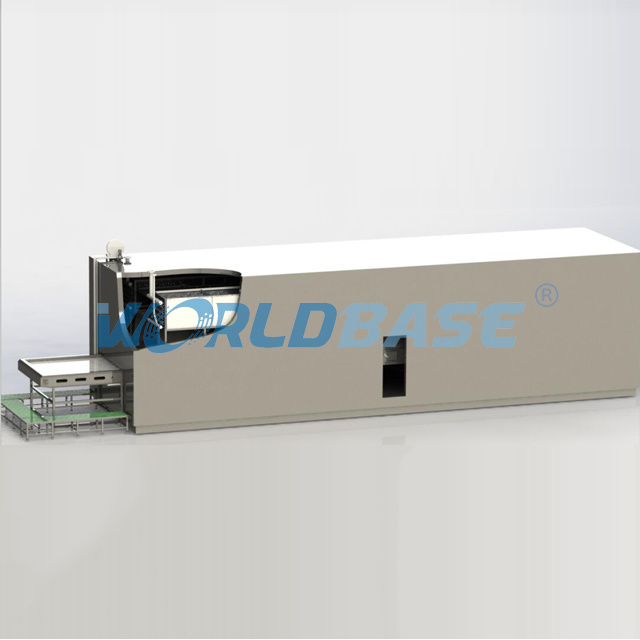
The moment produce is harvested, a quiet countdown begins. Unlike conventional methods that let warmth linger and degrade texture, our rapid cooling tunnel drives temperatures down in seconds, not hours. This sudden chill halts enzyme activity and moisture loss almost instantly, preserving the vibrant color and just-picked crunch you’d normally find only at the source. It’s not just cold storage—it’s a precision thermal pause that captures the peak of ripeness.
What sets the process apart is the way it respects the cellular structure of each leaf and fruit. Flash cooling forms micro-thin ice crystals that leave cell walls intact, preventing the mushiness that often plagues home-frozen goods. The result is produce that defrosts into a state remarkably close to fresh—juicy, firm, and full of life. There’s no need for added preservatives; the only ingredient we lean on is speed, locking in flavor as if nature hit its own pause button.
Custom Tunnel Designs for Your Production Line
Every production environment comes with its own set of constraints—tight floor plans, unusual product shapes, or specific material-handling needs. Off-the-shelf tunnel solutions rarely fit these nuances without costly modifications. That’s where tailored designs step in, shaping the enclosure to your exact workflow rather than forcing your line to adapt to a generic cabinet. Whether it’s an angled entry to accommodate conveyor paths or a multi-zone configuration for staged processes, custom tunnels let you reclaim floor space and streamline movement without compromising on protection or visibility.
The real advantage lies in how a bespoke tunnel can evolve alongside your operations. Need to integrate inline inspection stations, quick-access doors for maintenance, or transparent panels for visual monitoring? A made-to-order design weaves these elements into a cohesive structure that supports both current demands and future pivots. Materials and finishes are chosen not just for durability, but to match the hygiene, thermal, or electrostatic requirements of your specific industry—think antimicrobial coatings for food packaging or static-dissipative surfaces for electronics assembly.
Working directly with engineering teams during the design phase means your tunnel becomes a seamless part of the line’s rhythm. Features like adjustable mounting brackets, modular partitions, and snap-in glazing can reduce installation time and allow for swift reconfiguration when product specifications change. Instead of retrofitting standard enclosures each time you upgrade, you get a system that’s built to anticipate those shifts—ultimately cutting downtime and letting your operators focus on throughput, not on working around the equipment.
Energy-Smart Systems Reducing Your Carbon Footprint
Imagine a home that learns your daily habits and adjusts its energy use accordingly, slashing waste without you lifting a finger. Energy-smart systems do exactly that—they’re the quiet, intelligent backbone of a modern low-carbon lifestyle. By weaving together sensors, smart thermostats, and adaptive lighting, these setups ensure that electricity is only consumed when and where it’s truly needed. It’s not about giving up comfort; it’s about making your living space more responsive and efficient in ways that feel almost magical.
What sets these systems apart is their ability to sync with renewable energy sources on the fly. Picture your heat pump storing surplus solar power during the day, then using that stored energy to keep you warm at night. Or your electric vehicle charger automatically drawing power when grid demand is at its lowest. This kind of integration doesn’t just trim your utility bills—it actively shrinks the carbon emissions tied to your household, all while balancing the broader energy network.
The real beauty? You don’t need to be a tech wizard to benefit. Once installed, these systems hum along in the background, continuously fine-tuning themselves based on real-time data. Over time, they learn from weather patterns, occupancy trends, and even your feedback to optimize performance. It’s a seamless blend of comfort, savings, and environmental stewardship—a practical step anyone can take toward a cleaner future.
Scalable Solutions from Small Batches to Bulk Processing
When your production needs outgrow the lab bench, the transition should feel like a natural step forward—not a leap into the unknown. Our approach ensures that processes refined on a handful of units remain just as reliable when you're filling orders in the thousands. By focusing on consistency at every stage, we help teams avoid the usual pitfalls of scaling: formulation drift, uneven mixing, and the maddening variability that shows up only when volumes increase. It’s about building confidence from the very first small batch, so each subsequent scale-up simply feels like more of the same reliable outcome.
Too often, scaling up means sacrificing the nuances that made a small batch exceptional. We’ve engineered our systems to preserve those details—whether it’s a specific shear rate, a delicate temperature window, or a particular sequence of ingredient additions. The equipment and protocols adapt fluidly, so the jump from pilot runs to full production doesn’t force you into compromises. This means your unique product signature remains intact, without requiring you to become an expert in industrial engineering overnight. Instead, you get a partnership that understands the art as much as the science.
Efficiency doesn’t have to plateau once you move beyond manual operations. We’ve seen how smart process design can turn what used to be a bottleneck into a seamless flow. From automating data capture during small-scale trials to integrating inline quality checks in high-throughput lines, every step is threaded together to reduce waste and downtime. The result is a setup that grows with your ambition, handling everything from limited edition runs to continuous production without having to reinvent the wheel. It’s manufacturing that flexes around your vision, not the other way around.
Reliable Performance with Minimal Downtime
When building systems that must handle continuous operations, the focus naturally shifts to resilience and uptime. It's not just about avoiding failures but about creating an environment where small hiccups don’t cascade into major outages. This means designing with redundancy at every critical point, from power supplies to network paths, and ensuring that failover mechanisms are not just present but truly seamless. The goal is a setup that hums along quietly, with users hardly noticing when a component switches to its backup.
Monitoring plays a quiet but pivotal role here. By keeping a constant eye on system health metrics, teams can spot patterns that precede issues and address them before they disrupt service. It's about shifting from reactive firefighting to proactive maintenance, where updates and patches happen in the background without forcing downtime windows. This approach relies on live migration capabilities and rolling deployments, allowing services to stay up while improvements roll out underneath them.
The real test comes during unexpected spikes or resource shortages. A well-tuned architecture leans on auto-scaling and load balancing to absorb the pressure gracefully, throttling non-critical processes if needed to protect core functions. Over time, this builds a track record of stability that becomes invisible because it just works, day after day, without fanfare. That's the essence of reliable performance—delivering consistently, so the platform feels solid underfoot, even when things behind the scenes are anything but calm.
FAQ
A tunnel freezer is a continuous blast freezing system where food products move on a conveyor belt through an insulated tunnel. Inside, high-velocity cold air at temperatures down to -40°F (-40°C) is circulated around the items, rapidly pulling heat away and freezing them uniformly as they travel from entrance to exit.
Working with a supplier that focuses on tunnel freezing equipment means you get in-depth expertise—from system design to installation support. They understand the specific thermal requirements of different foods, can custom-engineer solutions to fit your production line, and typically provide better after-sales service and spare parts availability.
High-performance freezing locks in freshness, texture, and nutritional value by minimizing ice crystal formation. It also increases throughput, reduces product dehydration, and allows for more efficient cold chain management, ultimately lowering operational costs while keeping food safe and appealing.
Because of its speed, tunnel freezing creates smaller ice crystals that cause less cell damage in the food. This means fruits stay firmer, meats retain moisture better, and ready meals keep their intended texture—something slower, traditional freezers often struggle to achieve consistently.
Absolutely. Tunnel freezers are highly versatile and can be configured for everything from individually quick-frozen vegetables and seafood to large items like whole poultry or baked goods. Adjustable air speeds, belt materials, and zone temperatures let you fine-tune the process for each product category.
Key factors include your production volume, the physical dimensions and shape of your products, available floor space, desired freezing time, and energy consumption. It’s also wise to evaluate the refrigerant type, ease of cleaning, and whether the system can integrate with your existing line without major modifications.
Today’s models use optimized fan designs, high-efficiency compressors, and smart defrost cycles to reduce power consumption significantly. Many also incorporate variable-speed drives and insulation improvements, so they maintain sub-zero temperatures with much less energy than older generations of blast freezers.
Routine maintenance typically includes inspecting and cleaning the evaporator coils, checking conveyor belt alignment, ensuring door seals are intact, and verifying the refrigerant charge. Reliable suppliers often offer service contracts and training for your staff to minimize downtime and keep the freezer running at peak performance.
Conclusion
As a dedicated tunnel freezer supplier, we understand that food freezing must go beyond mere temperature reduction—it’s about preserving texture, taste, and nutritional value. Our systems provide precision freezing that handles even the most delicate items, from soft fruits to artisan pastries, without causing structural damage. The rapid cooling process locks in freshness at its peak, ensuring that products retain their original quality from production line to final consumer. Every tunnel is custom-designed to integrate seamlessly into your existing setup, matching your specific belt width, throughput rates, and spatial constraints, so you never compromise on line efficiency.
Behind this performance lies a commitment to sustainability and reliability. Energy-smart engineering reduces power consumption and carbon footprint, often without the need for costly facility upgrades. Whether you run small artisanal batches or high-volume bulk processing, scalable solutions adapt to production demands without surplus investment. Robust components and intelligent defrost protocols minimize downtime, keeping your output consistent and maintenance predictable. This combination of thoughtful design and dependable operation makes our tunnel freezers a practical choice for modern food processors seeking both product excellence and operational resilience.
Contact Us
Contact Person: Mr Yang
Email: [email protected]
Tel/WhatsApp: +8613809083091
Website: https://en.worldbase.cn