
Vibratory Concrete Reclaimer Fabrication: Key Techniques for Efficient Production
2026-08-06
In the competitive world of concrete production, efficient reclamation isn't just a goal—it's a necessity. Mastering the fabrication of vibratory concrete reclaimers unlocks substantial cost savings and environmental benefits, yet the key techniques often remain underexplored. At Sinou, we’ve seen how precise engineering transforms standard reclaimers into productivity powerhouses. This blog dives into the practical fabrication strategies that separate high-performing systems from the rest, giving you a fresh perspective on boosting your operation’s efficiency.
Mastering Vibration Dynamics for Optimal Aggregate Separation
The key to effective aggregate sorting lies in harnessing the nuanced interplay of amplitude, frequency, and stroke angle. When these parameters are precisely tuned, material stratification occurs rapidly, allowing finer particles to migrate downward while larger stones rise to the top. This natural layering effect, driven by controlled oscillatory motion, minimizes blinding and ensures each gradation exits at its designated point. Operators who take the time to map resonance curves for their specific material mix often discover performance sweet spots that manuals alone can't predict.
Beyond basic settings, the real art of vibration dynamics involves compensating for feed variability and wear. A surge of damp, clay-rich ore demands a different energy profile than dry, angular gravel. By monitoring acceleration signatures in real time, it's possible to detect shifts in bed behavior and make micro-adjustments before output quality degrades. Intelligent drive systems now allow for on-the-fly tuning, but seasoned technicians still rely on tactile feedback—the hum of a well-balanced screen is unmistakable and remains a reliable benchmark of optimal separation.
Looking deeper, the structural integrity of the screening media itself influences vibrational efficiency. Tensioned cloth, modular panels, and finger decks each respond uniquely to force inputs. Matching the media's natural damping characteristics to the exciter's output prevents energy waste and extends service life. Progressive plants are adopting hybrid layouts that combine linear and elliptical motion across successive decks, tailoring the vibration signature to the changing size and shape of particles as they move along the screening surface. This approach keeps throughput high while consistently hitting tight product specs.
Precision Welding Methods That Extend Reclaimer Lifespan
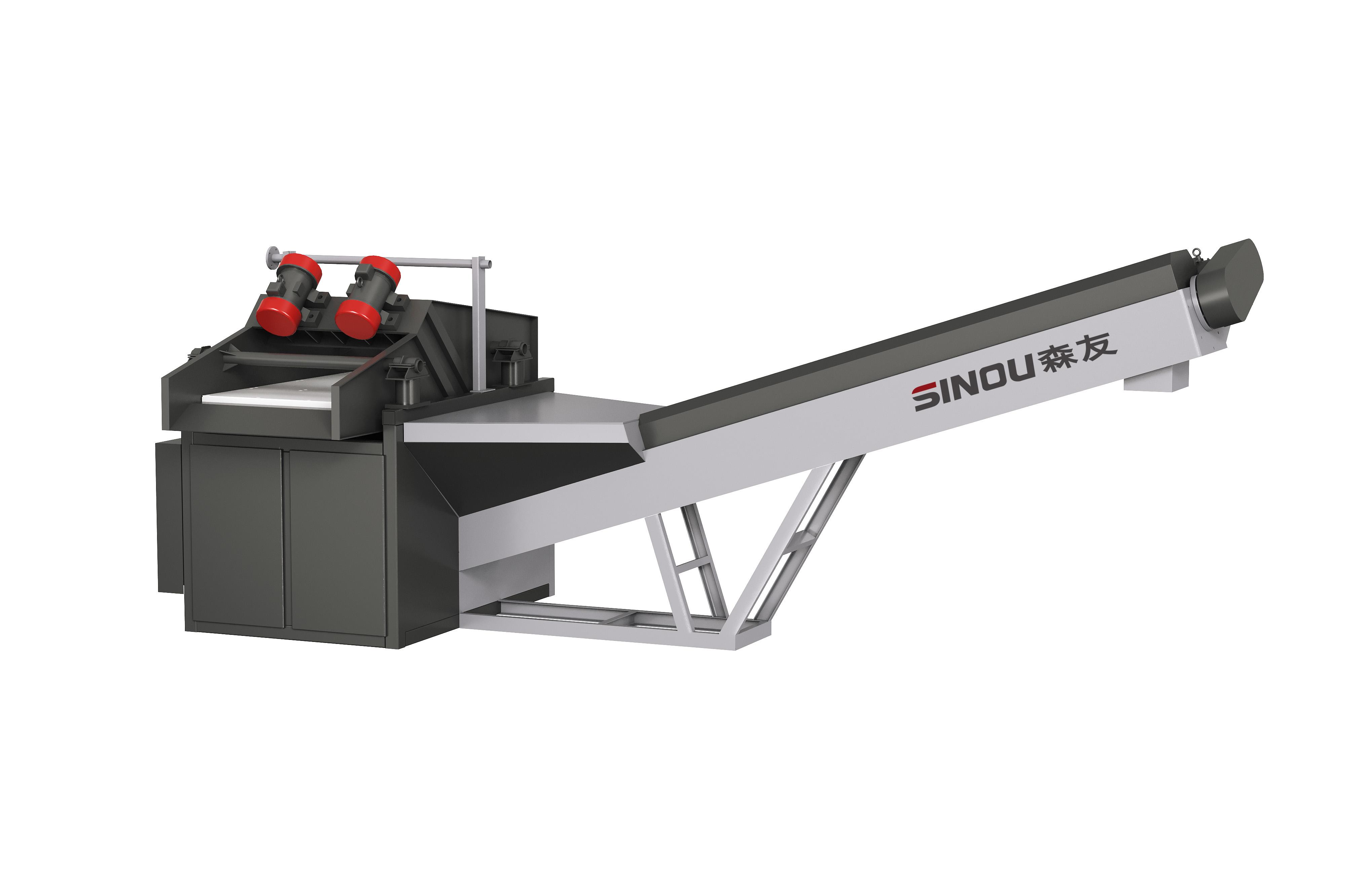
In the demanding world of heavy machinery, reclaimers face relentless wear from abrasive materials and constant stress. Precision welding steps in as a critical repair technique that not only restores but can significantly extend the equipment’s operational life. By carefully controlling heat input and filler material deposition, these methods rebuild worn surfaces to exact specifications, ensuring that critical dimensions and metallurgical properties are preserved. This meticulous approach reduces the risk of distortion and cracking, which are common pitfalls in less refined repair attempts.
Advanced welding processes like laser cladding and pulsed MIG have become game-changers for reclaimers operating in harsh environments. Laser cladding delivers a minimal heat-affected zone and a strong metallurgical bond, making it ideal for applying wear-resistant overlays on cutting edges and bucket lips. Similarly, pulsed MIG welding offers exceptional control over droplet transfer, resulting in uniform deposits with reduced spatter and porosity. These techniques allow for the precise application of specialized alloys that can outperform the original base material, providing enhanced resistance to abrasion, impact, and corrosion.
Beyond the equipment itself, the skill of the welder remains paramount. Interpreting engineering drawings, selecting the right filler metals, and applying proper pre- and post-weld heat treatments are all part of a systematic workflow that ensures long-term durability. Regular inspection using non-destructive testing methods, such as ultrasonic or dye penetrant checks, further validates the integrity of each repair. When these precision methods are combined with a thorough understanding of wear patterns, reclaimers can achieve a level of reliability that minimizes downtime and pushes replacement cycles far into the future.
Balancing Speed and Thoroughness in Concrete Reclamation
In any concrete reclamation project, the tension between moving quickly and doing the job right is a constant undercurrent. Rushing through demolition and processing can introduce unwanted contaminants—bits of rebar, soil, or mixed aggregates—that degrade the quality of recycled concrete and limit its reuse potential. On the other hand, an overly meticulous pace can stall project timelines, inflate labor costs, and leave downstream operations waiting. The real skill lies in shaping a workflow that doesn't treat speed and thoroughness as rivals, but as partners in a carefully choreographed sequence.
One practical approach involves front-loading the separation process. By using mobile crushers equipped with magnetic separators and air classifiers right at the demolition site, crews can sort materials as they go, drastically reducing the need for secondary sorting later. This keeps the momentum high without sacrificing the purity of the reclaimed concrete. Pair this with real-time checks—simple visual inspections coupled with occasional sieve analyses—and you create a rhythm where adjustments happen on the fly, not after a batch fails specifications.
It also helps to standardize what "thorough" means for different end uses. Clean fill uses may tolerate slightly higher impurity levels than structural-grade road base. By mapping out these needs early, teams can calibrate their processing intensity accordingly, avoiding the trap of over-processing where it isn't necessary. This clarity turns speed from a reckless gamble into a calculated advantage, ensuring that the reclaimed material arrives on time and fully up to the task.
Material Selection Secrets for Corrosion-Resistant Reclaimers
Picking the right material for a reclaimer that faces aggressive chemicals and moisture isn’t just about consulting a spec sheet. It’s about understanding the micro-environment where corrosion actually starts. For instance, designers often overlook that stagnation points inside the machine can create local acid concentration zones that eat through standard stainless steel within months. A hardened 316L might handle broad pH swings, but when chloride-laden dust gets trapped in a weld crevice, even that can fail spectacularly. Experienced engineers thus map the entire operating cycle, from idle humidity swings to intermittent chemical exposure, before even shortlisting alloys.
Then there’s the art of pairing surface finish with bulk composition. A duplex stainless steel with a mirror-polished internal surface sheds deposits far more effectively than a rougher, higher-grade alloy packed with nickel. Some teams experiment with electropolishing to remove the microscopic peaks that act as corrosion nucleation sites. Others use thin, sacrificial coatings that intentionally corrode first—giving maintenance crews a visual warning before the structural metal is compromised. The real secret is that corrosion resistance isn’t just a material property; it’s a systems play where geometry, finish, and operational habits intertwine.
Streamlining Assembly Lines Without Sacrificing Quality
Many manufacturers fear that speeding up production inevitably means cutting corners, but that false choice overlooks smarter workflows. By focusing on ergonomic station layouts and targeted automation, a line can run faster while keeping error rates low. Rather than pushing workers harder, we empower them with tools and data that catch defects before they leave a cell.
Small adjustments often yield outsized gains. For instance, pre‑kitting materials and optimizing part presentation shave seconds off each cycle, which compound over thousands of units. At the same time, standardized work instructions—delivered visually at each step—reduce mental fatigue and variation without stifling flexibility.
When quality metrics are embedded directly into the rhythm of production, teams can pace themselves naturally without sacrificing rigor. The result is a balanced system where rapid throughput and high standards reinforce each other, proving that efficiency doesn’t have to be the enemy of craftsmanship.
Innovative Screening Designs That Boost Recovery Rates
Rethinking the layout of screening surfaces has opened up new possibilities for capturing finer particles without sacrificing throughput. By moving beyond traditional woven wire meshes and experimenting with non‑uniform aperture patterns, operators have seen recovery climb even when processing complex ores. These designs often incorporate stepped decks or wave‑shaped panels that keep the material bed active, preventing blinding and ensuring every particle has multiple chances to reach the screen openings. The result is a more efficient separation that directly translates into less valuable material ending up in tailings streams.
Another departure from convention is the use of modular, interchangeable media that can be tailored to specific zones of the screen. Instead of a one‑size‑fits‑all panel, engineers now deploy sections with varying aperture sizes and orientations along the length of the deck. This creates a cascade effect where coarse material is removed early while the finer fraction gets more focused attention downstream. Combined with dynamic vibration parameters that adapt to feed conditions in real time, these designs dramatically increase the probability of near‑mesh particles passing through, pushing recovery rates into territory previously thought unreachable.
Crucially, these advancements are not just about hardware—they reflect a deeper understanding of material behavior. Computational modelling allows for the simulation of particle flow and stratification before a single panel is cut or welded. Small tweaks like changing the profile of screen wires from round to triangular can reduce turbulence and guide particles more effectively. When these insights are built into the screening design from the ground up, the gains in recovery are sustained over longer periods, even as feed characteristics fluctuate. It is this blend of clever geometry and data‑driven fine‑tuning that sets the new generation of screens apart from their static predecessors.
FAQ
It's a machine that separates sand and gravel from unused concrete using vibration, allowing the materials to be reused and reducing waste.
Heavy-duty welding, precision machining of vibrating components, and use of wear-resistant steel in high-abrasion areas.
By engineering the angle and amplitude of vibration to match specific aggregate sizes, and incorporating multiple decks with precise mesh sizes.
The vibratory mechanism agitates the concrete mix, accelerating the separation of aggregates from slurry, which boosts processing speed.
Using sealed bearings, corrosion-resistant coatings, and modular components that can be easily replaced without major disassembly.
It recirculates process water, minimizing freshwater usage and reducing disposal costs while maintaining separation effectiveness.
Conclusion
In the production of vibratory concrete reclaimers, achieving efficient aggregate separation starts with fine-tuning vibration dynamics. Engineers manipulate frequency and amplitude to create precise movement patterns that dislodge cement paste from sand and gravel without over-grinding the material. This optimization not only boosts recovery rates but also reduces wear on components. Equally critical is the selection of corrosion-resistant alloys and advanced screening designs—perforated drums or wedge-wire screens with custom slot openings that allow fines to pass while retaining coarse aggregate. These material and geometry choices combat the relentless alkaline environment of wet concrete, ensuring that reclaimers maintain peak performance over years of service.
Precision welding methods, such as automated MIG with strict heat control, extend the lifespan of drum assemblies and frames by minimizing distortion and stress fractures. Production lines are streamlined through modular fabrication, where sub-assemblies are built in parallel and quality checks are integrated at each stage, balancing speed with thoroughness. By combining these techniques—thoughtful vibration profiles, durable materials, meticulous welding, and efficient assembly—manufacturers can produce reclaimers that consistently deliver high throughput without compromising on the quality of reclaimed aggregate.
Contact Us
Contact Person: HaiYan
Email: [email protected]
Tel/WhatsApp: +86 18957325588
Website: https://www.senyoubeton.com/