
What Makes a Regular Lifter a Smarter Choice for Modern Meeting Rooms?
2026-05-08
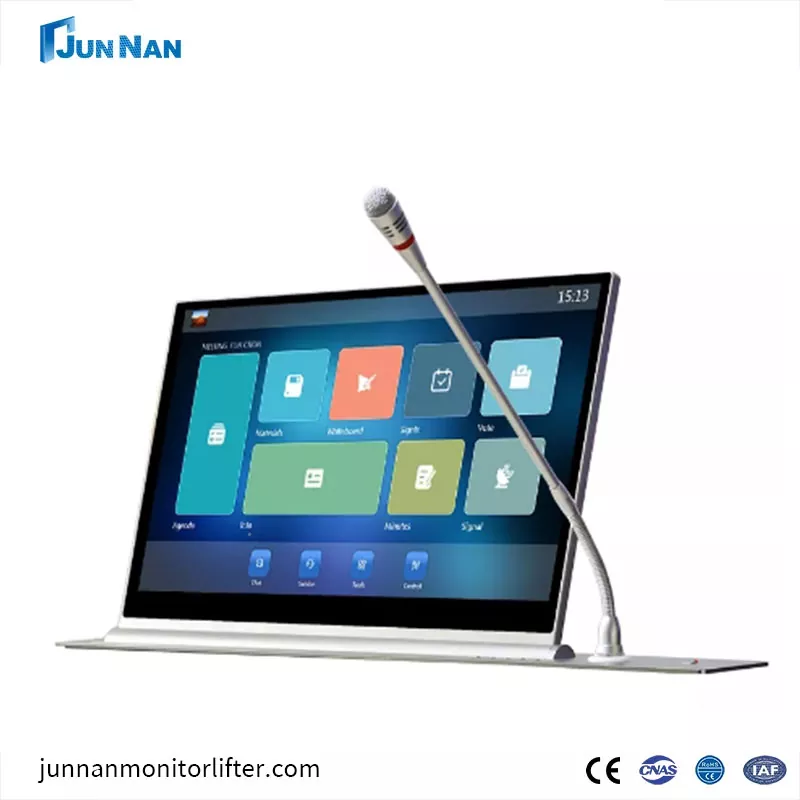
When I look at how meeting spaces have changed, I see one clear pattern: buyers no longer want bulky equipment sitting on the table and interrupting eye contact, cable management, and the overall look of the room. That is why products from Guangzhou Junnan Audiovisual Technology Co,.Ltd. caught my attention in a practical way rather than a purely promotional one. In many real conference, training, and executive office scenarios, a well-designed Regular Lifter helps me solve the daily issues that fixed displays often create, including cluttered desktops, limited usable space, difficult maintenance access, and a room image that feels outdated.
I have also found that choosing a Regular Lifter is not only about hiding a screen. It is really about improving workflow, protecting equipment, and making a room easier to use for everyone from managers to IT teams. If I am planning a boardroom, a government meeting room, a control space, or a high-end office table setup, I want a lifting solution that feels clean, stable, and predictable every single day.
Why Do So Many Buyers Struggle with Display Integration?
In my experience, buyers usually run into the same set of problems when they try to integrate monitors into furniture or conference tables.
- I often see screens taking up too much tabletop space and leaving less room for notebooks, documents, and microphones.
- I regularly notice visible cables making an otherwise premium room look unfinished.
- I know many teams worry about whether a lifting mechanism will remain stable after repeated daily use.
- I have seen decision-makers hesitate because they want a neat hidden design without creating future maintenance trouble.
- I also understand that project buyers need equipment that can fit different table sizes, room layouts, and user habits.
That is where a dependable Regular Lifter becomes useful. Instead of forcing a compromise between technology and furniture aesthetics, it helps me combine both. The screen stays hidden when not needed and rises only when the user wants it. That sounds simple, but in real commercial use, that simple function removes a surprising amount of friction.
Which Practical Benefits Matter Most When I Choose a Regular Lifter?
When I evaluate a lifting monitor solution, I do not start with appearance alone. I start with whether it will make the room easier to manage over time. A strong Regular Lifter should give me benefits that are visible to both the end user and the project team.
| What I Care About | Why It Matters in Real Projects | How a Regular Lifter Helps |
|---|---|---|
| Tabletop cleanliness | A crowded table makes meetings less comfortable and less professional | The monitor stays hidden when not in use, keeping the surface cleaner |
| Space efficiency | Executive rooms and multi-seat conference tables need every inch to be used well | The built-in lift design frees up more usable desk area |
| Visual presentation | Clients and senior staff notice room image immediately | A concealed display system creates a more refined, organized look |
| Operational convenience | Users want simple, predictable movement instead of awkward adjustments | The lift raises and retracts the display in a controlled way |
| Equipment protection | Exposed screens are more vulnerable to dust, accidental contact, and daily wear | Retracted storage helps reduce unnecessary exposure |
| Project flexibility | Different rooms require different installation approaches | The solution can be matched to customized furniture and meeting applications |
For me, these are not abstract product advantages. They directly affect whether the finished room feels premium, whether users adopt the system easily, and whether the buyer feels the investment was justified.
How Does a Regular Lifter Improve the User Experience in Daily Meetings?
I always pay attention to what happens after installation, because that is when the real value becomes obvious. A meeting room may look impressive on delivery day, but the real test is what happens after weeks and months of use.
With a good Regular Lifter, daily operation becomes more natural. When the screen is needed, it is available without placing extra equipment on the desk. When the meeting ends, the table returns to a cleaner state. This matters a lot in spaces that switch between presentations, negotiations, hybrid meetings, training sessions, and internal reviews.
I also like the fact that a lifting monitor setup supports a more focused environment. When screens are hidden, people tend to pay more attention to face-to-face discussion. When screens rise, the room becomes task-oriented immediately. That small change in physical environment helps the room adapt to different communication needs without major reconfiguration.
Is a Regular Lifter Only About Appearance?
Not at all. I think this is one of the most common misunderstandings. Yes, the hidden-lift design clearly improves appearance, but the practical value goes much further.
- I can create a more organized cable route inside the furniture structure.
- I can reduce desktop interference in rooms where multiple users sit side by side.
- I can support a cleaner architecture for conference technology integration.
- I can make premium office furniture work together with display technology instead of competing with it.
- I can deliver a solution that looks intentional rather than added on later.
That is why I see a Regular Lifter as both a functional device and a project coordination tool. It helps furniture design, audiovisual integration, and user interaction meet in one place.
Which Applications Make the Most Sense for a Regular Lifter?
From my point of view, this type of product works best in settings where appearance, order, and frequent use all matter at the same time. It is especially relevant when the client wants technology to be present but not visually dominant.
| Where I Would Use It | Why It Fits | What Problem It Solves |
|---|---|---|
| Executive conference rooms | These rooms require a premium and uncluttered presentation | It hides the display when discussion takes priority |
| Boardrooms | Boardrooms often combine formal presentation and face-to-face decision-making | It supports both visual display and clean table design |
| Government meeting spaces | Order, efficiency, and professional room image are essential | It keeps the environment neat and organized |
| Training rooms | Users need access to screens without permanent desktop obstruction | It allows flexible use of visual tools |
| High-end office desks | Executives often want technology that does not disrupt design | It preserves both usability and furniture aesthetics |
| Integrated smart office projects | Modern spaces need equipment that fits into a broader system plan | It supports cleaner integration of display functions |
Whenever I work on a project with these kinds of requirements, I naturally pay closer attention to a Regular Lifter because it addresses several needs at once instead of solving only one.
What Should I Check Before Buying a Regular Lifter?
I never think it is enough to choose based on appearance alone. Before making a purchasing decision, I would check several practical points that affect long-term satisfaction.
- Does the structure look suitable for repeated operation in commercial environments?
- Can it match the screen size and installation method required by the project?
- Will the housing and finish work well with the furniture style?
- Is the movement smooth enough to support a premium user experience?
- Can the supplier support customization when room conditions differ from standard layouts?
- Is after-sales communication clear enough for project coordination and future support?
These questions matter because many buyers are not simply purchasing one device. They are planning a complete room solution. If I choose the wrong lifting system, I can create problems for the furniture team, the installer, the AV integrator, and the final customer all at once. If I choose the right Regular Lifter, the whole project becomes easier to execute.
Why Does Supplier Experience Matter as Much as Product Design?
I have learned that even a promising product can become a difficult purchase if the supplier cannot support real project needs. That is why I pay attention to whether the manufacturer works across categories related to conference and intelligent office integration rather than offering a single isolated item.
A supplier with broader experience usually understands how a lifting display product must fit into larger meeting environments. That helps with installation logic, appearance consistency, and communication during customization. It also gives me more confidence when I need a solution that matches conference tables, office furniture, audiovisual systems, or other integrated equipment.
When I look at a company with a wider product line in intelligent office and conference equipment, I see an advantage for project buyers. It suggests a better understanding of actual usage conditions, especially where reliability, room coordination, and service response all matter.
How Can I Explain the Value of a Regular Lifter to Clients Who Only Compare Prices?
This is a question I deal with often. If a client only looks at the initial price, I usually bring the conversation back to cost over time and room value as a whole.
I would explain it this way: a cheaper exposed display setup may seem acceptable at first, but it can reduce the perceived quality of the room, limit available desk space, complicate wiring presentation, and create a less polished user experience. A well-selected Regular Lifter improves both the room image and the functionality users experience every day.
In other words, I do not treat it as a decorative upgrade. I treat it as part of the room’s working infrastructure. Once clients understand that it supports usability, organization, and presentation at the same time, they usually see the value more clearly.
What Kind of Content Helps This Product Perform Better in Search?
If I am writing content for a product like this, I know the most effective approach is not to stuff keywords or make exaggerated claims. What works better is clear problem-solving content that reflects how actual buyers think. People searching for a Regular Lifter often want answers to practical questions about hidden monitor solutions, meeting room upgrades, executive table integration, and commercial display lifting applications.
That is why I focus on pain points such as clutter, room aesthetics, equipment organization, installation suitability, and long-term usability. When content addresses those real concerns in natural English, it tends to be more useful for readers and more sustainable for search visibility as well.
Which Choice Helps Me Build a Cleaner and More Valuable Meeting Space?
For me, the answer is straightforward. If I want a meeting environment that looks organized, works efficiently, and supports a higher-quality user experience, a carefully selected Regular Lifter is one of the most practical upgrades I can make. It helps me reduce visible clutter, protect the visual quality of the room, and make display technology feel integrated instead of intrusive.
If you are planning a conference room, executive office, training environment, or integrated smart workspace and want a solution that balances appearance with day-to-day practicality, this is exactly the kind of product worth serious consideration. If you want to discuss specifications, customization possibilities, or project matching in more detail, please contact us today and send your inquiry. I would strongly recommend reaching out to Guangzhou Junnan Audiovisual Technology Co,.Ltd. to explore the right Regular Lifter solution for your application.